By Hope Mastrokalos, Element Event Solutions
In 2026, event design continues its evolution from aesthetic exercise to fully integrated experience strategy.
For hospitality-driven events, the intersection of environment, service and storytelling is more important than ever—where furniture, catering and layout are no longer separate considerations, but part of a cohesive guest journey.
Intentional, Human-Centered Environments
Scale is no longer the defining metric of success. Instead, events are being designed around how people gather, connect and engage within a space.
This shift is reflected in the move toward layered lounge environments—curated clusters of sofas, lounge chairs and ottomans that create natural conversation zones.

Mixed-height tables and upholstered dining seating elevate both comfort and dwell time, encouraging guests to settle in rather than circulate quickly.
From a catering perspective, centralized buffets are giving way to distributed service moments—satellite bars, grazing stations and styled coffee activations that act as both functional and social anchors.

Flexible, Modular Design That Evolves
Today’s events are rarely static. Spaces are expected to transform throughout the event lifecycle, often without guests noticing the transition.
Modular seating systems, reconfigurable lounge pieces and lightweight cocktail tables allow environments to shift seamlessly—from keynote to networking, from dining to after-party.

For catering, this translates into pop-up culinary experiences—chef stations, tasting counters and interactive food moments that can be introduced, repositioned or removed as the energy of the event evolves.
Destination-Driven Design
A growing influence in 2026 is the rise of destination-driven design, where events draw inspiration from global locales to create a sense of transportive escape.
Italian-inspired environments are a leading example, bringing a warm, relaxed sophistication to hospitality settings. Think Tuscan countryside meets modern aperitivo culture: long communal wood tables, bistro-style chairs, neutral linens, bold ceramic dinnerware and artisanal glassware.

For catering, this means family-style service and shared platters that encourage connection, as well as interactive stations such as spritz bars, pasta finishing and antipasti builds.
Beyond Italy, this trend expands into broader Mediterranean, coastal and global influences, but the common thread is authenticity—design that feels collected, rooted and experiential rather than themed or literal.
Drapery as Soft Architecture
Once considered purely decorative, drapery has emerged as one of the most powerful tools in event design—functioning as soft architecture that shapes space, movement and experience.
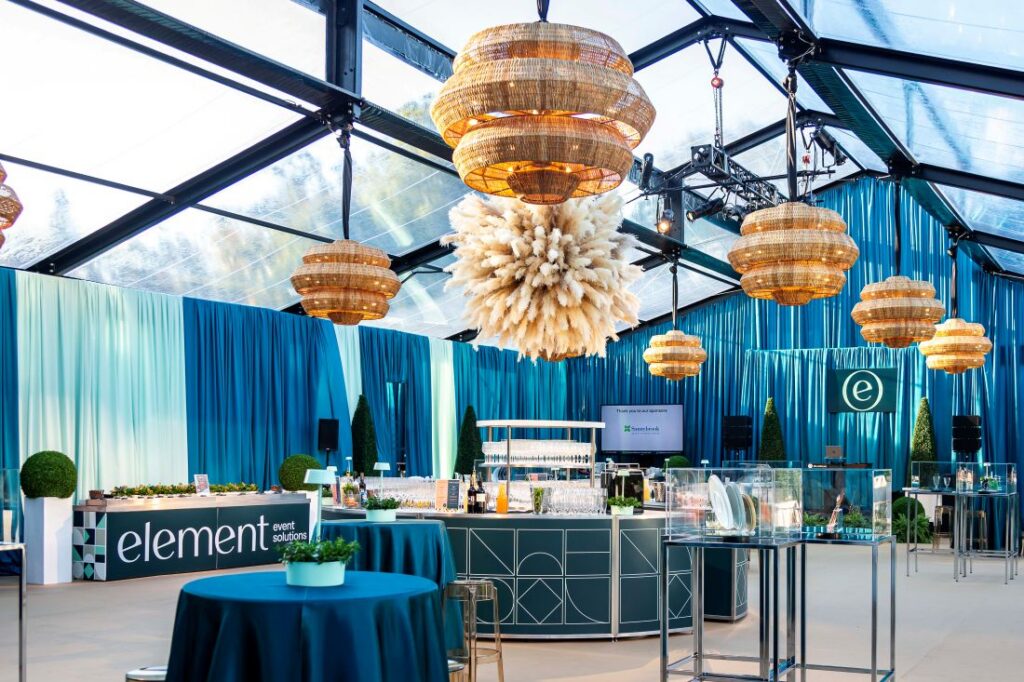
In large or open venues, drapery is being used to create rooms within rooms—defining lounges, enclosing dining areas or framing key focal points like bars, stages and entrances. It allows designers to control scale and intimacy without the rigidity of built structures.

Full-height draping, modular track systems and ceiling treatments are increasingly used to soften large venues, divide space and create intimacy through layered textiles like sheers and velvets. Beyond aesthetics, drapery enhances acoustics, guides guest flow, introduces movement and reveals moments that transform open environments into immersive, human-scaled experiences.
For hospitality environments, drapery also elevates catering moments—framing bars, enhancing buffet presentations and creating distinct, memorable zones within a larger event footprint.
Expressive, Personality-Driven Aesthetics
Events are embracing bold color, sculptural forms and layered styling to create environments that feel distinctive and memorable.
Statement seating in rich jewel tones—paired with patterned linens, colored glassware and mixed materials—creates a sense of depth and individuality. Sculptural furniture silhouettes and custom-built elements—such as branded bars or feature installations—serve as visual anchors and photo moments.

For hospitality teams, this extends into highly styled tablescapes and branded food experiences, where every detail—from menu cards to dessert displays—contributes to a cohesive visual identity.
Classic & Heirloom-Inspired Design
Alongside more expressive trends, there’s a renewed appreciation for classic, enduring design—pieces that feel timeless, collected and rooted in tradition. Heirloom-inspired aesthetics bring a sense of familiarity and understated luxury, often drawing from European influences, heritage materials and refined detailing.

Traditional silhouettes, rich wood tones, cane accents and antique-inspired finishes are paired with neutral, subtly textured linens and classic tabletop elements like ceramic plates and cut crystal to create a timeless foundation.
This is complemented by refined plating, elevated family-style service and balanced, understated tablescapes that prioritize elegance and longevity over trend.
The Takeaway
Across all trends, one idea stands out: event design is no longer about filling a space. It’s about shaping it. Furniture defines flow, bars become focal points, catering becomes immersive, and drapery transforms volume into experience—creating intimacy, flexibility and atmosphere.
For hospitality-driven events in 2026, success lies in the ability to layer these elements seamlessly, delivering environments that feel intentional, transportive and deeply considered.

About the Author

Hope Mastrokalos is vice president of product and market strategy for Element Event Solutions, Canada’s premier provider of rentals, tents and event services. Hope has more than 25 years of experience in international sourcing, buying and negotiations, executive leadership, strategic planning, business transformation, product management and partnership development
Delivering more than 35,000 memorable events each year, Element Event Solutions recently unveiled the most extensive product release in its 115-year history. Featuring more than 200 new pieces, the collection introduces nine thoughtfully designed themes that bring together furniture, linens, tabletop elements, décor and drapery.
Subscribe to CFE News' twice-monthly newsletter reporting on the business of catering, foodservice and events.