
By Ankish Shetty, corporate executive chef, Restaurant Associates
An event captain walked up to me during a Diwali service and told me something a guest had mentioned: “This feels like Indian food, but it’s not crazy spicy—it has a good taste and texture.”
For me, it was the highest possible compliment.
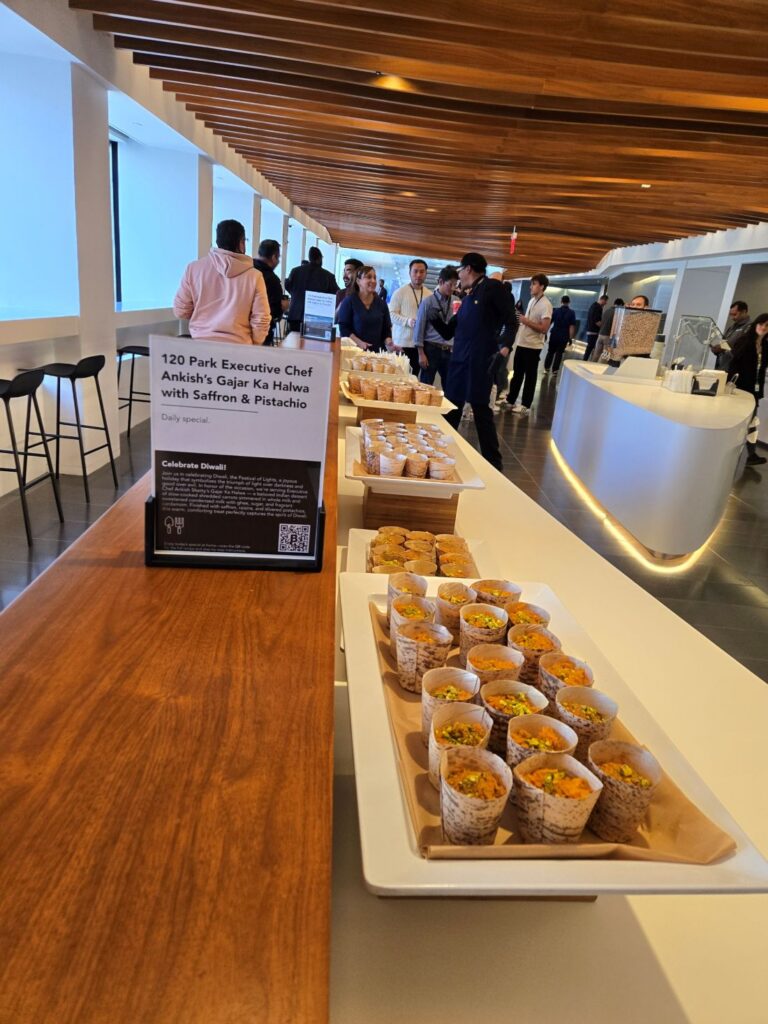
I had just served 2,800 guests at a corporate Diwali celebration across three simultaneous kitchen locations in New York City. Most of the guests were South Asian. Many had grown up eating the dishes I was serving—their mother’s version, their grandmother’s version, the version from the restaurant back home that became the baseline for everything that came after.
That guest’s comment meant the food passed the test that matters most when you serve Indian cuisine to a South Asian diaspora audience: it reminded them of something true.
Why South Asian Diaspora Audiences Are Different
Every multicultural menu carries cultural stakes. But Indian cuisine for a South Asian diaspora audience is a specific category of difficulty that most catering operators underestimate, for one reason: the guests are the experts.
A second-generation Indian-American who grew up eating their mother’s dal makhani every Sunday has a calibrated sensory memory of what that dish is supposed to taste like. They are not evaluating your food against a general idea of Indian cuisine. They are evaluating it against a specific, emotionally loaded personal standard.
I grew up in Mumbai. When I decide whether a dish is authentic enough to put in front of a South Asian audience, I am measuring it against three things simultaneously: the food I ate growing up—street food, home food, celebration food; my mother’s cooking, which is the baseline I still cook toward; and what I learned at Rasoi by Vineet in Geneva, Switzerland, a Michelin-starred Indian restaurant that showed me what Indian cuisine looks like when it is held to the highest possible technical standard.
No recipe can replicate all three. But the discipline of trying to honor all three is what separates food that feels like Indian food from food that merely looks like it.
The Rule: Change the Format, Never the Flavor
The first decision I made when I started executing Indian cuisine at corporate scale was the most important one: I would adapt the format of a dish before I would ever adapt its flavor.
This is not obvious. The instinct in high-volume catering is to make food more accessible—which often means making it milder, simpler, safer. That instinct is exactly wrong for a South Asian diaspora audience. They do not want a safer version of their food. They want their food, delivered in a format that works for the service environment.
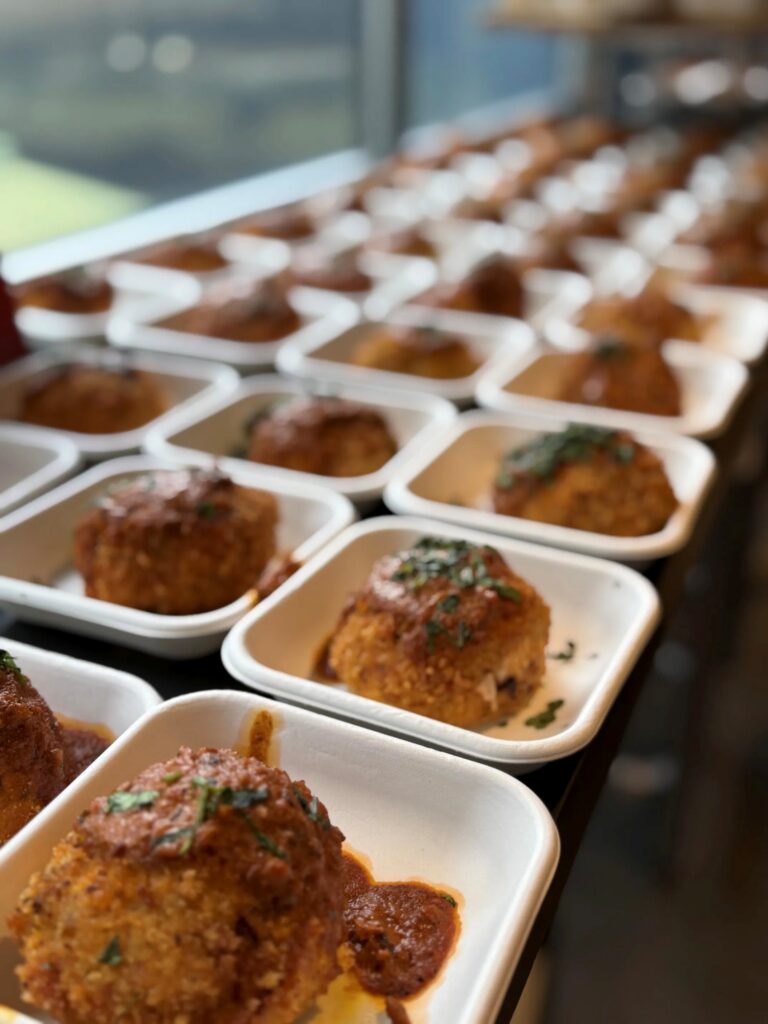
Butter chicken is the clearest example. The traditional dish—a rich makhani sauce, deeply spiced, heavy, sauce-forward—is a logistical nightmare at scale. It does not hold well. It is difficult to portion consistently. At a 2,800-guest event with three simultaneous service points, a sauce-heavy plated dish creates a cascade of problems that no amount of planning fully resolves.
So we made butter chicken bites.
The chicken was marinated in the exact same spice blend I would use for the original dish. The makhani sauce was produced in the same way—bloomed whole spices, reduced tomato base, finished with cream and butter in the right ratios. The flavor profile was not adjusted, not thinned, not made safer. Only the format changed: the chicken was formed into a fried bite-sized portion, served with the sauce as a dip rather than a coating.
A South Asian guest picking up a butter chicken bite at that event tasted butter chicken, not a corporate approximation of it.
Change the format before you change the flavor. Format is a logistical decision. Flavor is a cultural one. Conflating them is where most corporate Indian menus go wrong.
The Biryani Problem: Why Regional Specificity Is Not Optional
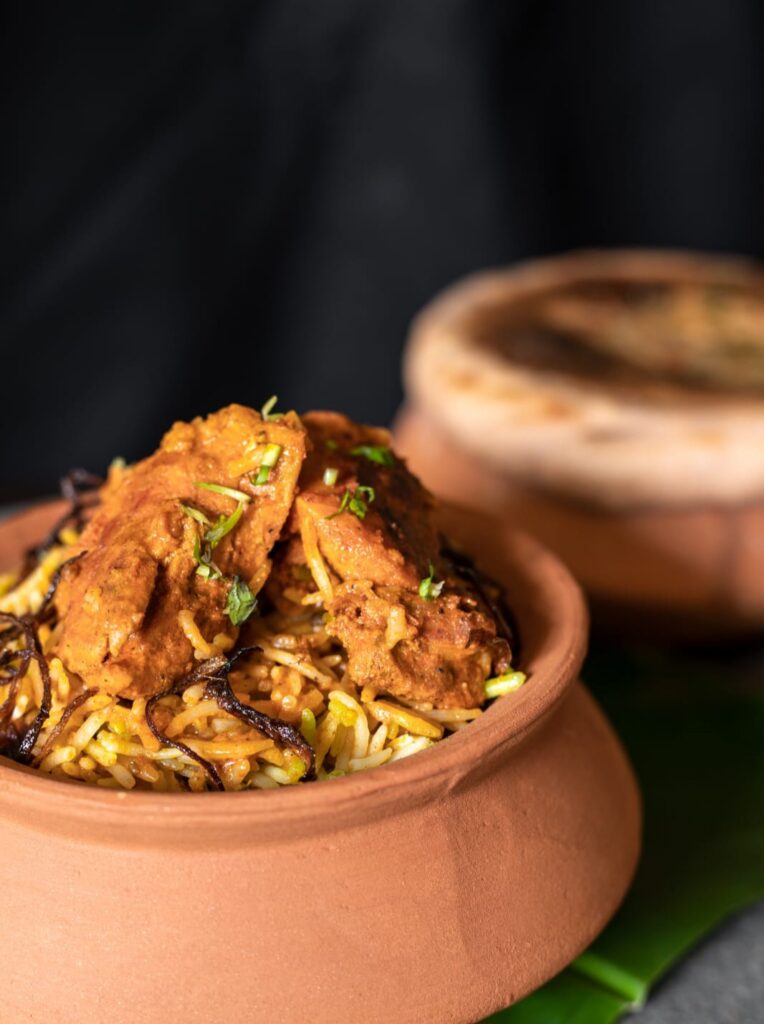
If I had to identify the single-hardest Indian dish to execute correctly for a South Asian diaspora audience at corporate scale, it is biryani. Not because it is technically the most complex—though it is complex—but because no other dish in Indian cuisine carries more regional specificity, and no other dish will be judged more harshly when that specificity is ignored.
Biryani is not one dish. It is a family of dishes with profound regional variation: Hyderabadi biryani is layered and dum-cooked, with a distinct smokiness and a very specific ratio of rice to meat. Lucknowi biryani is more delicate, the rice more fragrant, the spicing subtler. Kolkata biryani has potato in it—a detail that surprises non-South Asian guests and is entirely non-negotiable for guests from that tradition. Bombay biryani, which is what I grew up eating, has a specific combination of fried onions, dried plums and a different heat level.
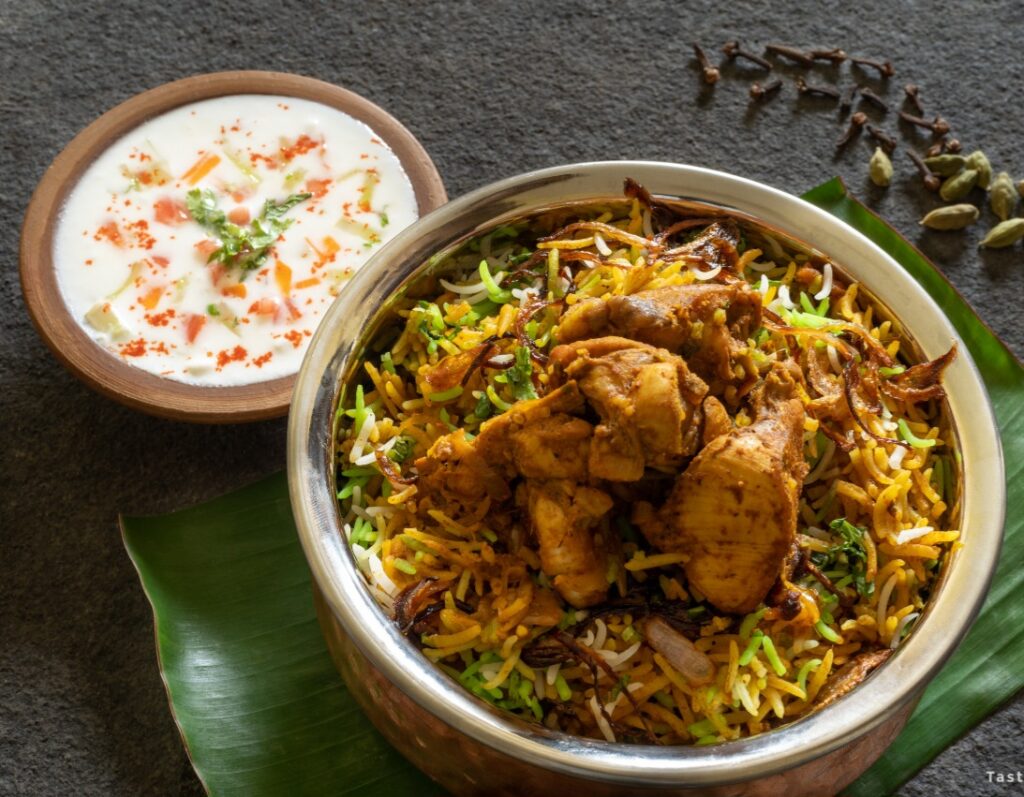
Put any of these on a menu and label it simply “biryani,” and a South Asian guest may tell you it’s not what they expected. Not because your biryani is bad—but because their version of biryani is specific, and the label implies a specificity you have not delivered.
The way I handle this operationally is twofold:
- First, I always specify the regional style on the menu—Hyderabadi biryani, not biryani. This is not just accurate labeling. It signals to the South Asian guests in the room that the food was made with knowledge, not approximation.
- Second, I select the regional style based on the composition of the audience. A corporate Diwali event in New York City with a heavily North Indian guest list gets a different biryani than an event where the audience is predominantly South Indian.
Training a Team That Has Never Cooked These Dishes Before
The most important operational challenge is building systems that allow a team to execute food consistently, even when not every member of that team has grown up eating or cooking the cuisine.
The system I use removes unnecessary judgment and variation wherever possible. Every spice blend is produced in controlled batches at the start of the week and treated as a standardized ingredient. No one adjusts spice ratios during service. The blooming sequence for aromatics is documented step by step, with timing and temperature at each stage. The finish of each sauce—the point at which cream or butter is added, and the heat level at which it happens—is specified precisely, not described in terms of feel.
The goal is that a team member who has never eaten butter chicken at home can execute it to a standard that a guest who has eaten it every week of their life will recognize as right. That is only possible if the system is tight enough that personal judgment cannot introduce variance. The team follows the system, not the feeling. And the system is built on a feeling—mine, developed over years of eating and cooking this cuisine—that has been translated into a structure they can execute.
You cannot ask a team member to feel something they have not experienced. You can build a system that produces the right result without requiring them to feel it. That is the craft of training for multicultural menus at scale.
About the Author
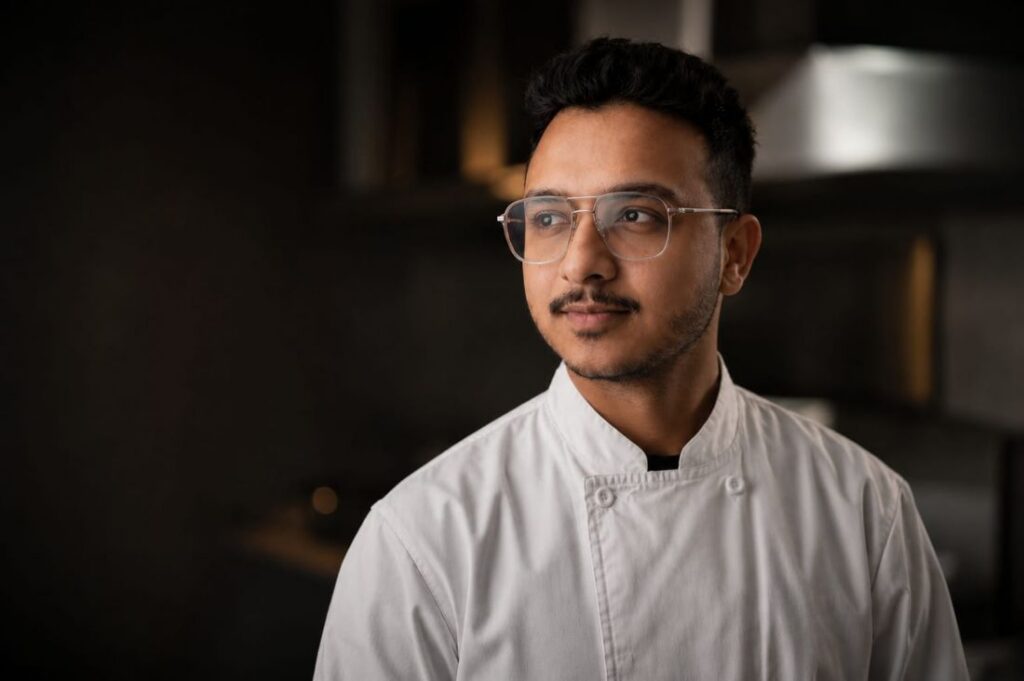
Ankish Shetty is corporate executive chef at Restaurant Associates (Compass Group) in New York City, where he oversees culinary operations for one of the city’s largest institutional dining accounts. Originally from Mumbai, he trained at Rasoi by Vineet—the Michelin-starred Indian restaurant in Geneva and the only ethnic restaurant in continental Europe to hold that distinction at the time—and at the Kempinski Grand Hotel Des Bains in St. Moritz, Switzerland. He serves as a jury member for the FoodInSpace Awards 2026. His work has been featured in Modern Restaurant Management, Restaurant Technology News, Total Food Service, Smart Meetings, Global Indian Magazine, Appetito Magazine and NRI Pulse.
Subscribe to CFE News' twice-monthly newsletter reporting on the business of catering, foodservice and events.