By Sara Perez Webber
On the Caribbean island of Nevis, mangoes are more than a seasonal fruit. They’re part of the landscape, tied indelibly to residents’ memories and, increasingly, the island’s tourism identity.
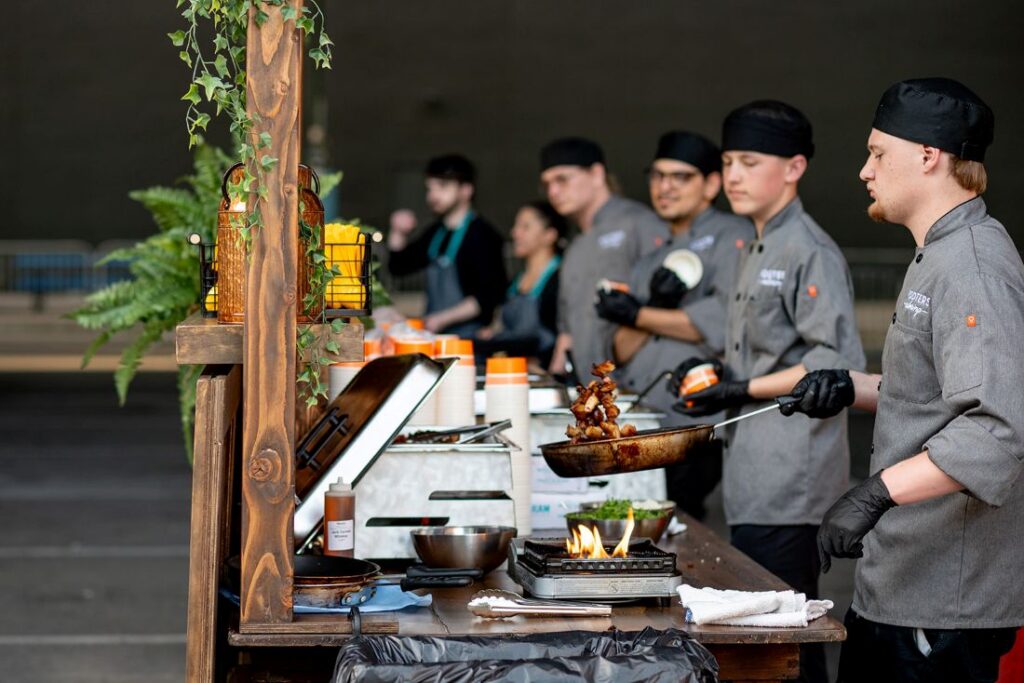
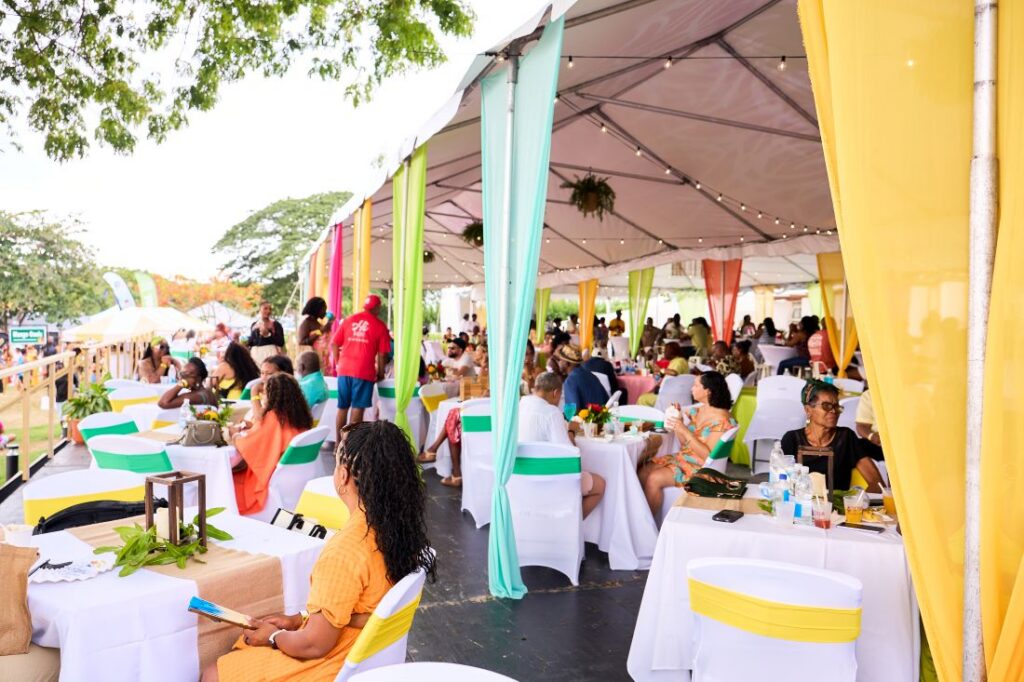
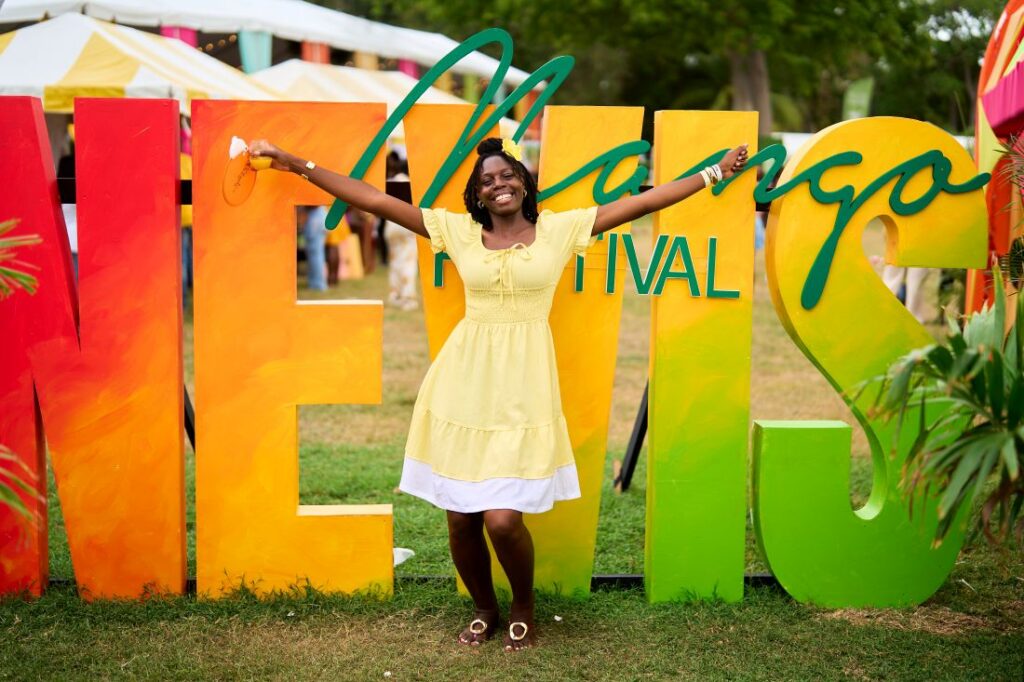
Nevis recently wrapped up its four-day Mango Festival, held annually in July. This year’s celebration was its biggest yet. The signature event—For the Love of Mangoes, which brings together top chefs from across the island—attracted about 5,200 guests, compared to 4,100 last year. That’s an increase of nearly 27%.
“That kind of growth tells us travelers are actively seeking out destinations through the lens of food,” says Andia Ravariere, CEO of the Nevis Tourism Authority. “They’re not just booking a beach vacation anymore—they want a story, a reason to say, ‘I was there for that.’ Food gives them that connection in a way a beach alone can’t.”
For caterers and foodservice operators, the festival offers a useful case study in ingredient-driven experiential dining: Take something distinctive to your region, give guests multiple ways to experience it, and sell the story surrounding it—not simply the food itself.
Turning Local Abundance Into an Attraction
More than 44 varieties of mango grow across Nevis, and they’re not exported; visitors have to travel to Nevis to taste them. “The differences are real, not subtle,” says Ravariere. “Our varieties range widely in size, color and texture, and the flavor differences are part of the fun.”
A decade ago, tourism officials saw an opportunity to capitalize on that abundance: Turn an ingredient already associated with Nevis into a reason to visit the island.
“The team at the time was looking for a way to fill what were traditionally slower travel months for Nevis, and they kept coming back to the same thing: our mangoes,” adds Ravariere. “Almost every Nevisian family has a memory tied to a mango tree. It made sense to build something around a fruit that already meant so much to our people.”
Today, Mango Fest has grown from a local celebration into one of the region’s signature culinary events.
Selling the Story, Not Just the Ingredient
Nevis also demonstrates that ingredient-driven events need more than a themed menu. The festival features chef demonstrations, a food tour, supper club, mixology competition, mango-eating contest, beach-bar crawl with mango-themed cocktails and even a tug-of-war inspired by the rivalry between two beloved varieties, Julie and Amory Polly. Several ticketed events sold out before this year’s festival began.

This year’s festival felt “transformational,” says Ravariere: “We had a headline chef with national recognition in Eric Adjepong, sold-out premium experiences, and a level of community involvement—government, private sector, farmers, chefs, volunteers and sponsors all working together—that reinforced Mango Fest as more than a festival. It’s become a signature tourism product that represents the very best of what Nevis has to offer, and that reputation is what keeps drawing culinary travelers back year after year.”
One Fruit, Many Possibilities
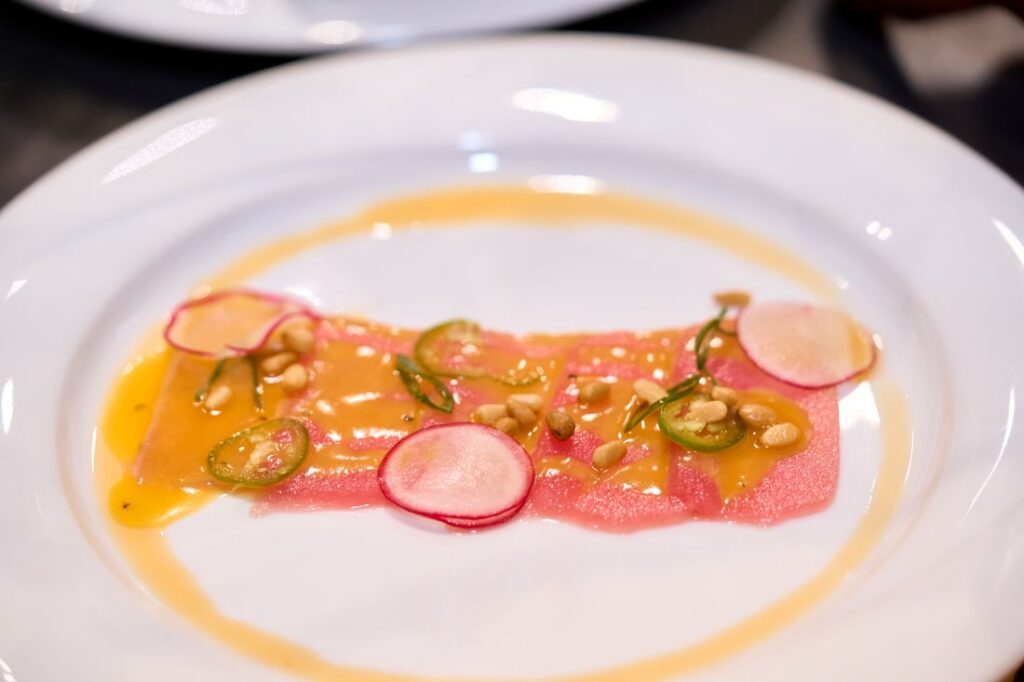
Adjepong—a New York-based chef with Ghanaian roots who appears often on Food Network—developed 10 recipes for the event. His approach demonstrates another useful lesson for caterers: A single ingredient doesn’t have to result in a repetitive menu.

“For me, it starts with understanding the specific mango I’m working with rather than treating ‘mango’ as one universal flavor,” Adjepong says. “A green mango can bring acid and crunch almost like a pickle or citrus; a firmer, semi-ripe mango can be grilled or charred into a salad; a fully ripe mango can become a sauce or glaze.”
Variety matters as much as ripeness, he adds. “In Nevis, the Amory Polly stood out immediately for its sweetness and texture, while the Nano had more complexity and character,” he says. “As a chef, I’m not always chasing the sweetest mango—I’m looking for the one with the right balance, structure and personality for a specific dish.”
Adjepong paired mango with smoke, chile and deeper savory flavors, while incorporating local herbs, seafood and produce to keep the food grounded in Nevis.
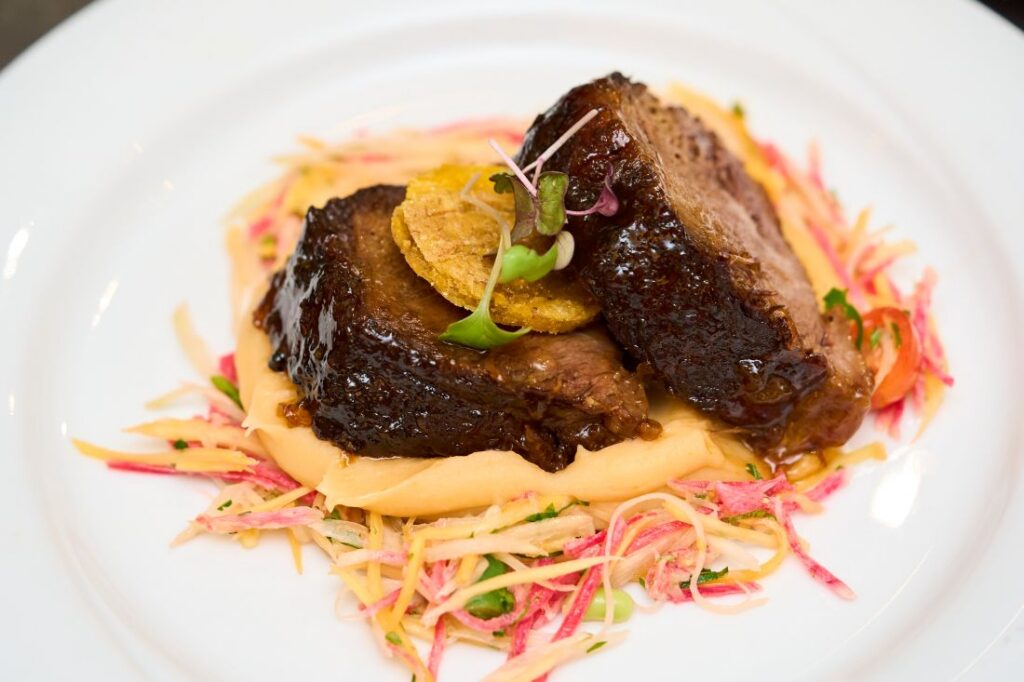
“Mango can behave like several different ingredients, depending on when it’s harvested and how it’s treated,” Adjepong says. “That range lets you build an entire menu without every dish tasting sweet or repetitive.”
Adjepong also points to pickling, fermenting, drying, and turning mangoes into sauces and condiments as ways chefs can extend an ingredient beyond its natural season.
Make the Community Part of the Experience
Perhaps the most important element of the Nevis model is that the festival is built around an entire community—not one headline chef or single venue. This year, 64 local chefs prepared mango-infused dishes, while restaurants, bars, farmers and other businesses participated throughout the island.
“They’re the heart of it,” says Ravariere. “We designed the entire experience to celebrate the full value chain: from the person nurturing the mango tree, to the chef transforming that fruit into something extraordinary, to the local bartenders, entrepreneurs and small businesses who bring the festival to life.”

As Nevis prepares for its next Mango Fest—taking place July 1-4, 2027—it’s also planning an Economy Impact Assessment. “It’s all about economic empowerment,” says Ravariere. “Every mango sold, every dish prepared, every dessert served, every room occupied, every car rented, creates a ripple effect through our economy.”
Nevis’s celebration of a homegrown product is clearly bearing fruit—and demonstrates how to turn a local specialty into a culinary experience that keeps guests coming back for more.
Subscribe to CFE News' twice-monthly newsletter reporting on the business of catering, foodservice and events.