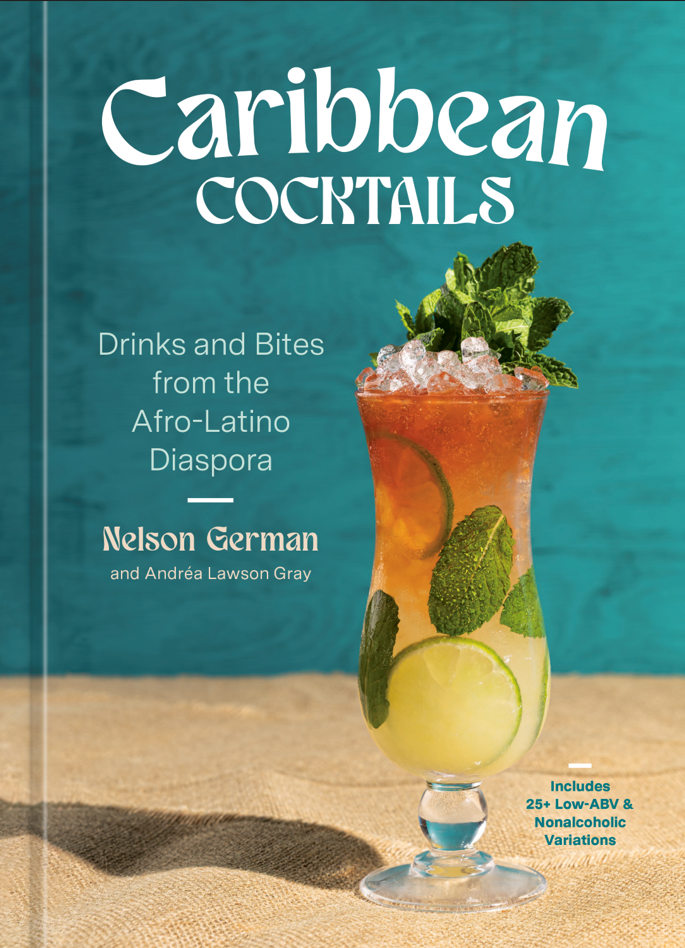
Reprinted with permission from Caribbean Cocktails: Drinks and Bites from the Afro-Latino Diaspora. Text copyright © 2026 by Nelson German. Photographs copyright © 2026 by Eduardo Gonzalez. Illustrations copyright © 2026 by Fanesha Fabre. Published by Ten Speed Press, an imprint of the Crown Publishing Group, a division of Penguin Random House LLC, New York.
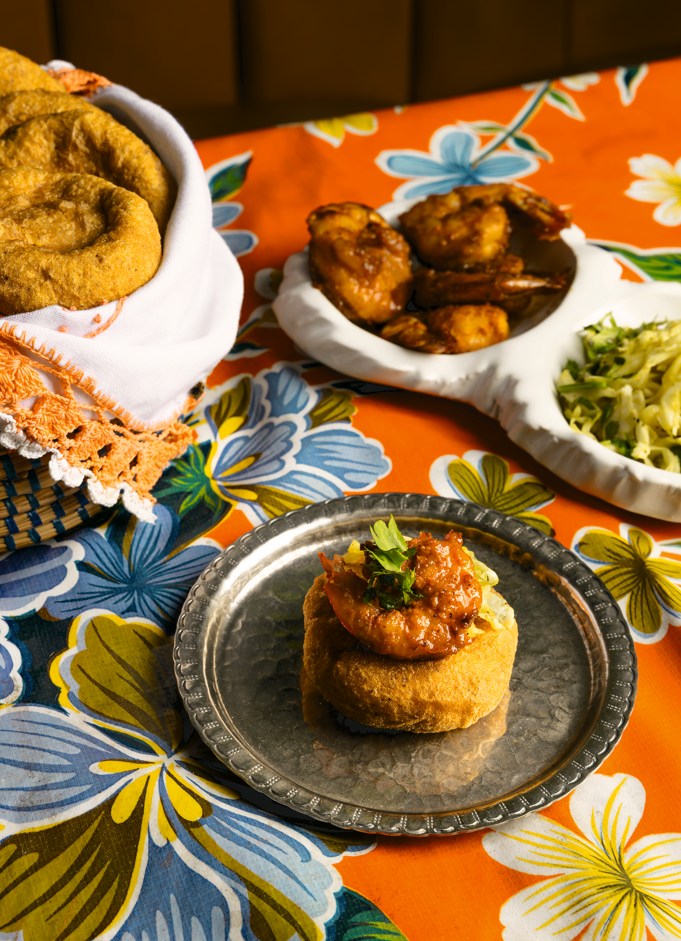
Dominican arepas trace back to the foodways of the Taíno, Indigenous peoples who inhabited present-day Dominican Republic. Unlike South American versions, which are typically savory, griddled and split for fillings, the true Dominican arepa is a sweet, pan-baked cornmeal cake, sliced like bread and often served for holidays. Here, I reimagine the arepa as a savory, bite-size base for honey-garlic shrimp—a fusion of Dominican flavor and South American form. Ripe plantains in the dough nod to the cake’s original sweetness, creating a dish that blends memory, texture and flavor.
Makes 24 (1-ounce) arepas, or 8 servings

Chef’s Note: Different brands of masa harina absorb water differently; adjust the amount of water as needed if not using the Masienda brand. Shaping masa takes practice. Be patient if you’re unfamiliar with the technique—you’ll improve over time.
INGREDIENTS
Plantain Masa Arepas
½ ripe plantain, peeled and chopped
2 ½ cups (300g) masa harina (preferably Masienda brand)
2 ¼ teaspoons kosher salt
1 ½ cups warm water, plus more as needed
Vegetable oil, as needed
Chile-Lime Aioli
1 cup mayonnaise
Zest and juice of ¼ large lime
½ teaspoon sriracha
⅛ teaspoon cayenne pepper
Pinch of kosher salt
Pickled Cabbage
¼ cup apple cider vinegar
1 tablespoon honey
Zest and juice of 1 orange
Zest and juice of 1 lime
⅛ teaspoon ground black pepper
1 cup shredded cabbage
2 tablespoons chopped cilantro
Honey-Garlic Shrimp
Vegetable oil, as needed
¼ cup chopped garlic
1 pound medium shrimp (30 to 40), peeled and deveined
1 tablespoon Dominican sazón (preferably Loisa brand)
2 teaspoons kosher salt
1 teaspoon black pepper
2 tablespoons honey
Special equipment: Food processor
METHOD
Prepare the plantain masa arepas: Bring 1 quart of water to a boil in a small saucepan over high heat. Add the plantain and cook until fully tender and soft, 2 to 5 minutes; drain well. Transfer the plantain to a food processor and puree until smooth, then set aside to cool.
In a large bowl, combine the masa harina and salt and mix thoroughly. Slowly pour in ¾ cup of the warm water, kneading with your hands until the mixture forms a cohesive dough. Incorporate the plantain puree, then gradually add the remaining ¾ cup warm water, continuing to knead until the dough is smooth and the ingredients are evenly combined. If the dough feels too dry, add water as needed until it reaches the ideal consistency. Divide the dough into 24 equally sized portions, roll into balls, and cover with a damp kitchen towel to prevent them from drying out.
Make the aioli: In a small bowl, whisk together the mayonnaise, lime zest, lime juice, sriracha, cayenne pepper and salt until smooth. Cover and refrigerate.
Make the pickled cabbage: In a medium bowl, combine the apple cider vinegar, honey, orange zest and juice, lime zest and juice, and black pepper. Stir until the honey dissolves completely, then add the cabbage and toss until fully coated. Fold in the cilantro and let marinate in the refrigerator for at least 15 minutes before serving.
Prepare the shrimp: Set a large skillet over medium-high heat and add enough vegetable oil to coat the surface. Add the garlic and shrimp, sauteing for 1 to 2 minutes, until the shrimp turn opaque on each side and are partially cooked. Sprinkle in the sazón, salt, cayenne pepper and black pepper, stirring to combine and evenly coat the shrimp. Add the honey and continue cooking for 3 to 4 minutes, until the shrimp are fully cooked and glazed. Remove from the heat and set aside.
Cook the arepas: Flatten each masa ball into a disk about 1 ½ inches in diameter and ¼ inch thick. Heat a comal or nonstick skillet over high heat, with just enough vegetable oil to lightly coat the surface. Working in batches, cook the arepas for 20 to 30 seconds per side, until the surface is dry and lightly set with just a hint of browning. Remove from the heat and gently pinch the edges of each arepa upward to form a shallow rim, like a mini tart shell. (If they’re too hot to handle, use a small spoon to shape the edges.) Add more vegetable oil to the skillet and set it over medium-high heat. Return the pinched arepas to the skillet, frying for about 1 minute per side, until golden and crispy. Transfer to a paper towel-lined plate.
Assemble: Fill each arepa with a tablespoon of shrimp, top with pickled cabbage, and drizzle with chile-lime aioli. Serve immediately.
To store arepas: Cooked arepas should be cooled completely before storing. To refrigerate, place in an airtight container or resealable plastic bag, and store for up to 3 days. To freeze, arrange arepas in a single layer on a baking sheet and freeze until solid, then transfer to a freezer-safe bag or container and keep frozen for up to 3 months. Reheat from frozen by toasting or pan-frying until warmed through.
To store aioli and cabbage: Refrigerate chile-lime aioli for up to 5 days, and pickled cabbage for up to 1 week, both in airtight containers. Stir the aioli before using.
Subscribe to CFE News' twice-monthly newsletter reporting on the business of catering, foodservice and events.