By Sara Perez Webber
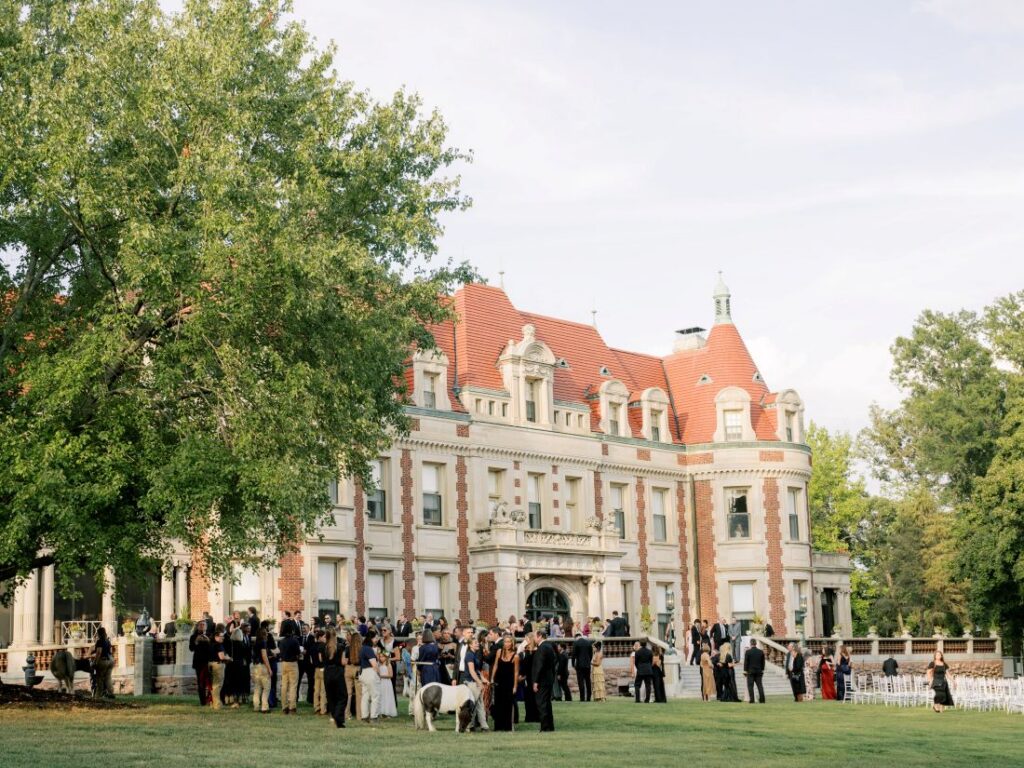
As Butler’s Pantry celebrates its 60th anniversary, the St. Louis catering company is honoring the family vision that launched it while relying on a new generation of leaders to shape what comes next.
Founded in 1966 by Richard L. Nix Sr. and his wife, Anita, Butler’s Pantry began with the couple’s dream of bringing creative, innovative catering to the community they called home. Today, under the leadership of their son, Richard Nix Jr., the company employs more than 300 people, operates three exclusive venues and holds preferred-caterer status at more than 40 venues across the St. Louis area.

Helping guide that continued growth is a senior management team in which women hold eight of 11 positions, including key roles overseeing sales, operations and culinary development.

CFE News recently spoke with three of those leaders: Coleen Donovan, vice president of sales and catering; Ciara Johnson, vice president of operations; and Samantha Pliler, chef de cuisine.
Their perspectives offer three practical lessons for catering companies hoping to build a lasting legacy like Butler’s Pantry’s.
Lesson 1: Ask for—and Be Receptive to—Client Feedback
Donovan joined Butler’s Pantry in 2015, shortly after graduating from college. Although she had completed event internships, she had never worked in catering or foodservice.
Since then, she notes wryly, “I have made catering and event execution the majority of my personality.”

Over the past 11 years, Butler’s Pantry has executed more than 22,000 full-service events. Donovan estimates that she has served as the client point of contact for approximately 10% of them.
“So much of my event growth has been due to repeat clients,” she says. “It is really special to be able to celebrate with so many of the same individuals and companies over the last decade-plus.”
Be Willing to Pivot
Those longstanding relationships have taught Donovan that growth depends on more than continually introducing new menus and event concepts. Caterers also need to determine whether their ideas are delivering what clients actually want.
“Ask your clients for, and be receptive to, feedback,” she advises. “We are always churning out new event and menu ideas, but if they are not making the right impact for our clients, we need to pivot.”

Donovan describes Butler’s Pantry as “a small army,” giving the company the capacity to collaborate on a single large-scale event or execute numerous special events on the same day. “The volume of business we can execute—and execute well, at one time—gives us an exceptional position in our market, she says. Looking ahead, Donavan sees opportunities for growth through additional exclusive-venue partnerships and an expanded specialty-rentals division.
Lesson 2: Plan for Obstacles Before They Occur
Johnson joined Butler’s Pantry nine years ago as an event manager before finding her home in operations.
She was drawn to catering because many of her favorite childhood memories centered on culinary experiences, and she wanted to help create similarly meaningful moments for others.
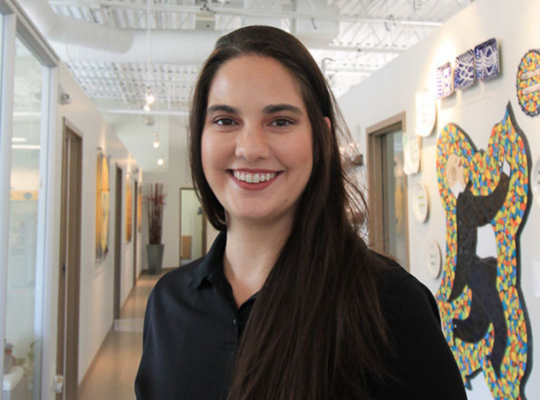
Today, Johnson’s department manages Butler’s Pantry-operated spaces, a fleet of 13 vehicles, and a rental warehouse containing everything from ovens, warmers and grills to tables, chairs, china, flatware and glassware.
The operations team also participates in site visits and pre-planning meetings for elaborate events, collaborating across departments to make the client experience—and the on-site team’s work—as seamless as possible.
“The operations department thrives because of their ability to problem-solve when curveballs are thrown and their willingness to step in wherever needed to ensure the client’s vision comes to life,” she says.
Ask and Answer the “What If” Question
The department’s mantra is “What if…”—a question that encourages the team to anticipate challenges before they reach the event floor. Clients aren’t aware of all the behind-the-scenes prep “but they trust us with their event and know that we will stay one step ahead of anything that could be thrown our way!”

Johnson’s focus on preparation also extends to the support she provides employees.
“The work that I do one-on-one with each of my team members to promote growth in their work and personal lives is what makes me most proud,” she says. “Being able to give my team the resources they need to get to the next level in all facets of their lives has easily been my most gratifying experience.”
Lesson 3: Preserve Tradition While Creating What’s Next
Pliler joined Butler’s Pantry two-and-a-half years ago after transitioning from the restaurant world into catering. After six years in the catering industry, she says she has found her favorite niche in the culinary industry “by far.”
“I love the creativity involved, and above all I love being a part of people’s celebrations,” says Pliler. “In a restaurant, you never quite know what kind of guest will walk through the door…my favorite thing about catering is that we are a part of making people’s special moments that much more special!”
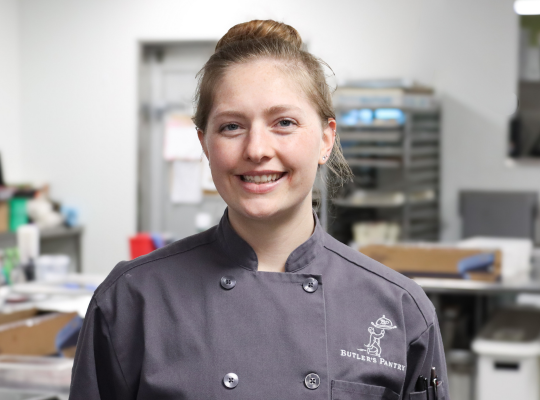
Pliler says she is most proud of the creativity and refinement she has brought to an already successful culinary operation.
“I came into a well-oiled machine producing really yummy food where there was not always the time to get creative, and was given the bandwidth to bring in exciting flavors and techniques,” she says. “With fine dining experience in combination with catering experience, I have been able to see the places where we can level things up a little bit and make the guest experience that much more unforgettable.”
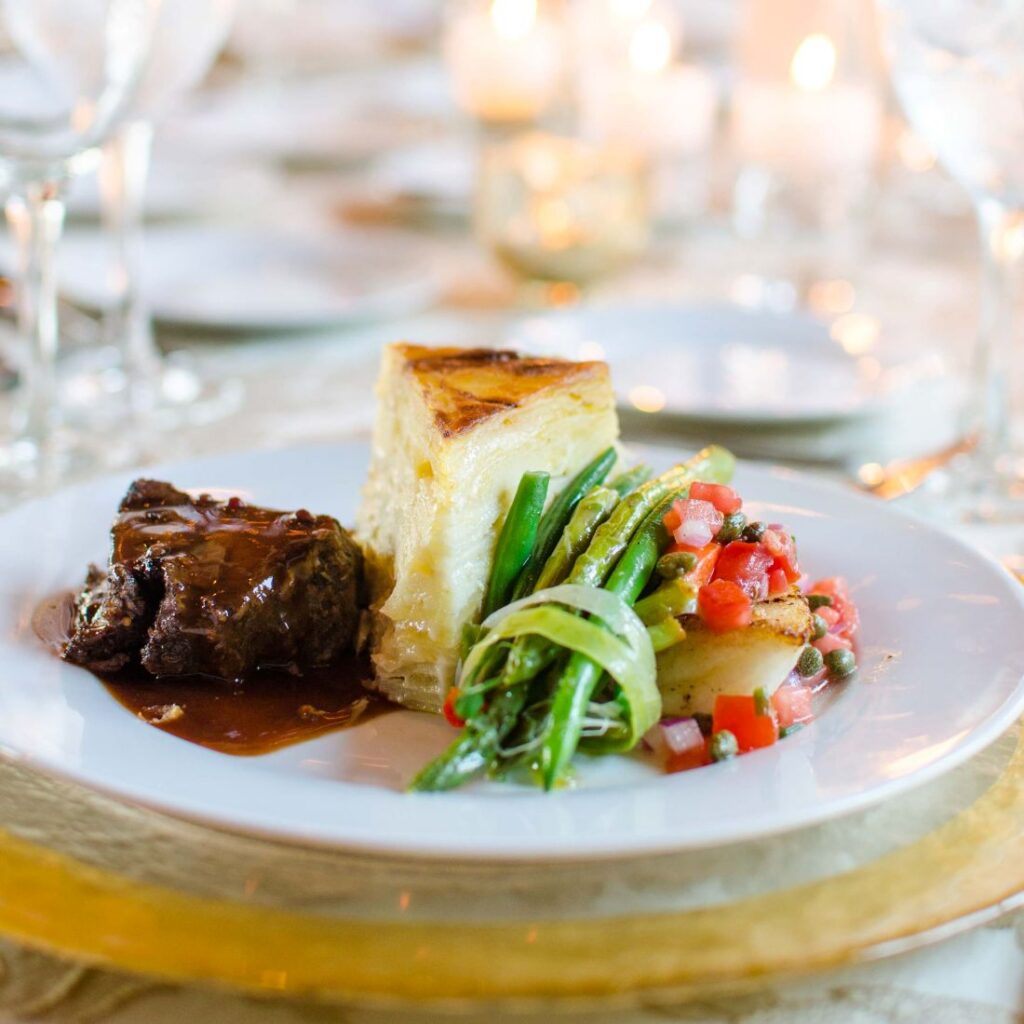
Innovation, however, does not require discarding everything that came before it. Certain Butler’s Pantry traditions remain firmly in place, including its beef tenderloin marinade and potato pavé.
“They are yummy and popular, and I think if we ever changed them, we’d get quite the pushback,” she says.
Themed Stations That Delve Deeper
At the same time, Pliler is excited about new themed stations designed to provide guests with “a more immersive authentic experience of a given cuisine as opposed to just a surface-level taste.” Station concepts in development include one that distinguishes between northern and southern Indian cuisine, “A Passport to Italy,” “British Tea Time,” “Parisian Tour” and an exploration of Southeast Asian cuisine.
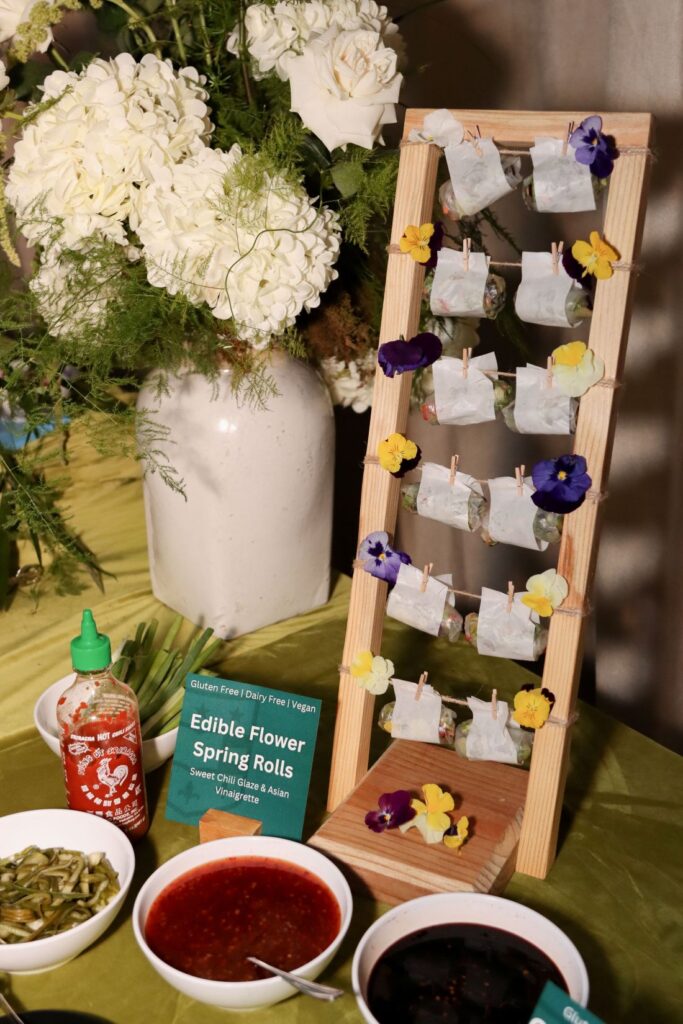
Pliler emphasizes building up flavors in each component of a dish “as opposed to relying on a large number of components to provide the ‘wow’ factor.”
Executing ambitious food concepts off-site also requires practical preparation. Pliler credits the professionalism of Butler’s Pantry team members, who can turn creative ideas into executable experiences.
“I could have a million good ideas, but it is our incredible team—both at the commissary and on site—that is willing to run with a funky idea and go through the extra training when needed,” says Pliler. “They create the finesse that brings those memorable experiences to life.”
Subscribe to CFE News' twice-monthly newsletter reporting on the business of catering, foodservice and events.