By Alexus Medina, director of product management at Sabert
It’s been another strong year across the catering world, and the industry is feeling increasingly optimistic heading into 2026. In fact, the sector is expected to grow at a compound annual growth rate of 7.7% from 2023 to 2030. That’s the kind of consistent uptick anyone in the catering space should be thrilled to see.
In addition to events, workplace catering saw promising growth from 2024 to 2025. As more companies go back to the office, complimentary meals are becoming an important perk for employee retention and satisfaction.
At the same time, consumers are also using catering in non-traditional ways. Some are buying catered meals and using them to meal prep for the week. Others are turning to drop-off catering options for small gatherings, such as game days or birthday parties. Foodservice establishments, including fast casual and quick-service restaurants, have expanded their catering offerings to align with these new consumer habits and better serve smaller groups. For example, Chipotle launched “Build-Your-Own Chipotle,” which serves four to six people and “brings the customizable Chipotle experience to guests’ homes.”

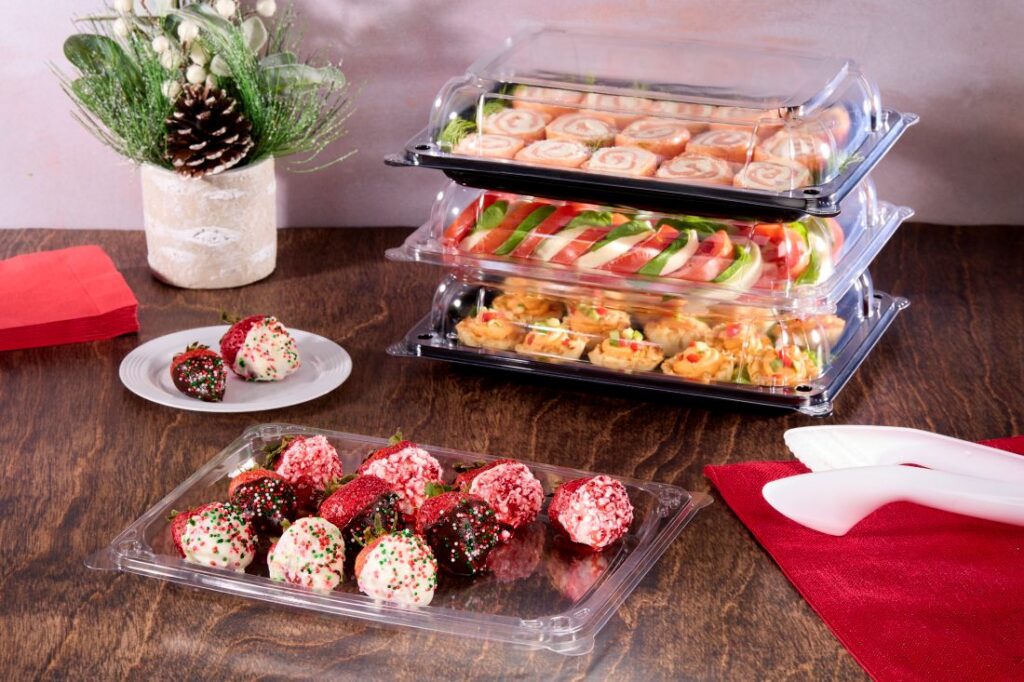
As catering evolves, packaging continues to play a critical role in the customer experience. From food safety and performance to waste reduction and circularity, packaging is a way foodservice establishments can elevate their catering offerings. In 2025, we saw several innovations in food packaging, and we anticipate these trends will continue to expand in 2026.
4 Key Packaging Trends for 2026
1. Sustainability is table stakes
Sustainability has been a hot topic in food packaging for the past few years, and that trend is expected to continue. Consumers seek sustainable options, and it’s no longer a nice-to-have; it’s a must. Especially with the higher price point of full-service catering, consumers expect those experiences to have sustainability built in.
Packaging suppliers are increasingly focused on innovation that doesn’t sacrifice practical needs—like freshness, waste reduction and compliance—for sustainable materials. Post-consumer recycled (PCR) content and PET (polyethylene terephthalate) gained interest in 2025 because PCR’s circularity and PET’s high recyclability make them attractive options for caterers. We’ll continue to see packaging suppliers integrate these substrates into their catering offerings in 2026.
2. Focus on packaging end of life
This past year, the focus for packaging was on the beginning of life—incorporating sustainable materials like PCR and PET. Heading into 2026, it’s going to be all about end of life. Driven by a mix of consumer demand and legislation, including Extended Producer Responsibility (EPR), there is heightened awareness around supporting a circular economy by choosing products that are recyclable or compostable.
To meet these needs, caterers have the opportunity to connect the dots by clearly communicating to customers how to dispose of the packaging properly. As more EPR regulations are implemented, we expect to see greater adoption of sustainable packaging in catering applications.

3. Paperization and personalization
Paper packaging has started to gain popularity in catering as it offers sustainability and recycling benefits, not to mention its ability for customization. Products like paper pop-up trays and lunch boxes offer a blank canvas for printing custom designs—from branding to eye-catching colors or graphics. This customization allows operators to deliver a branded experience at any location, whether it’s a consumer’s home, office or tailgate spot. There’s also an opportunity for operators to drive further consumer engagement with their brand through QR codes printed on catering packaging that direct users to the operator’s website or social media. Branded, engaging catering packaging will continue to gain traction moving into 2026.
4. Serving up shareable moments
We saw nontraditional uses of catering pick up in 2025, and nowhere was that more apparent than in event-based catering packages driven by partnerships. Look at “The Taste of the Masters,” a home catering box of the classic concessions from the Augusta National Golf Club, which brought the world-famous tournament tastes directly to consumers even if they couldn’t score a ticket. Quick-service operators have leveraged strategic partnerships with sports leagues, such as the NFL, to create special party boxes featuring team logos, thereby bringing spirit to watch parties. In 2026, caterers and foodservice operators will continue to take advantage of strategic partnerships to create unique experiences and shareable moments for consumers.

Satisfying Consumers with Craveable Packaging
From expanding drop-off offerings to non-traditional uses of catering meals, the catering industry has a lot of momentum heading into 2026. For caterers and foodservice operators looking to capitalize on the growing popularity of catering, partnering with an innovative packaging supplier is going to set them apart from the competition.
The most advanced packaging suppliers are proactively expanding their sustainable product lines for catering uses, while maintaining quality and performance. They’re also pushing the boundaries of personalization and interactive packaging solutions that make catering more than a meal and turn it into a memorable experience. At Sabert, we’ve introduced more PCR and PET catering options and have expanded our pulp and paper products to help caterers deliver the sustainable, high-performing and customized experiences consumers crave.
About the Author

Alexus Medina is director of product management at Sabert Corporation, a global leader in innovative and sustainable food packaging solutions. In her role, she works with customers to create a suite of packaging options to suit their foodservice needs.
Subscribe to CFE News' twice-monthly newsletter reporting on the business of catering, foodservice and events.