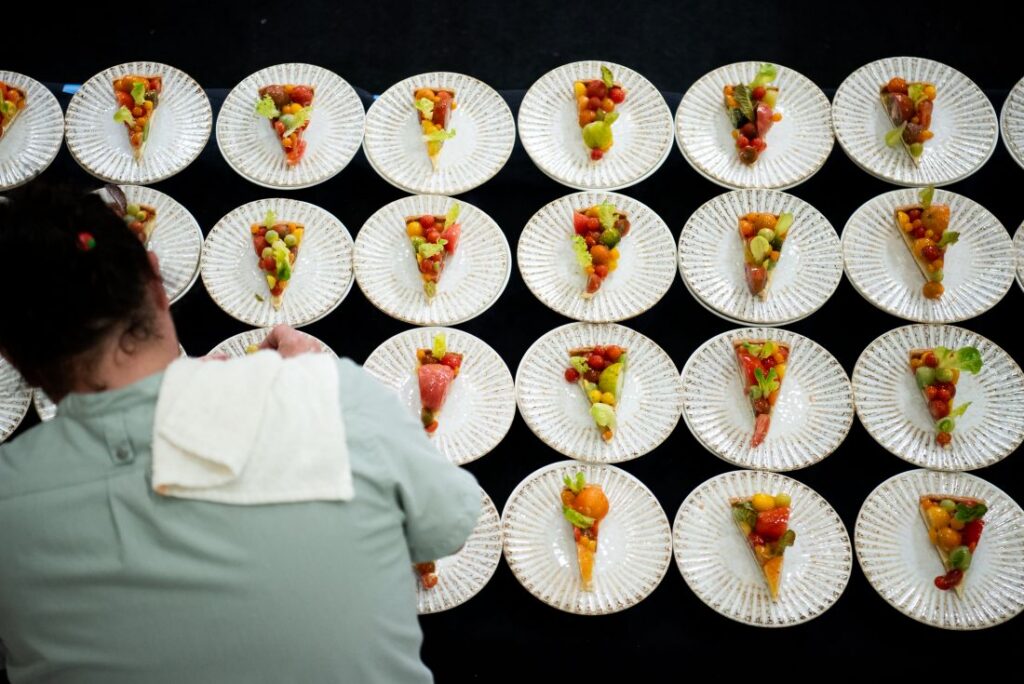
Caterer: Landmark Experiences
Venue: William H.G. FitzGerald Tennis Center, Washington, D.C.
Overview: What does it take to feed more than 80,000 guests, athletes, media and VIPs at one of the oldest and most prestigious tennis tournaments in the U.S.? For Landmark Experiences, the feat involved careful advance planning and thoughtful collaborations with local standout chefs.

Last July, Landmark Experiences delivered the robust F&B program at the Mubadala Citi DC Open. A newly launched initiative from Elior North America’s Dining & Events, Landmark specializes in large-scale, high-profile events and brings together sister brands including Constellation Culinary Group, Abigail Kirsch and Design Cuisine.

Landmark Experiences’ culinary management of the eight-day tournament included:
- High-volume concessions with streamlined menus, efficient ordering and strategically placed service points to keep lines moving during peak match windows.
- Premium lounges and sponsor suites requiring elevated, high-touch hospitality, including custom plating, curated beverage programs and flexible service formats tailored to partner expectations.
- Athlete dining and back-of-house support, featuring performance-oriented menus, rapid replenishment and adaptable serving windows tied to unpredictable match schedules.
- Satellite kitchens and mobile prep hubs to reposition labor, equipment and product quickly across the grounds—critical when matches ran long or crowd flow shifted.
- Temporary infrastructure buildouts such as refrigeration, dry storage, beverage stations and mobile dishwashing to support consistent execution across all service zones.
- A multi-layered staffing strategy, combining seasoned Landmark personnel with trained temporary staff and supported by on-site leads.
- Robust safety and compliance protocols,including hazard training, allergen awareness and fire-safety procedures aligned with tournament and county requirements.
- Detailed service mapping and guest-flow forecasting to anticipate congestion points and adapt layouts as attendance patterns evolved throughout the day.

Menu Highlights: To bring local flavor courtside, Landmark collaborated with such celebrated regional chefs as José Andrés, Michael Rafidi, Jeremiah Langhorne and Patrick O’Connell. Each contributed dishes that reflected their culinary style while remaining practical for high-volume service.
“One standout collaboration was an artisanal pasta dish developed with Chef Nicholas Stefanelli from Masseria that balanced culinary creativity with scalable execution,” said Shannon Shaffer, vice president of operations at Landmark Experiences. “From the earliest planning stages, the dish was designed to maintain quality and consistency under volume. Similar elevated offerings, such as composed bowls and refined sandwiches, were the result of months of collaborative development, testing and refinement to deliver VIP-level cuisine at scale.”

Takeaway Tips from Shannon Shaffer, Vice President of Operations at Landmark Experiences:
Plan Service Layouts Around Guest Flow
“Every service point is intentionally placed through the lens of operational flow and guest experience,” says Shaffer. “We analyzed projected foot traffic patterns and menu popularity to deploy multiple, strategically spaced service stations across the venue. This approach minimized wait times while ensuring safe and seamless guest circulation, avoiding choke points and maintaining open egress paths.”
Anticipate Congestion by Mapping the Full Guest Journey
“Our experience in large-scale event logistics allows us to anticipate pressure points before they arise,” adds Shaffer. “At the Citi Open, we mapped the full guest journey from entry to dining zones using prior event data alongside real-time observations. We identified high-density intersections near lounge transitions and proactively rerouted service traffic, adjusted signage and opened alternate access points. Our teams are trained to adapt in real time, ensuring operational safety while preserving the guest experience.”

Subscribe to CFE News' twice-monthly newsletter reporting on the business of catering, foodservice and events.