By Sara Perez Webber
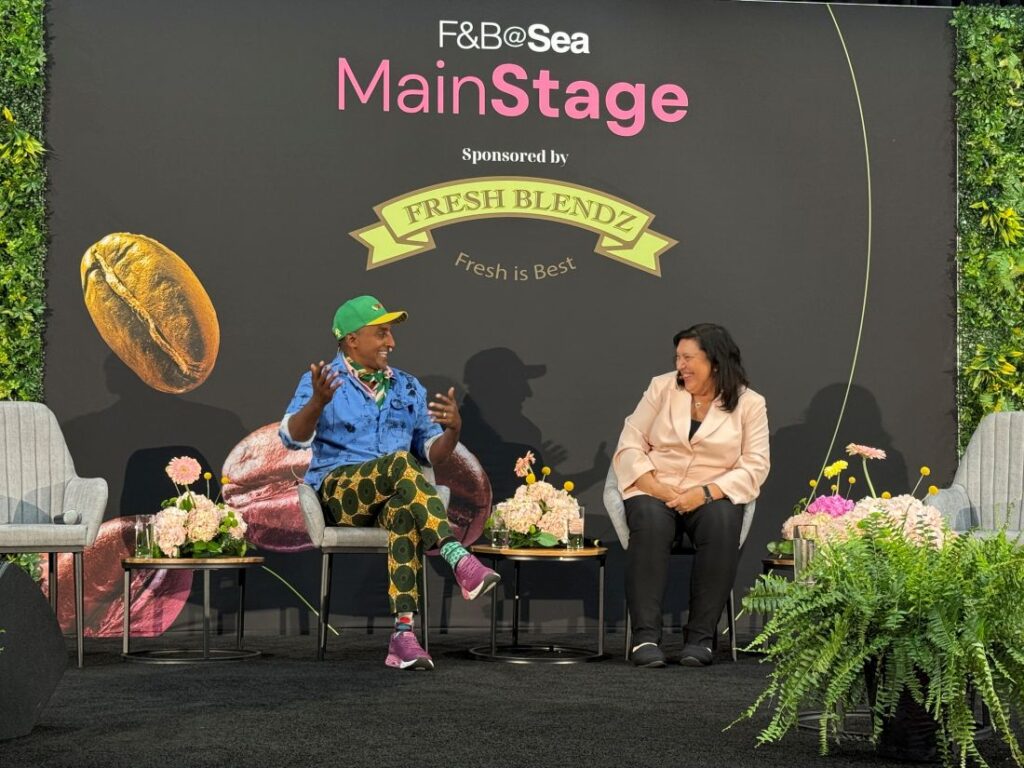
At F&B@Sea, celebrity chef Marcus Samuelsson emphasized a point that every chef, caterer and hospitality professional understands: food is never just food. It is memory, identity, discipline, discovery and connection.
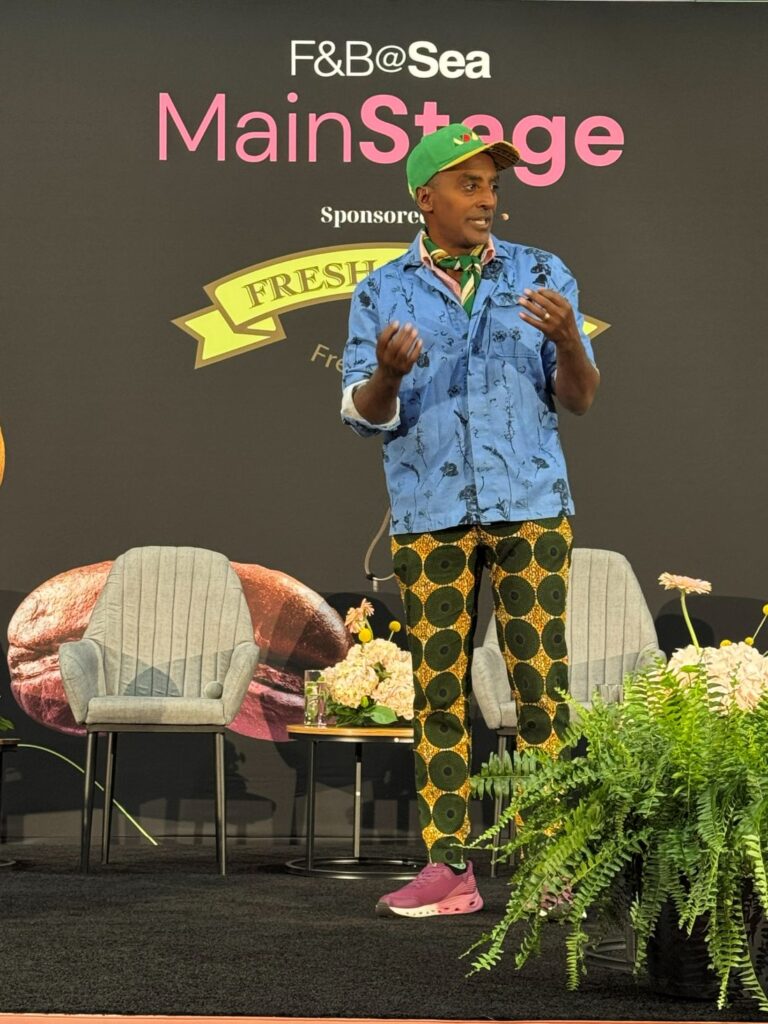
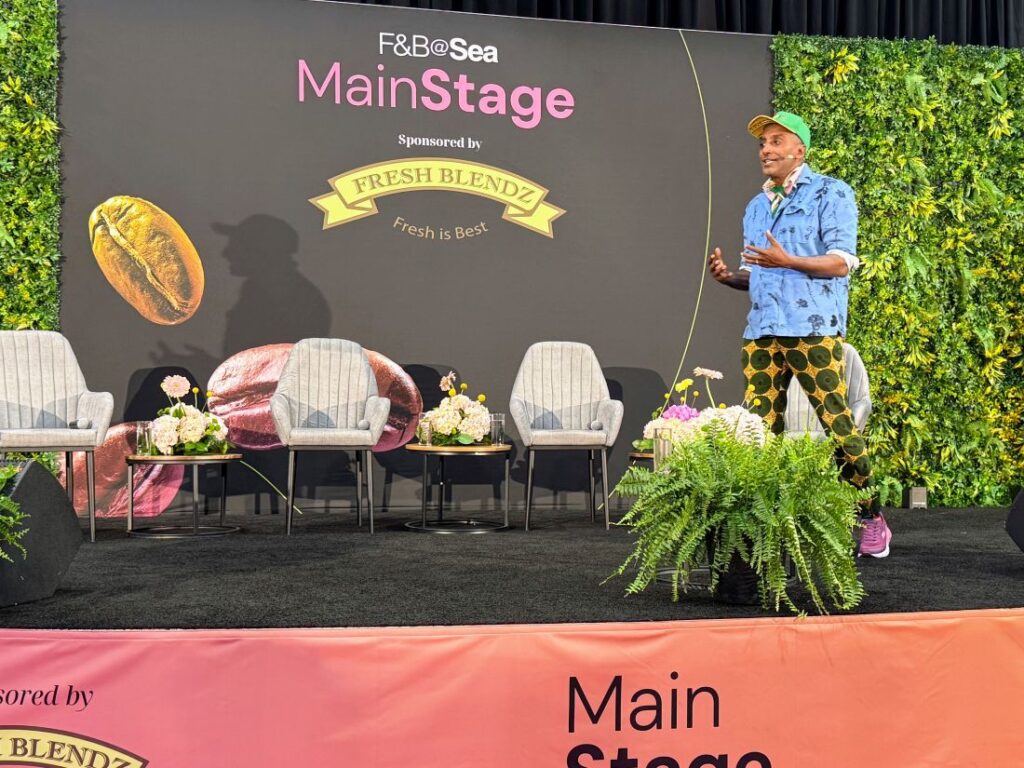
Samuelsson spoke on the main stage in April at the Miami conference, which brings together the global cruise F&B community.
In a conversation that touched on his childhood in Sweden, his early work aboard cruise ships, his global restaurant career and the role of storytelling in modern dining, Samuelsson reminded the audience that every culinary professional carries an origin story—and that the best food experiences are rooted in authenticity.
“Every single person here has an origin food story,” Samuelsson said, noting that his own story blends being Ethiopian, American and Swedish. “As a chef, you actually get the opportunity to express it.”
An Origin Story Rooted in Sweden
For Samuelsson, that story began with his grandmother’s cooking in Sweden, where local, seasonal, close-to-the-source food was simply the way people ate.
“My grandmother [was] cooking farm-to-table way before there was farm-to-table,” he said, recalling a coastal childhood built around fishing and home cooking.
But Sweden, he said, was only the beginning. To grow as a chef, he knew he had to travel—marveling that he could get paid to discover the world while doing something he loves. That desire took him first through Europe and eventually to the cruise industry, where he worked aboard Seabourn as a young chef. The experience, he said, changed how he understood food, culture and the pace of professional kitchens.
The Ship as Culinary Classroom
Samuelsson spoke with real affection for the ship’s galley, describing it as one of the most demanding and disciplined environments in hospitality. The work was relentless, the standards high and the learning curve steep. But for those willing to absorb it, the lessons were invaluable.
“I think everyone who is in hospitality should do one contract on a cruise ship just to get to know it, because you learn so much,” he said.
Samuelsson credited those early shipboard experiences with expanding not only his palate, but also his sense of what hospitality could be.
Discovering Culture Through Cuisine
Moving from port to port, he was exposed to flavors and foodways that stayed with him. He remembered tasting local dishes in Singapore, Mexico and other ports, and learning from the multinational crews who cooked and ate together below deck.
“Going port to port to port really transformed my mind,” he said.
For today’s operators, Samuelsson said the opportunity—and the challenge—is to remain curious. Guests are more knowledgeable than ever, thanks to food media, travel, social media and their own increasingly adventurous palates. That has raised expectations across the industry, including aboard cruise ships.
“The most important thing for a chef is to stay curious about flavors, and to be totally open to flavors,” he said.
Today’s Guests Want More Than a Meal
He also emphasized that diners are not only seeking new flavors; they are seeking stories. They want to understand where dishes come from, who made them and what traditions they carry.
“The world is more diverse than ever,” he said. “The world wants to hear more food stories, not less food stories.”
That storytelling, he suggested, must be rooted in respect. Whether drawing from Ethiopian, Swedish, American, Filipino, Mexican or Caribbean influences, the goal is not novelty for novelty’s sake. It is connection.
For chefs and operators looking for practical advice, Samuelsson’s closing message was simple but useful: keep looking, keep tasting and keep stepping beyond the obvious.
“Be curious, right? And stay hungry,” he said. “Get off the beaten path a little bit.”
In an industry built on feeding people well—at sea or on land—Samuelsson’s address was a reminder that the best hospitality professionals are not just technicians. They are translators of culture, collectors of experience and lifelong students of flavor.
Subscribe to CFE News' twice-monthly newsletter reporting on the business of catering, foodservice and events.