By Deanne Moskowitz
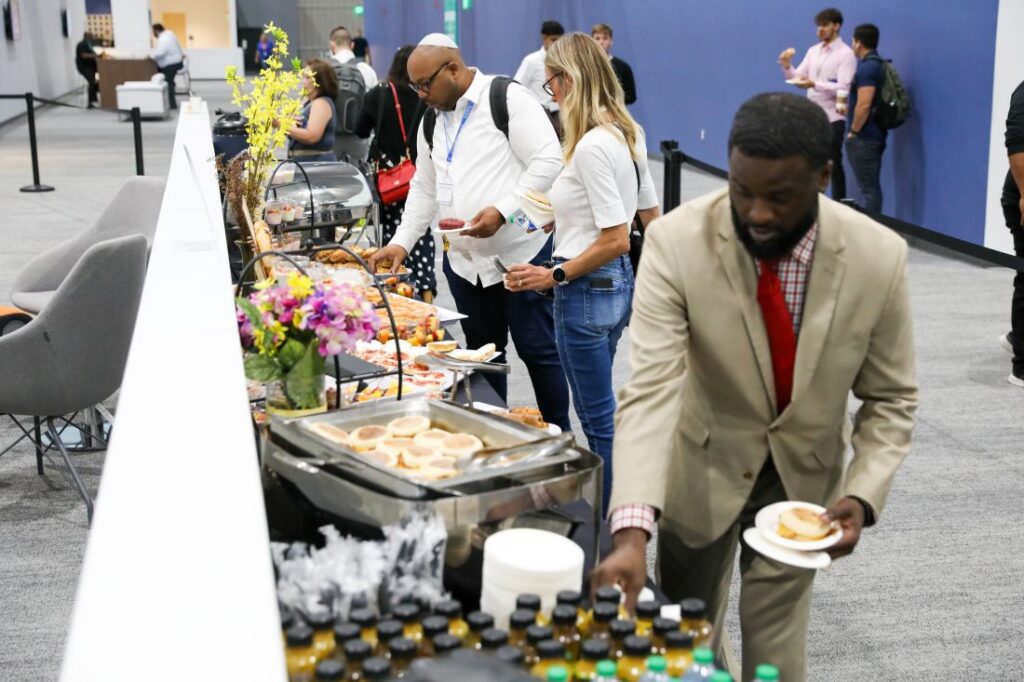
The 6th annual Plant Based World Expo (PBWE) North America sowed the seeds for an industry resurgence. The event—which took place Dec. 2-3 at New York City’s Javits Center—combined a lineup of educational programs and a selection of plant-based food product lines, many new to market and most targeting foodservice. Among returning exhibitors were plant-based meat makers Impossible Burger and PAOW! PBWE is the only 100 percent plant-based U.S. conference for retail and foodservice.
Tracing the industry’s evolution from 2016 through 2026 in her keynote address, Angela Flatland, senior sales director, plant-based for SPINS—a consumer packaged goods market research firm—described the segment as being at a “place of reset.” Flatland attributed the pullback from the industry’s 2020 peak largely to consumers’ renewed interest in conventional meat and dairy.

However, declines have begun to moderate as we move toward 2026, noted Flatland. Consumption of plant-based products continues to grow in non-staple categories, with cleaner, better-for-you options that win on taste and sustainability—particularly in dairy-free items. The demand for high protein and fiber content is also boosting plant-based sales.

Ideas for Revitalization
The industry’s slowdown was generally attributed to normal category maturation, but also to other factors, including disappointing flavor execution in some products and a lack of pricing parity. Yet seminars at the show offered ideas for revitalizing the business, including:
- Satisfying Millennial and Gen-Z demands, such as the explosion of interest in international flavors;
- Better communicating plant-based advantages, such as healthfulness and sustainability, through menu call-outs, packaging and social media listings; and
- Improving products through technological advances, including enzymes from Amano that improve meat texture and cheese meltability; Maia’s mushroom powders, that beef up protein, fiber and umami; and Steakholder’s multi-patented 3D printing technology, that gives its plant-based meat the appearance of marbling.
Although participants sometimes differed regarding the right marketing approach for plant-based (for example, whether to use the broader lifestyle term “vegan” or the narrower food term “plant-based”), good, convincing taste emerged as the overriding determinant of success for plant-based foods. That was the consensus during a panel discussion about the future of fine dining moderated by VEGPRENEUR founder Noah Hyams, and featuring Edwin Bark of Redefine Meat, Insa Mohr of Offbeast, Chef Rob Hodge of PAOW! and Jonah Goldman of fast-food chain PLNT Burger. As Bark put it, “Health may be key to entering the category, but taste may be key to leaving it.”

More to Chew On
Winners of the VEGPRENEUR awards—celebrating the most innovative and trustworthy plant-based products—included OSHI for its Salmon Fillets, made from soy, fungi and algae, and offering Omega-3s like real salmon. One chef on the show floor marveled, “You even got the smell right.” Another winner was Lamb Kofta from Redefine Meat, a producer of high-protein, high-fiber and low-fat products, that’s widely distributed in European foodservice outlets but new to the U.S.

Milking Dairy
Bolstering this hard-hit category, Oatly, targeting the barista market,sampled flavored lattes; showcased its year-old Half & Half; and announced the renaming of its Super Basic Oatmilk to 4 Ingredients, reflecting the product’s formulation of gluten-free oats, filtered water, sea salt and citrus.
Also focusing on barista business, South African producer Maïzly—which imports only a few ingredients, limiting tariffs’ impact—highlighted the sustainability, absence of GMOs and extended shelf life of its new entry Corn Milk. The new product is made of corn fiber and chickpea protein and said to “froth like dairy milk.” Never Better Foods added cheesecake to its plant-based cheese line.

Out of Left Field
Several innovative products brought excitement to the show floor. They included Cupffee’s edible hot-drink cup, made from oat bran and wheat, which tolerates 180°F liquid for 20 minutes without getting soggy; Plant Whip’s egg substitute, made with aquafaba; and American-manufactured, pre-cooked white and brown rice and flavored recipe mixes featuring hearts of palm from Ecuador’s largest producer of the vegetable, Natural Heaven.

Up and Coming
Beyond these and other freshly minted items, there are reasons to hope for new growth. Serving 7 billion meals per year, public schools offer an untapped opportunity, according to the Coalition for Healthy School Food, a non-profit that promotes plant-based foods and nutritional education in schools nationwide.
In PBWE’s final program—”Plant-Based Enters the Grey Zone: What’s Next?”—Danny O’Malley, president and founder of Before the Butcher, predicted a slow return to a stronger industry and suggested abandoning an all-or-nothing mindset. Instead, he proposed a flexitarian-focused future, which still would ensure healthier diets and less animal cruelty than an all-animal-based one.

Subscribe to CFE News' twice-monthly newsletter reporting on the business of catering, foodservice and events.