
By Sara Perez Webber
For Michigan-based Rudy’s Hospitality Group, the difference between a corporate cafeteria and a restaurant comes down to more than the food.
“A cafeteria is just kind of there, and it’s there to serve a purpose—to feed people,” says Jason Olinik, senior vice president of operations, growth and partnerships for Rudy’s Hospitality Group. By contrast, he adds, a restaurant invites people in, treats them as guests and has to earn their business every day.
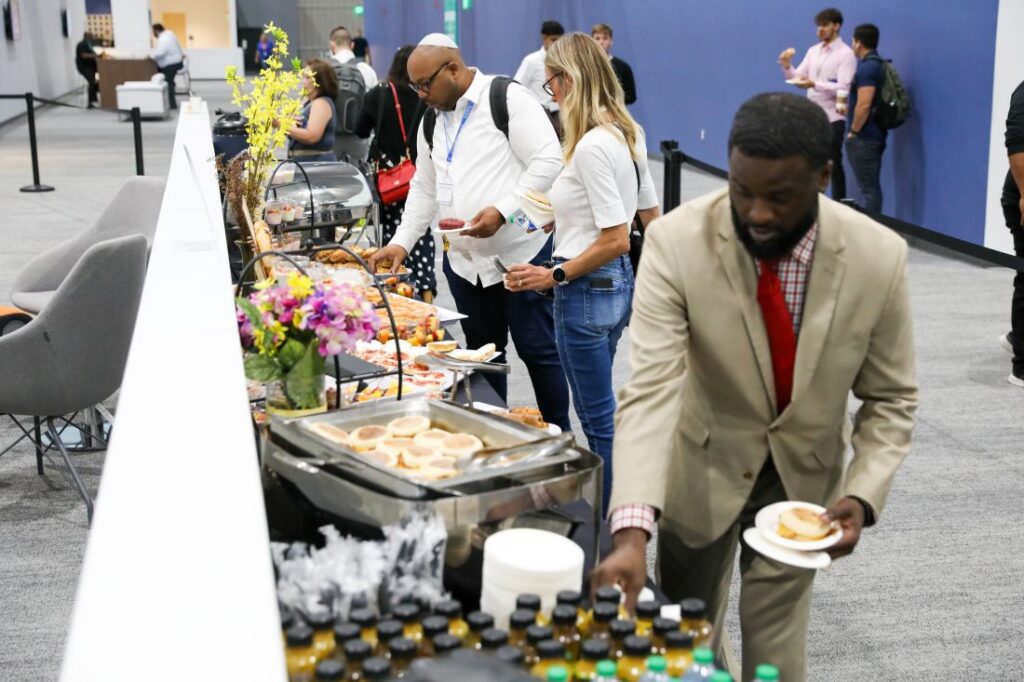
Rudy’s Hospitality is bringing that mindset to corporate dining at a time when employers are looking for foodservice partners who make the office a more enticing, collegial place. “A great hospitality partner should contribute to a positive workplace culture,” says Olinik. “It should help bring people into the office willingly and create an environment where people can talk to each other.”

Serving five corporate clients and 10,000-plus customers daily in Metro Detroit, Rudy’s Corporate Dining has created a template for doing just that—transforming traditional workplace cafeterias into hospitality-driven dining destinations. Next up: taking that model beyond Detroit—and potentially across the country.

Building on a Michigan Legacy
Rudy’s traces its roots to 1933, when Rudy Schwartz opened a grocery store in Clarkston, Mich., in a former Ford dealership. Current owners Robert Esshaki and Chris Thomas bought the store in 1989 and operated it until 2020.
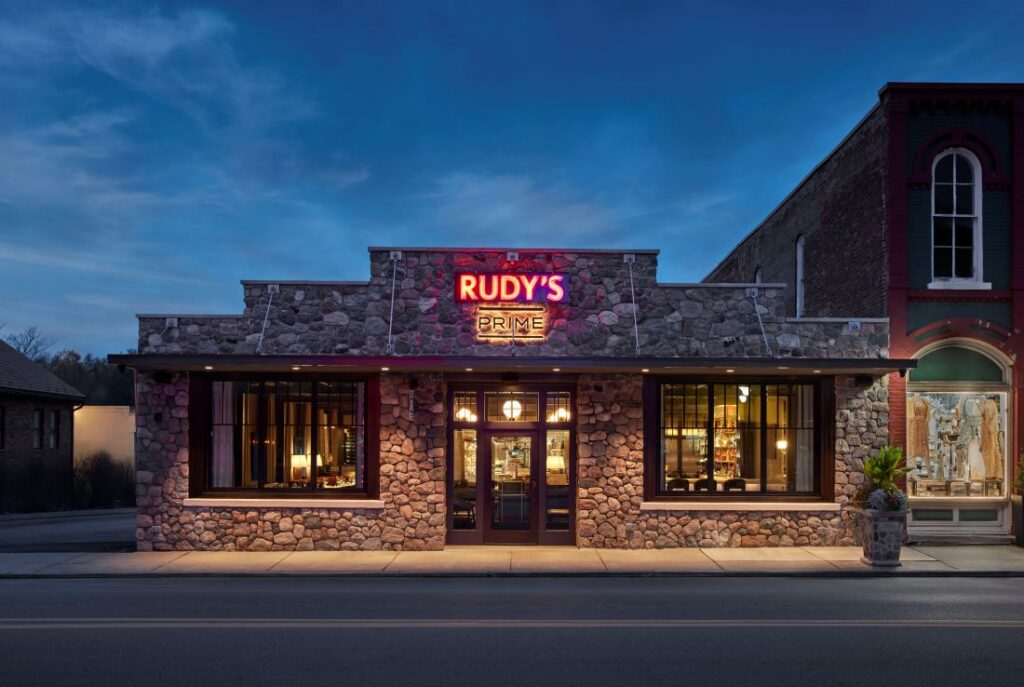
In 2024, they opened the transformed space as Rudy’s Prime Steakhouse—which was named Detroit’s 2026 Restaurant of the Year by Hour Detroit magazine.
Along the way, Esshaki and Thomas branched into corporate dining. Rudy’s partnered with United Wholesale Mortgage (UWM) in 2018, taking on foodservice operations for the company’s 800 employees. Now UWM has 8,000-plus employees—and Rudy’s is still the company’s corporate dining partner, having grown right alongside them.
Hospitality Hub: A One-Stop Shop
For its corporate dining clients, Rudy’s offers a one-stop shop under what it calls the Hospitality Hub: one provider managing the corporate café, catering, micro markets, coffee and other food-and-beverage needs within a workplace.
Historically, Olinik says, companies often assembled those services through separate vendors: “Things were a little disjointed, and the seams were really felt from the guest experience.”
The Hospitality Hub is designed to eliminate those gaps by having one team manage everything.
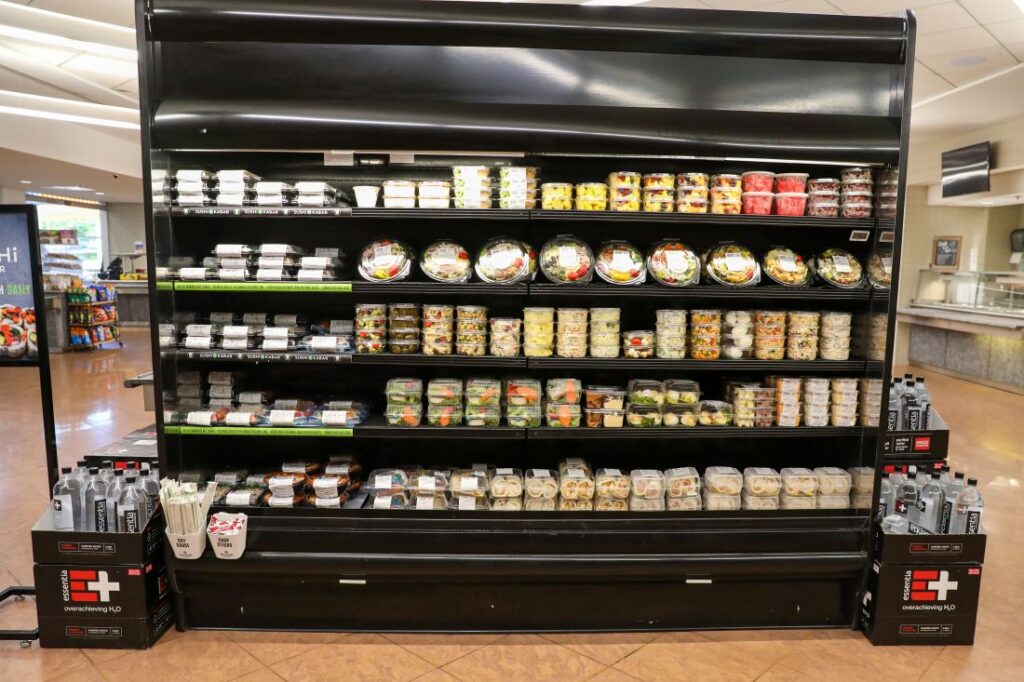
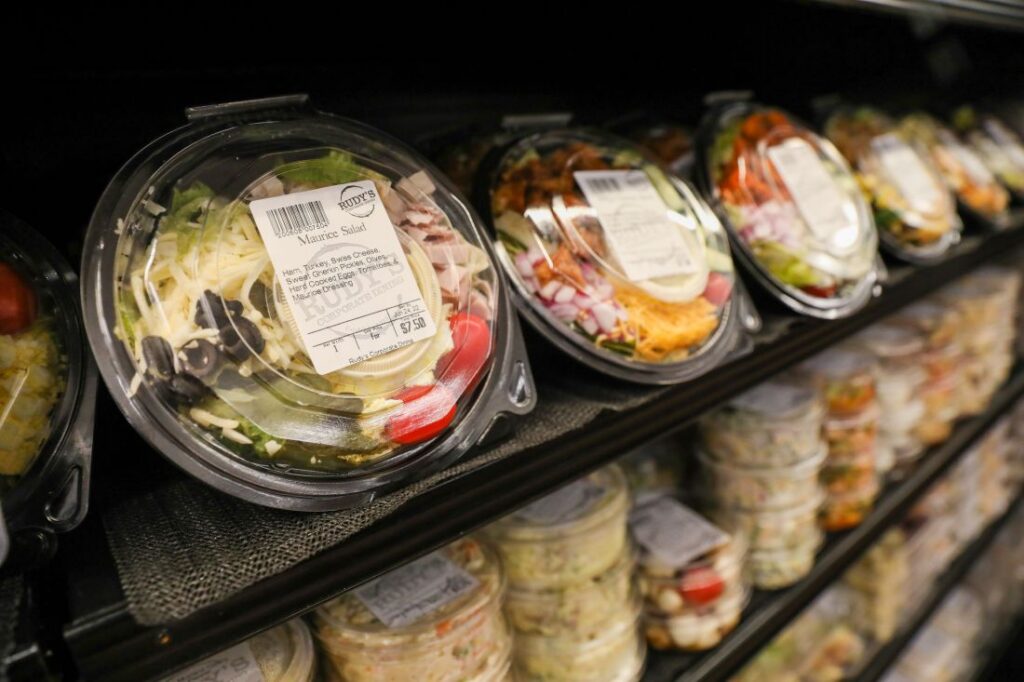
The company’s grocery roots also play into the model. Rudy’s produces prepared foods daily, allowing it to stock micro markets with fresh grab-and-go items such as sandwiches, salads and re-heatable entrees rather than relying solely on packaged snacks.
“The micro market is this flexible offering for people that provides really great food, energy drinks, protein shakes—whatever they need at any time of the day,” says Olinik. At UWM alone, Rudy’s operates seven micro markets.
Outside Brands Offer Variety
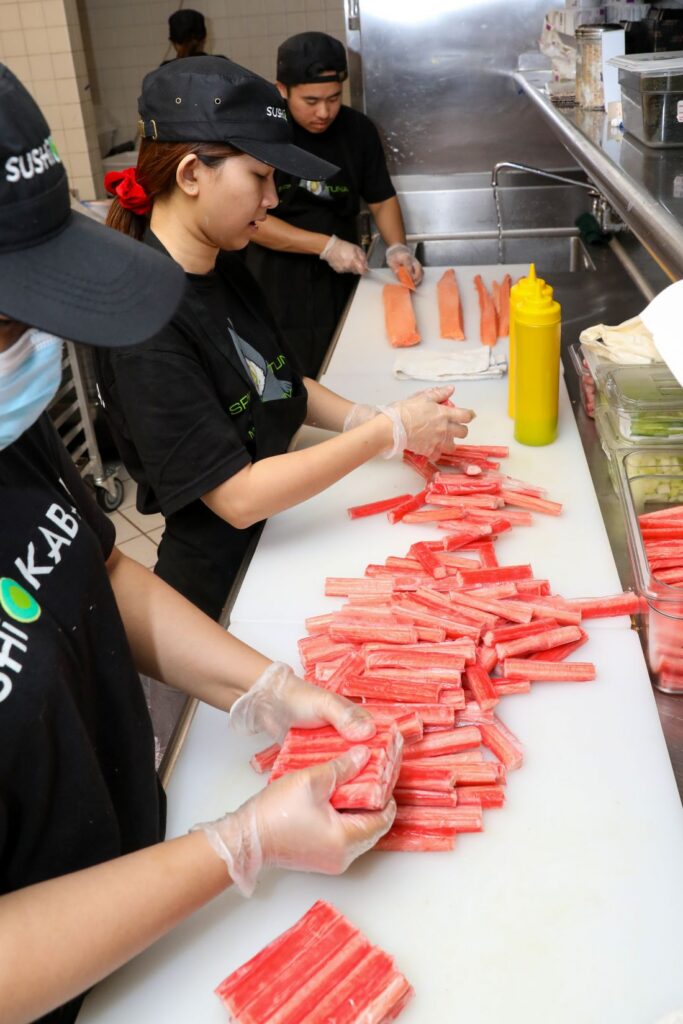
Rudy’s also incorporates outside brands where they strengthen a company’s program—such as Sushi Kabar, which rolls sushi daily; Miroh, a plant-based meal prep company; and local coffee favorites like James Oliver and Zingerman’s.
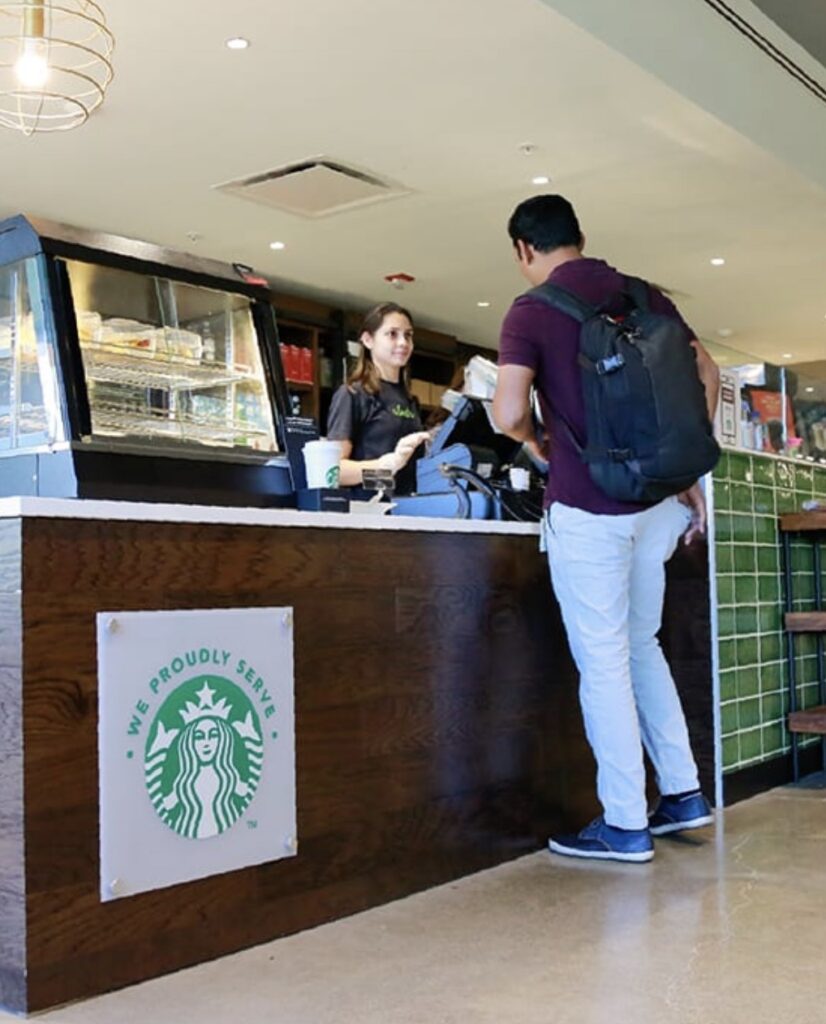
The company even operates a Starbucks inside one large facility, which means “competing with probably 12 Starbucks on everybody’s way to work,” says Olinik.
The goal, he adds, is to make the workplace coffee shop the place employees want to go: “They come right to work, they park, they go in, and someone who knows them by name, who knows what they like, is making their coffee. I think that’s a really special thing to have inside the workplace.”
Plus, adds Olinik, recognizable brands help keep workplace dining fresh for employees who may eat in the same café several times a week.
“You’re trying to show up as a new restaurant every single day,” he says.
Competing With the Couch
That restaurant mentality has become increasingly important as hybrid work changes how employees use the office—and employers are looking for ways to entice staffers to come in.
“The biggest question that employers have right now, in this hybrid work environment, is how do we promote a healthy culture where people are connecting? It’s hard to do that when everybody is working at home,” says Olinik.
To encourage what used to be called “water cooler conversations,” you must first convince hybrid workers to come to the office. “You’re competing with the couch, and DoorDash, and grocery delivery,” he says.
When employees make the effort to commute to the office, opportunities to interact with fellow workers over a meal or cup of coffee are “a good draw,” says Olinik: “It can be used to retain great employees and to recruit great employees. Food is a differentiator at work.”
Benefits of Two Operations in One
Managing both restaurants and corporate dining creates a lot of synergy, notes Olinik—and will help the company grow.
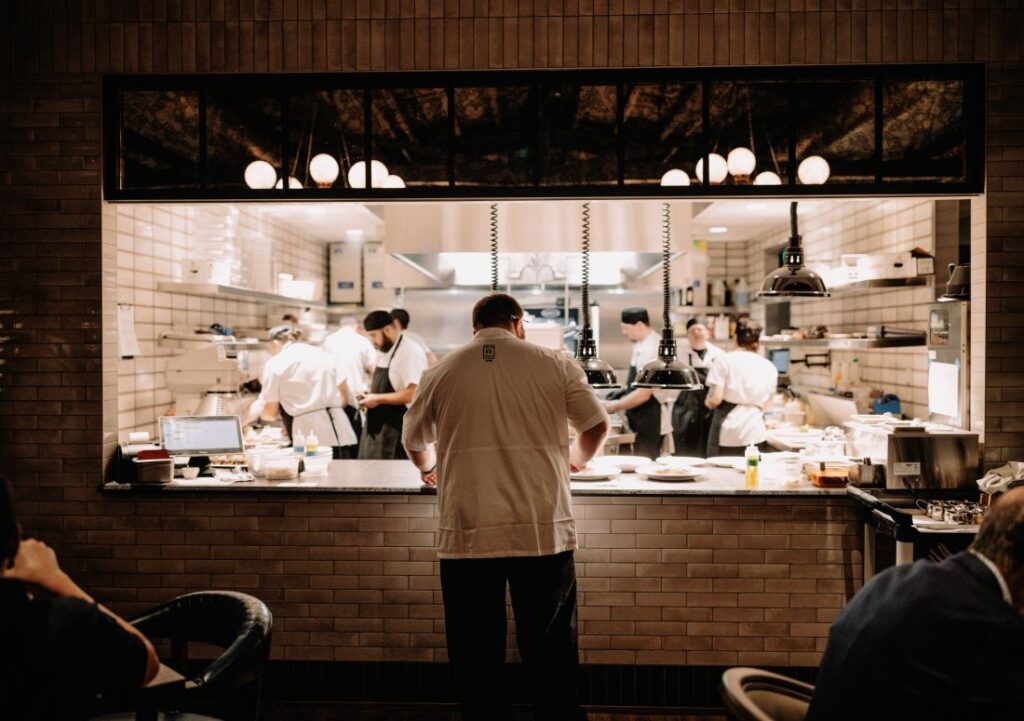
“For example, we may have a great chicken sandwich that goes on both menus,” he says. “Whether you’re sitting in a fine-dining restaurant or a corporate dining restaurant, it comes down to the same fundamentals—the sourcing, the creating of the dish, was the server or cashier focused on the person in front of them. It’s making sure the experience was special.”
The company’s dual nature also helps attract talented chefs who may prefer a Monday-through-Friday gig without sacrificing their culinary creativity: “This is the kind of place where it’s all about great food.”
Primed for Growth
That recruiting edge will help as Rudy’s grows from 150 employees in Metro Detroit.
Its immediate expansion plans are focused on Michigan, where Olinik sees a lot of potential: “We believe this area is under-served in workplace hospitality.”
A second restaurant is scheduled to open in West Bloomfield, Mich., in spring 2027. As Rudy’s enters additional markets, the company plans to build regional clusters where its restaurant and corporate dining operations can share culinary ideas, employees and expertise.
Rudy’s intends to grow deliberately, stresses Olinik, preserving the individualized approach that has shaped its corporate dining business.
“We’re not in a rush to get really big,” he says. “We want to stick to what we’re good at, which is partnering and being a boutique foodservice provider that listens. What we do is on behalf of the client and what they want to provide for their employees.”
The broader ambition, however, extends well beyond Michigan.
“We’ll have clusters of hospitality people doing really great things all over the country in the future,” Olinik says. “But right now, it’s going to be starting locally in Michigan, seeing where we go from here and proving our concept at scale.”
Subscribe to CFE News' twice-monthly newsletter reporting on the business of catering, foodservice and events.

