By Sara Perez Webber
Outdoor events have a special kind of magic. There’s just something about fresh air, twinkling lights and dappled sunshine that add an enchanting aura to special occasions staged al fresco.
But for caterers, that magic comes with a lot of moving parts—and more chances for things to go awry.
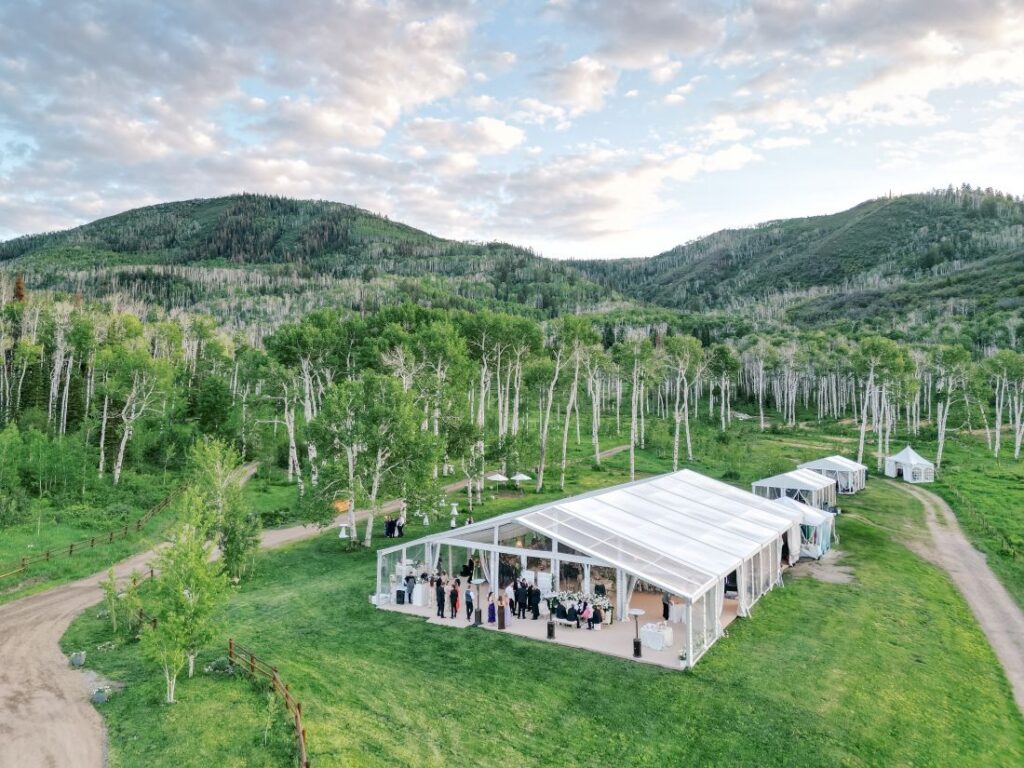
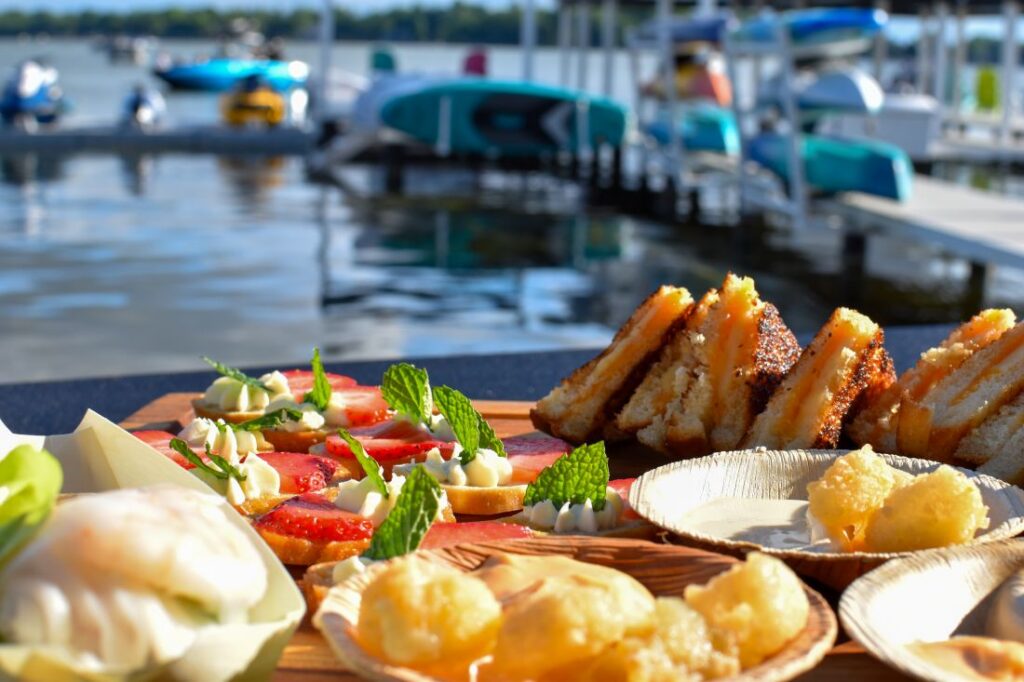
“An outdoor event takes a lot more than what anybody who hasn’t done it before would assume,” says Christie Altendorf, marketing and brand experience director at D’Amico Hospitality in Minneapolis. “What clients should be looking for is a caterer or hospitality partner who has really deep experience with this, because it’s not as easy as a truck rolling up into a field. It is truly picking up an entire kitchen, an entire restaurant, and transporting it onto the shores of a lake or to somebody’s backyard at their summer cabin.”

As the summer season gets underway, CFE News convened our Editorial Advisory Board for a wide-ranging discussion on what it really takes to execute outdoor events at a high level—from the first client conversation to the final plate. Following are some of these catering leaders’ tips and strategies.
Start With the Backup Plan—and the Right Expectations
For Anthony Lambatos, co-owner and CEO of Footers Catering in Denver, the most important outdoor-event conversation is the one that happens with clients at the beginning of the planning process.
“Talking about the backup plan in conversation one is probably one of the most critical things,” he says. That means being direct with clients about what happens if the weather turns—and what the costs are to ensure the best outcome.
Clients may not want to pay for a tent or a full contingency plan. But Lambatos has seen what happens when optimism replaces planning. He recalls an event where a torrential downpour resulted in soaked linens because the client had refused to rent a tent.
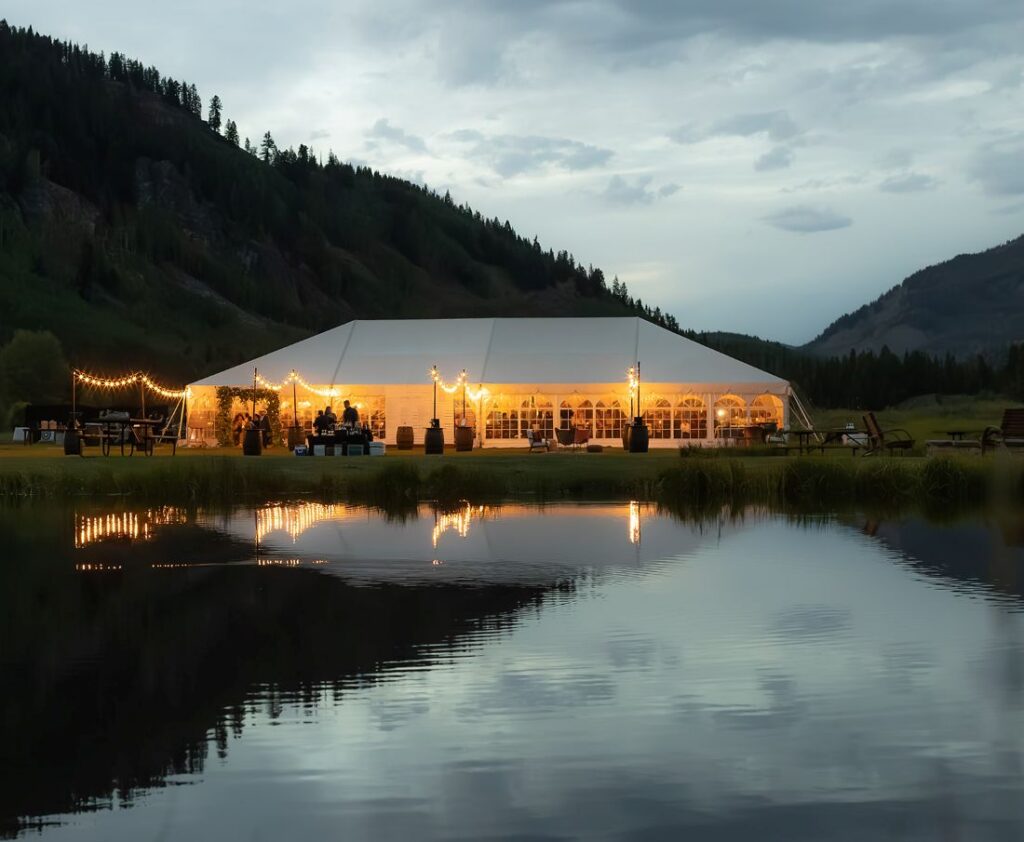
“There’s pushback all the time, and you just have to be very clear and say, ‘Here’s the experience you could be facing,’” he says, adding that it sometimes pay to walk away from an event if the client isn’t willing to pay for contingencies.
When clients want an outdoor setup that creates logistical challenges, “be blatantly honest with them” about what can happen, advises David Porto, managing partner of Blue Plate Catering in Madison, Wisconsin. Just about anything can be accomplished with an unlimited budget, he adds, but clients need to know the cost upfront.
“There’s not a whole lot that we’ll say ‘no’ to as long as the price is right,” says Porto. “I tend to be very much a fan of saying, ‘Great, love it. Here’s the price tag. I’ll let you make the decision.’”
Expect the Unexpected
Ask any of these caterers what has surprised them most about outdoor events, and the answers reveal just how many variables lie outside their control.
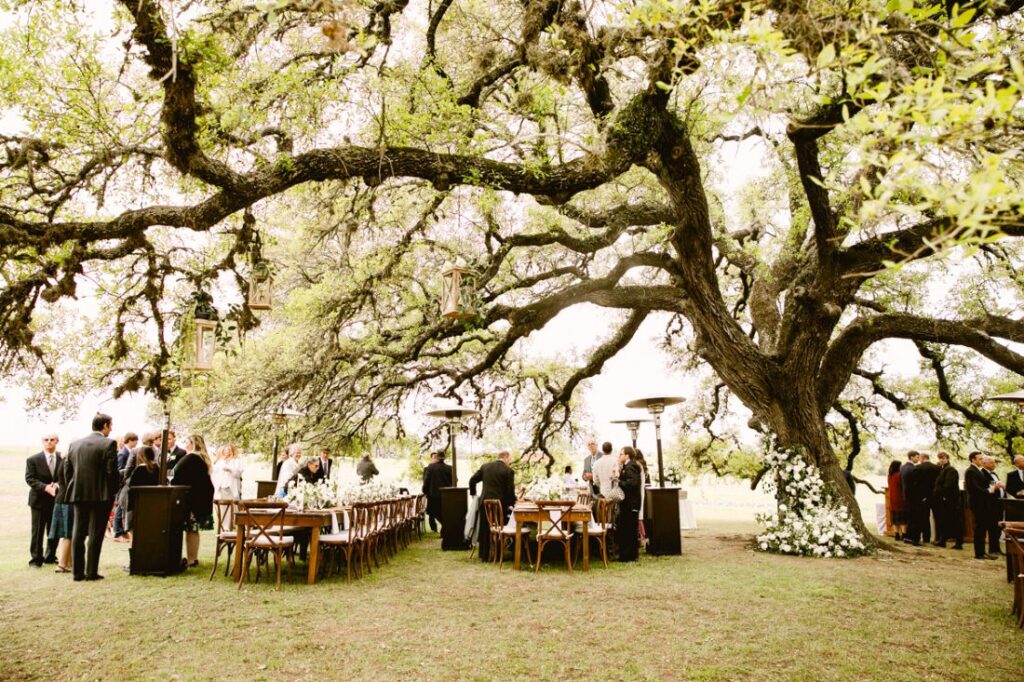
Rachael Volz, owner and CEO of Houston-based A Fare Extraordinaire, recalls a wedding derailed not by rain or heat, but by an unexpected natural phenomenon. “There was a moment at a wedding we did a few months ago—it was caterpillar breeding season, and there were millions of caterpillars crawling over everything,” she says. “Sometimes you just have to laugh and say, ‘We have really tried to prepare for everything here, but no one thought we’d be in charge of getting rid of caterpillars all night!’ We just shook off the linens and smiled. Only in Texas, right?”
Altendorf shares a cleverly improvised solution when a newly sodded yard turned to mud ahead of an outdoor event. “Our large tables were sinking very quickly into the yard,” she recalls. “A quick fix was plate covers—stacked two or three together, each one went under a leg, and the linen went over it. The tables stopped sinking, and nobody was the wiser.”
Scout the Location Well in Advance
An outdoor event requires a lot of advance scouting, says Robin Selden, executive chef and managing partner of Marcia Selden Catering in Stamford, Connecticut, whose team does “a ton of outdoor tented events.”
That includes multiple site visits and looking at the property under real conditions. “You may be planning it a year ahead, or when the weather is going to be very different,” notes Selden. “You want to see what the trees will look like. Will it be muddy?” Seeing the site in different weather conditions will help caterers prepare for all contingencies—down to the type of shoes staff should wear.
“We have to plan for the worst weather ever, and then we’ll work backwards from there,” she says.
Don’t Forget Staff Comfort
Outdoor events are about the guest experience, but Advisory Board members emphasize that staff comfort and safety matter just as much.
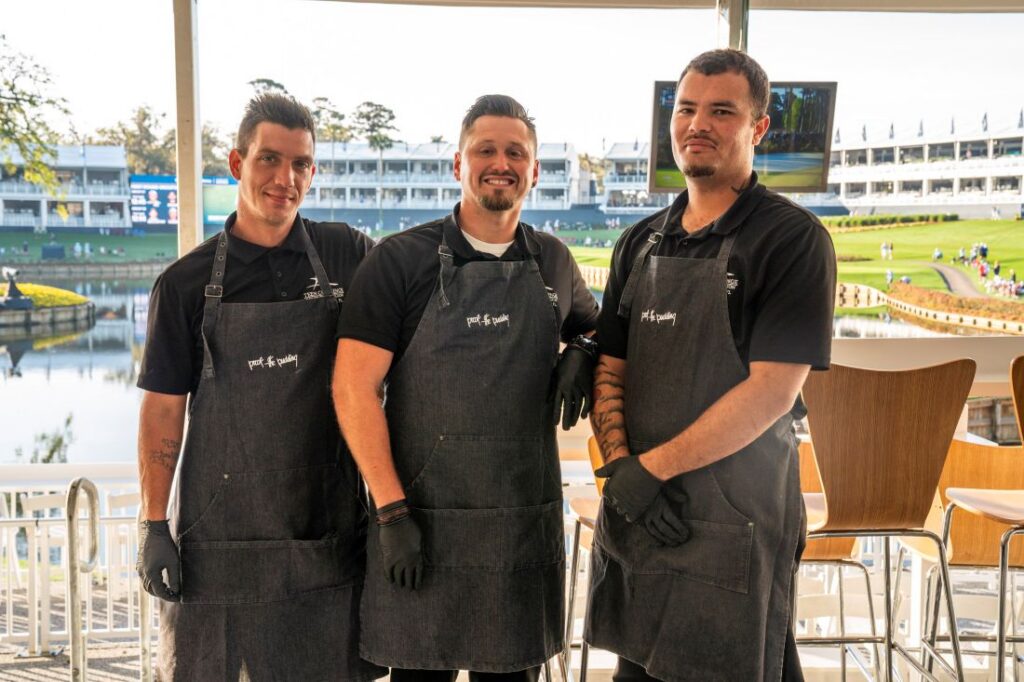
Air conditioning and ventilation “are not just for the clients but for your employees in the back of the house, in field kitchens and tents,” says Adam Noyes, CEO of Proof of the Pudding in Atlanta. “That helps morale, it helps food safety, and it helps food quality.”
Providing sunscreen to both staff and guests is another smart move, says Noyes, who adds that uniforms should be appropriate not just for the event but for the weather. “They need to look the part but also be comfortable,” he says. “Staff members will be happier and serve the guests better as a result.”
Selden recommends cooling towels for staff members. “We dunk them in ice-cold water, and everyone ties it around their neck,” she says. “It’s like an internal air conditioning for everyone.”
Volz provides snacks, energy drinks and motivational notes to staff members to keep up morale: “We try to make it feel special.”
Make Sure Staff Members Have the Tools They Need
When far from the home kitchen, caterers need to ensure team members have everything they need at hand to pull off a successful event.
“Whether it’s an event for 300 or an event for 100,000, it’s getting those details to the individuals that are going to be executing them,” says Noyes. “You can’t be everywhere, so you’ve got to give them the tools to be successful.”
Noyes points to the large-scale outdoor sporting events catered by Proof of the Pudding, such as the recent PGA Tour Truist Championship, where the work becomes “the logistics business.”
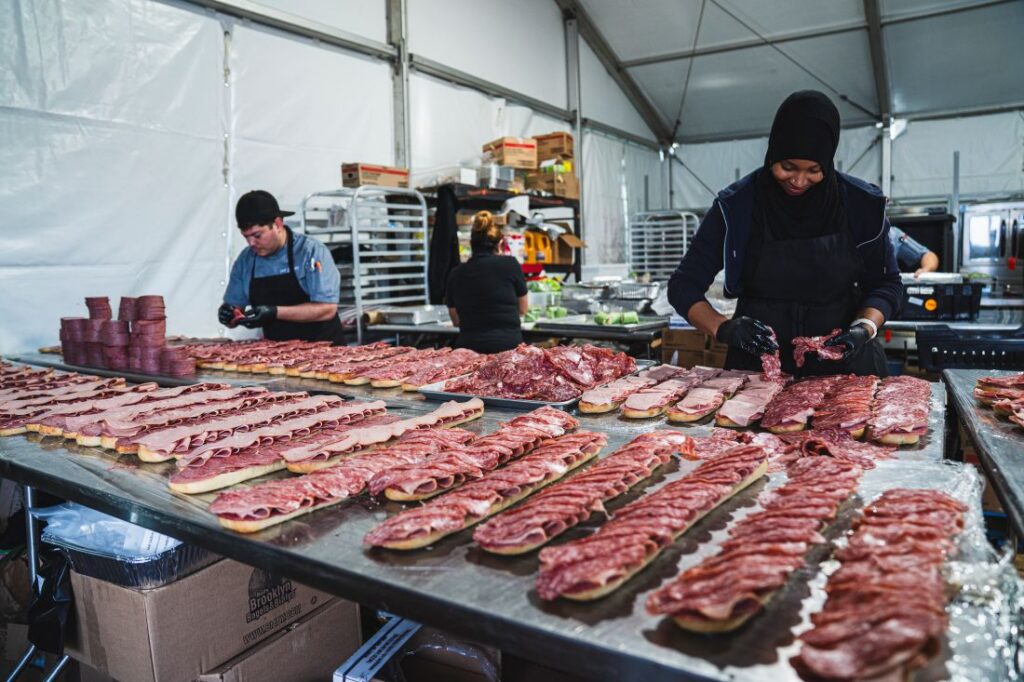
“We’ve got 15 field kitchens and we’re moving product overnight and the refrigeration in each location—so much planning has to go into something like that,” he notes. At the Formula One event at Circuit of the Americas, also catered by Proof, there may be “30 different places you’re firing food over a five-mile” area.
To achieve uniformity across multiple kitchens, Proof distributes detailed binders to the chefs with photos showing every dish and every garnish placement. “You want consistency at these massive-scale events,” says Noyes.
Plan a Menu That Fits the Environment
Outdoor conditions should inform every menu decision, and experienced caterers know which items simply cannot survive the elements.
“If we’re doing an outdoor wedding in July, I’m not going to let them sell the pavlova dessert,” says Selden. “That’s going to be a sticky mess. They might say, ‘It’s so light and fresh.’ I’m like, ‘Yeah, it is. But we need air conditioning for that.”
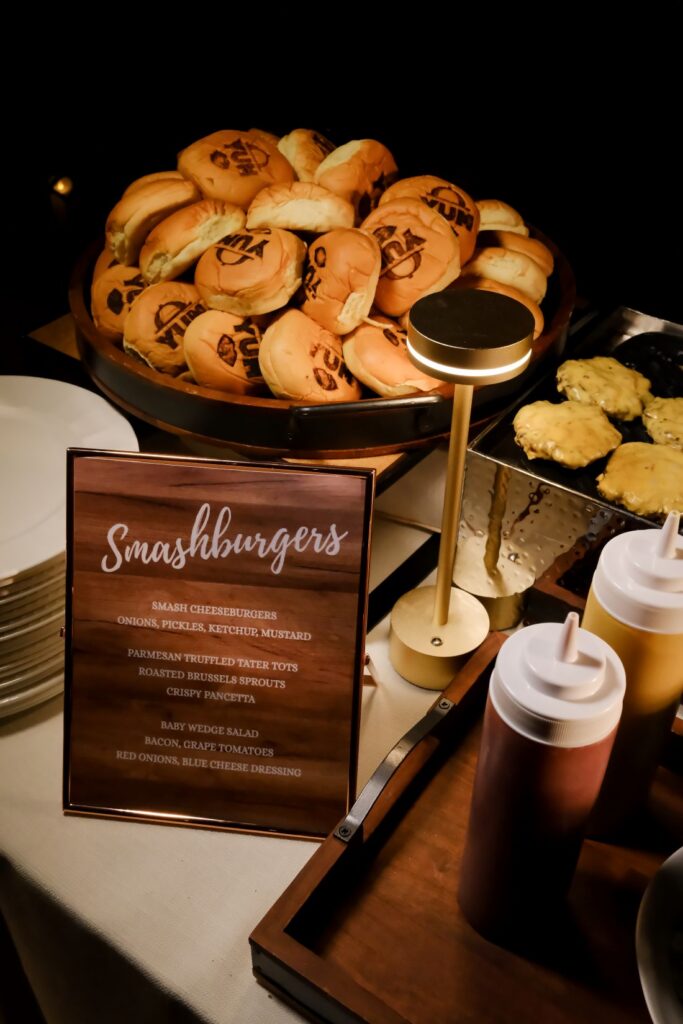
Another often-overlooked detail at an outdoor event? Lighting. Selden has worked with event planners who seemingly thought of every detail—“everything’s glorious, and the guests are so happy, and the dance floor is perfection”—until the guests get to the food stations, which are shrouded in darkness.
“That’s something we are very conscious of, and if we have to, we will bring the lighting ourselves, because you don’t want your guests to walk up and say, ‘What am I eating?’” says Selden.
Keep the Team Focused
Outdoor events require extensive logistical planning, but they also require a positive mindset.
“The attitude of the team is probably the most important thing on our end,” says Lambatos.
He encourages his team to see difficult events not as obstacles, but as hard-earned wins in the making: “This is going to be challenging, this is going to be hard, and it’s going to be awesome when we get on the other side.”
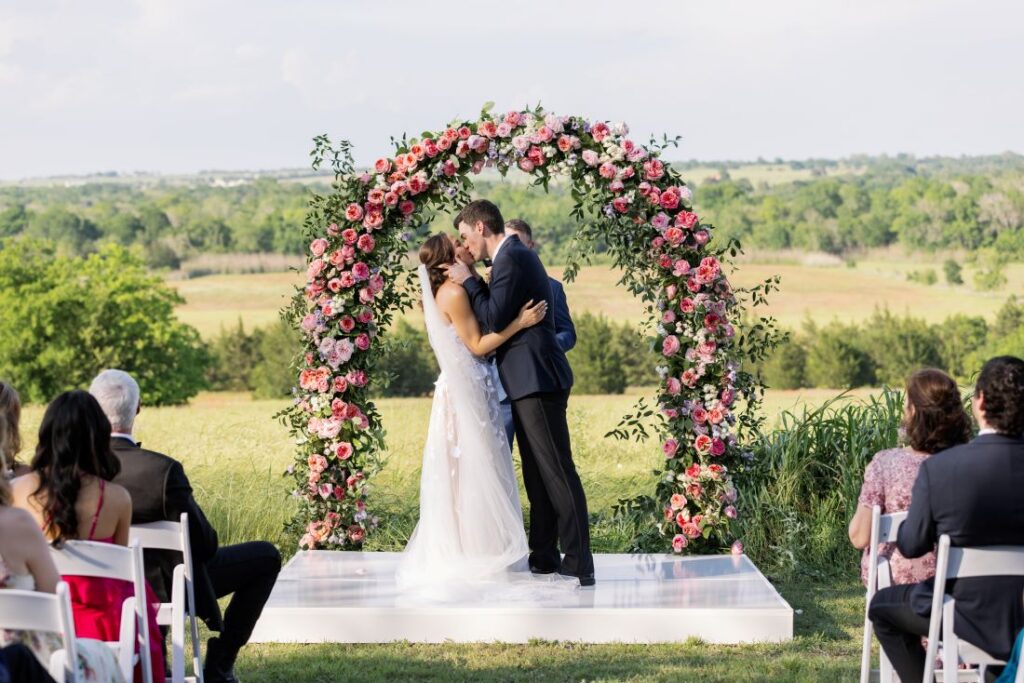
Volz said outdoor field weddings can become “a major bonding experience” for staff because the challenge requires everyone to think on their feet: “A lot of the field weddings that we do are usually in the Texas countryside, and they’re usually gorgeous, so they love being part of a milestone occasion like that, where everything is so pretty and detailed.”
Porto uses a skiing metaphor with his team. “I tend to find the space instead of trying to avoid the trees,” he says. “If we spend most of our time saying, ‘Wait, there’s a tree, avoid it’—sooner or later we’re going to hit one and it’s going to hurt. So trying to encourage people to train their brains that it’s going to be a success, that it’s going to go well, I think is really helpful.”
Look Forward to the Reward on the Other Side
For all the preparation, contingency planning and improvisation that outdoor events demand, these caterers agree that the payoff is worth it.
“Some of these are very complex,” says Lambatos, recalling a three-night event on a remote Wyoming ranch that required an eight-hour drive and days of advance prep. “Our team still talks about it. There’s a reason people love to run marathons. If you want to be thrown a curve ball every single day and know that something’s not going to go according to plan—come join our team. And I think that’s one of the special things about our industry.”
Volz agrees, calling herself and other top caterers “adventure junkies.”
“We are just looking for the next high,” she says, “and we seem to attract people that work for us that like those highs as well.”
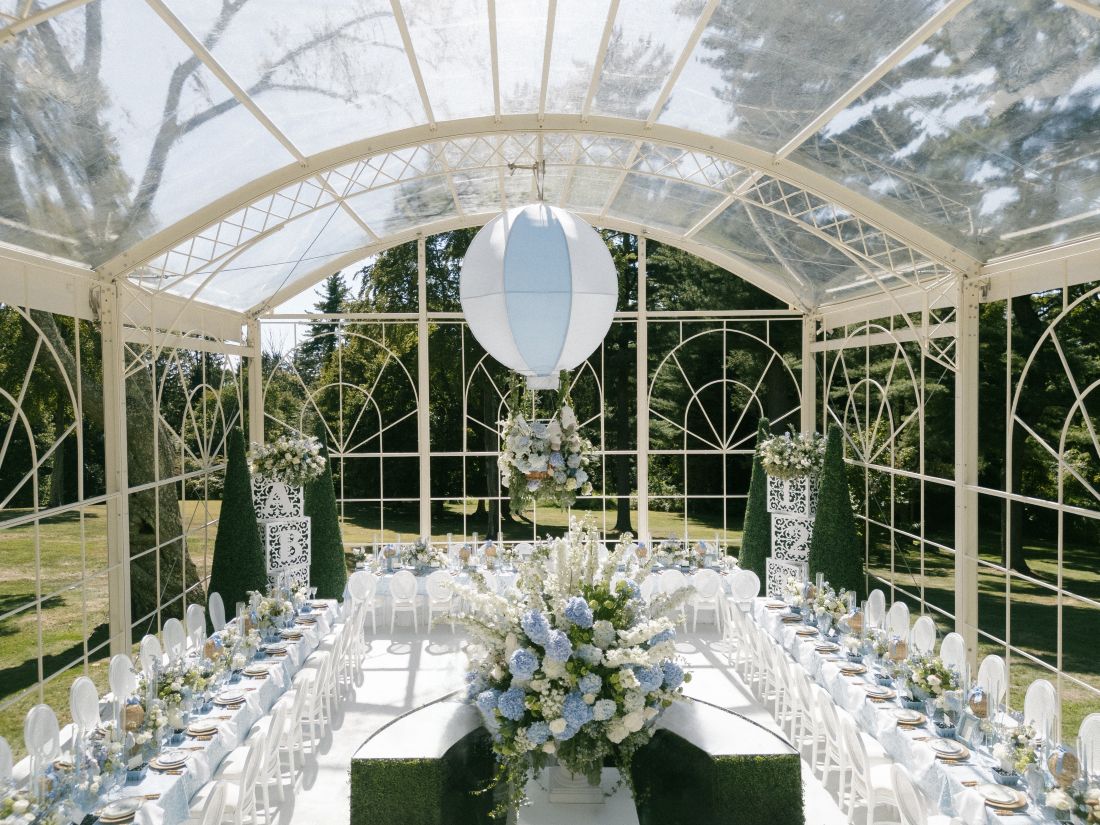
The outdoor event, at its best, is a testament to what the catering industry does unlike any other: transform any space—a muddy field, a glass greenhouse, a five-mile racetrack—into something unforgettable. That, these professionals suggest, is exactly the point.
Subscribe to CFE News' twice-monthly newsletter reporting on the business of catering, foodservice and events.