By Sara Perez Webber
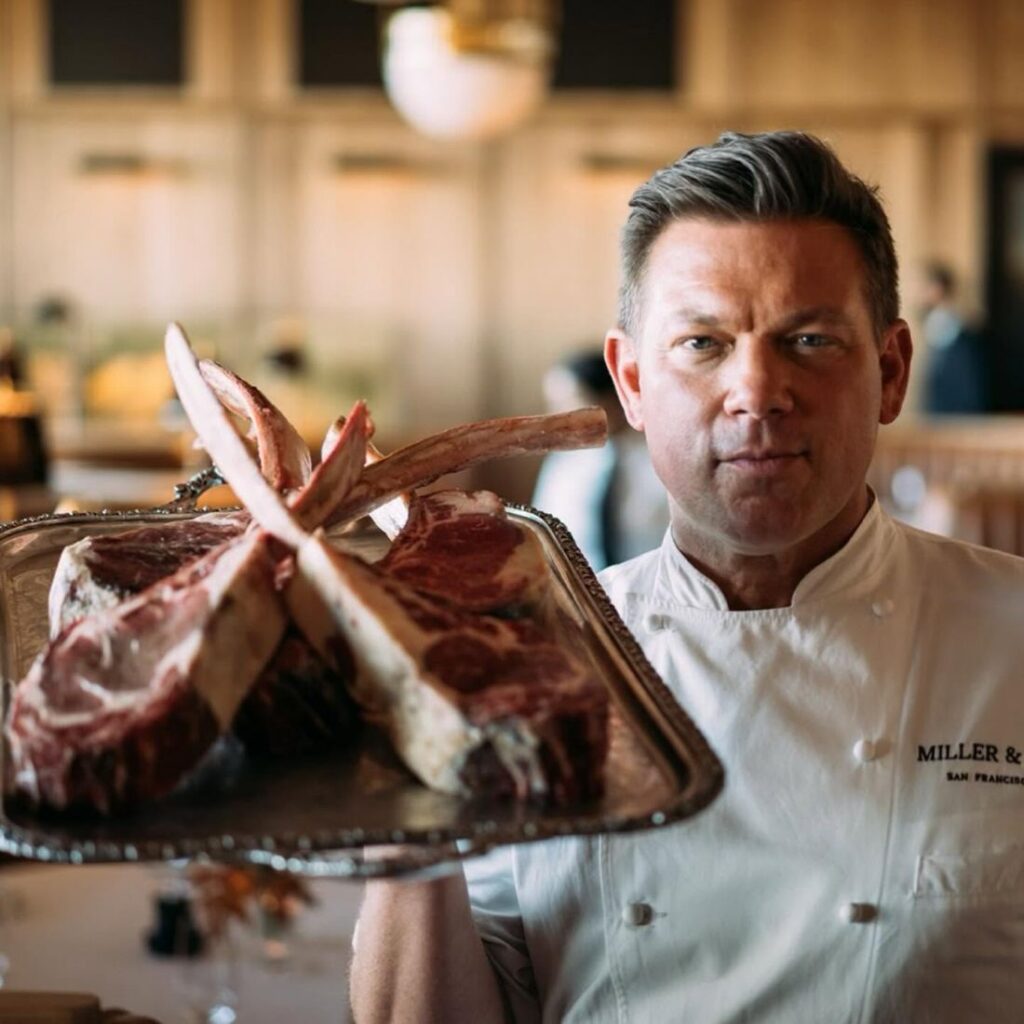
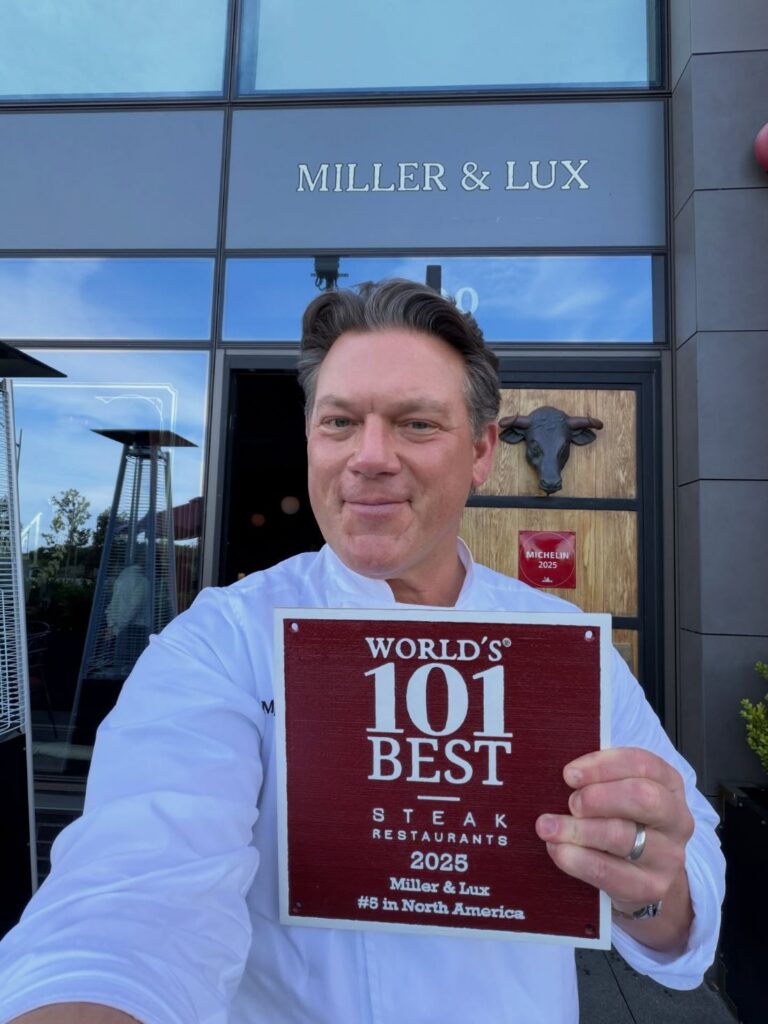
Celebrity chef, restaurateur and Food Network veteran Tyler Florence spoke with CFE News Editor-in-Chief Sara Perez Webber ahead of his appearance at the California Restaurant Show on Aug. 24. Florence—chef and owner of the Michelin Guide-recommended Miller & Lux steakhouse in San Francisco and host of The Great Food Truck Race for nearly two decades—shared his perspective on the challenges facing today’s operators. His message was clear: Restaurants that succeed in today’s market know exactly who they are, who they serve and what problem they solve.
Sara Perez Webber: Thank you for taking the time to talk with us! I’m on the conference advisory board for the California Restaurant Show, and when I learned you would be speaking there, I thought it would be a great opportunity to share some of your knowledge with our readers before the show in August.
Tyler Florence: We’re thrilled to be a part of the show. I think we have a lot to offer and a lot to share. It doesn’t have to be as hard as it is to learn how to run a successful restaurant. I want to save you the heartache of failure. I want to teach restaurateurs how to focus and open up a concept that sticks, that works. So I’m really passionate about sharing any and all knowledge that I’ve collected along my route, and I look forward to being a part of the California Restaurant Show.
Webber: You’re appearing at the show at a time when operators are facing a lot of pressure—labor costs, food costs, changing guest expectations, tighter margins. From your perspective, what separates the restaurants that are thriving right now from those that are simply surviving?
Florence: I think you’ve got to make really hard choices. Restaurants in the middle—good value, neighborhood restaurants—those are the ones that are going to suffer the most, because they’re not nice enough to be nice, and they’re not cheap enough to be cheap. Those are the restaurants you’re going to see, unfortunately, start to fold pretty quickly.
So I think now is a really good time to think, “OK, how can we re-concept this? How can we go cheaper and still provide value, still be yummy and awesome, and have Michelin touches?” You could have a really fancy taqueria at a price point that people can really get behind. Or you could run it up another notch if you want to go Michelin and say, “We’re going do something incredibly special with the space and give people a reason to celebrate.”
Webber: What about delivery—is that a lane worth pursuing for operators who are retooling?
Florence: Yeah, one of the hottest concepts right now is Gwyneth Paltrow’s Goop Kitchen delivery. Everybody’s talking about it—it’s really high margins, super-focused concepts. It’s healthy takeout food. She’s partnered with a couple of really good chefs, and she’s rolling these out in cities, and not even focusing on brick-and-mortar, because she’s doing it in ghost-kitchen spaces. Her forward-facing position is an app; and the front door—the menu, the ambiance—is the packaging.
There are lots of ways to get into sub genres of food delivery services, what I like to call “micro grocery.” Look up the most-searched recipe category in a particular zip code—you can get lots of really good micro data, and then build a delivery service around it.
If you’re going to open up a business, the most important thing that you can do is ultimately provide a service and solve a problem. “Hey, Mom, what’s for dinner?” That’s a big problem to solve. You could pipe right into that vein and say, “We are a gourmet micro grocery,” focused on this particular zip code that speaks to this particular mom, because she makes all the food decisions in the house. Provide a really great service and give her food that you could pop into the microwave and finish in the oven. Micro grocery is a hot, hot lane to get into, and we have been seriously thinking about it.
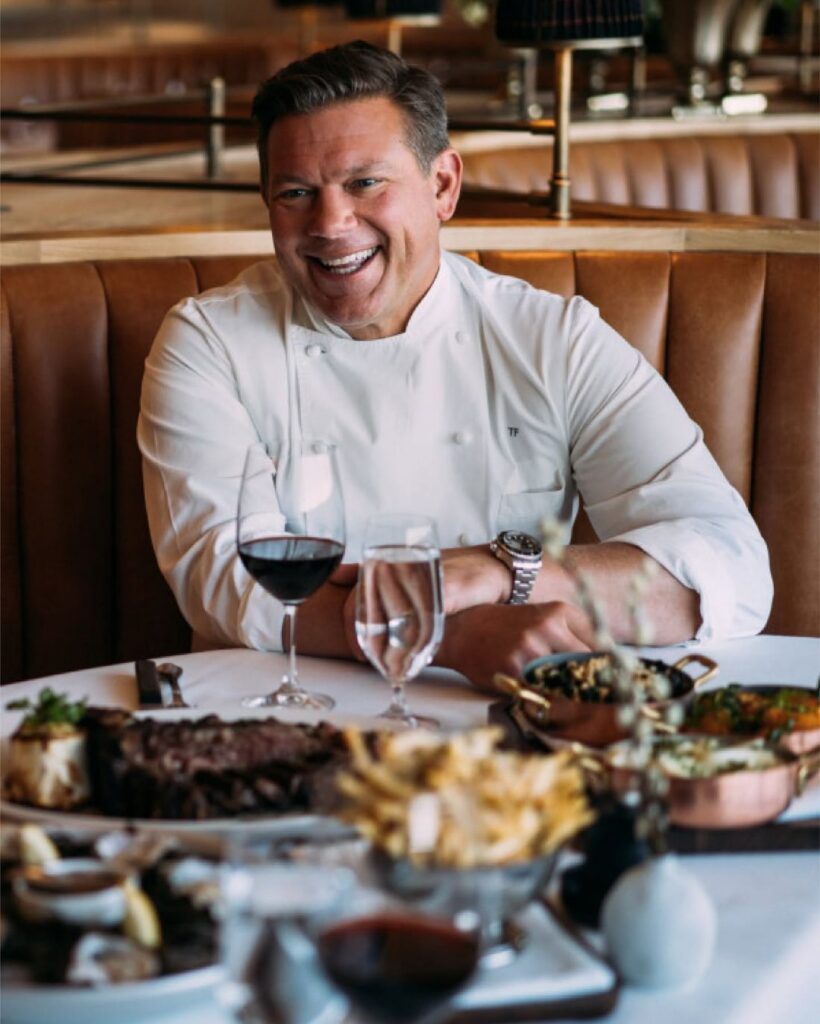
Webber: California continues to influence national food trends. What do you think the broader industry can learn from the California food scene right now?
Florence: What California cooks, the country eats. That’s always been true, and I think it always will be. In Northern California where I am, there are more Michelin stars than anywhere else in the country. Los Angeles has a very unique elite-casual sense of dining, which is super fun. They do casual better than anybody.
From a food trend perspective, I think everything really kind of starts in California. There’s a fearlessness when it comes to our entrepreneurs. You see it in the entertainment sector, in the tech sector and even in robotics. We attract very clever people who produce clever concepts and open fun businesses.
One big trend coming out of California right now is live-fire cooking. Kitchens are completely gutting stainless steel gas-piped boxes—stove tops, ovens, broilers—and going for a live fire pit with different shelving structures so you can grill, roast and catch that ambient heat. It smells really good, and it’s really pretty in the restaurant. It feels primal. Chefs love to cook on live fire. That started here in California, with Alice Waters cooking over live fire at Chez Panisse. There are lots of things that happen in California the world pays attention to.
Webber: For chefs and operators trying to build a brand beyond the four walls of their restaurant, what should they be thinking about?
Florence: You have to have a media presence, and I don’t think it necessarily has to be television. It’s YouTube, for sure. I think if you’re building a budget for a new restaurant, having a full-time social media manager is really important—somebody who’s hip and savvy with a DSLR camera or an iPhone and a gimbal, who knows how to capture content and turn you into a character, turn your restaurant into a theatrical stage, turn your kitchen team into a supporting cast.
The tuna that rolled in this morning—give a demo on how you break it down. A new, limited-allocation white Burgundy just arrived—do a little story on that. Four new dishes are hitting the summer menu—here’s a sneak preview. You don’t really have to try too hard to create great content.
And if you do anything in the media world, it has to be on your terms, with what you want to talk about, that’s going to put butts in seats at your restaurant. If not, it’s a waste of time. Let television be a spoke in your wheel, but don’t let it be your wheel. Your wheel is who you are as a chef. Focus, Chef, focus. Put your head down and commit to the restaurant.
If you think about the greats—Thomas Keller, Jean-Georges Vongerichten, Daniel Boulud—these guys don’t have television shows, but they’re filthy rich, and all they do is focus on hospitality.
Webber: You’ve seen food entrepreneurs succeed and struggle in high-pressure environments on Food Network’s The Great Food Truck Race. What lessons from food trucks translate best to restaurants?
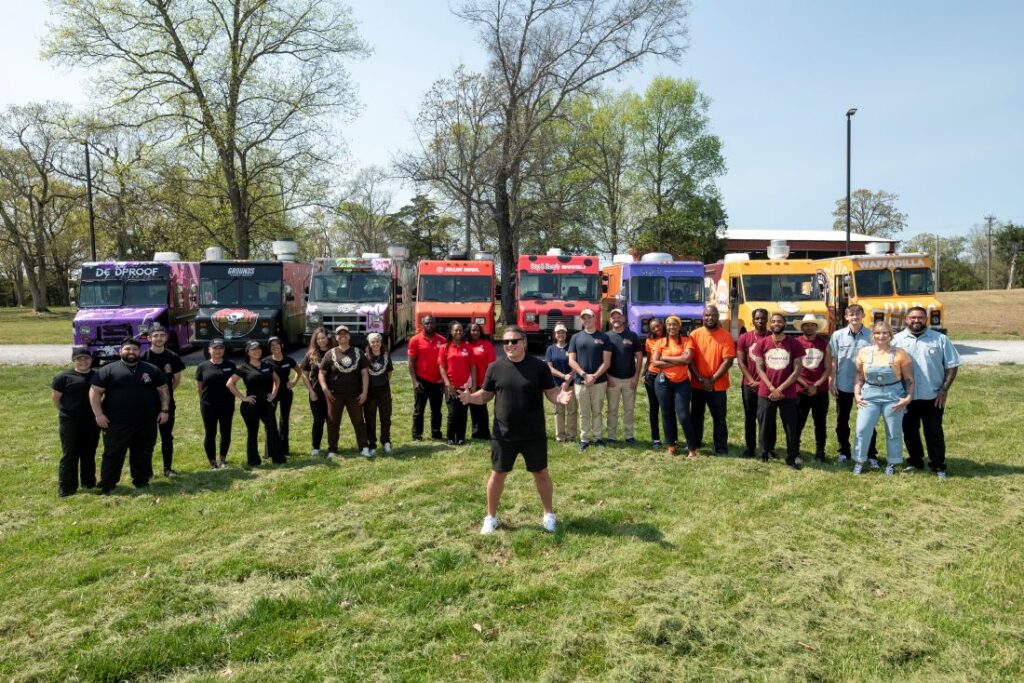
Florence: I love The Great Food Truck Race, and I think it’s probably my greatest contribution to the American restaurant scene. It was a trend that started to happen around 2008, during the economic downturn—restaurants were closing left and right, but chefs still needed to practice their crafts to feed their own families. They said, “OK, we’re going to give up four walls for four wheels, but we’re still going to produce super high-quality food.” And it transformed the industry.
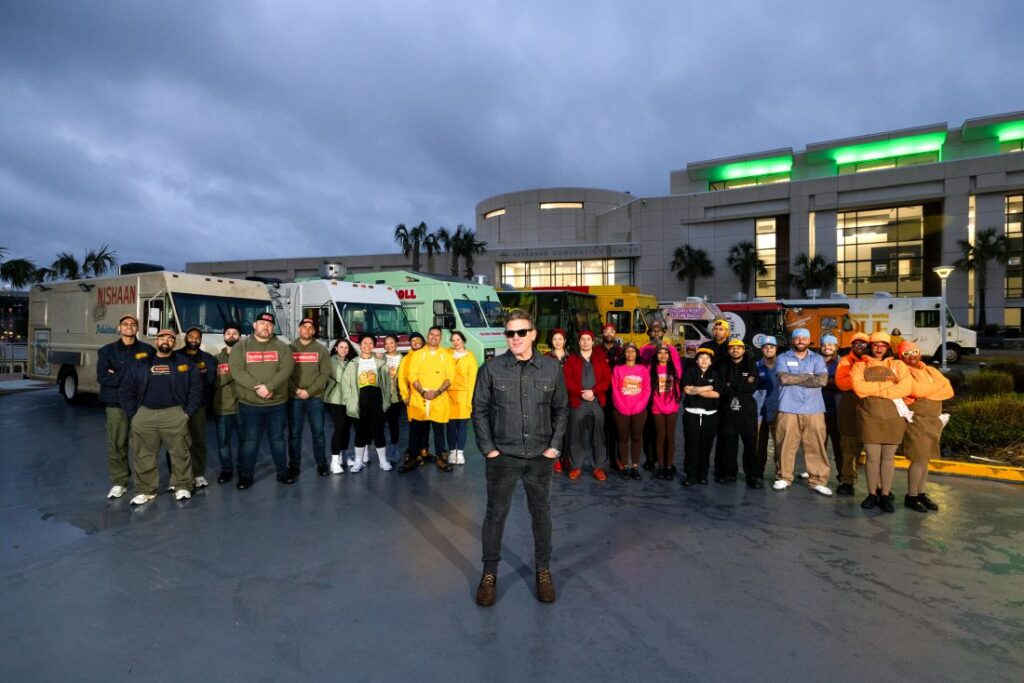
So in 2010 we started shooting The Great Food Truck Race. It’s the root stock of all things that are business—buy low, sell high; location, location, location; and teamwork. It’s “everything I learned in kindergarten about business” school, because it’s such a micro business model, but it scales up infinitely.
What we’ve created out of the show is a new on-ramp into the restaurant industry that is really pure democracy. With 50 or 60 grand, you can lease a food truck, skin it, get your food handler’s permit, prep up, and be in business in a month. You could produce easily six figures a year in your pocket. You could send your kids to school, pay a mortgage, with a food truck. And the scalability is really great.
We’ve also created an epic fan base for the genre. It’s the number-one show on the network every summer and has been for over a decade. I stay in touch with all the cast members, and they all have my cell phone number. I’ve helped all of them for years because I know everybody.
I’ve been around the block a million times, and I’ve had some really satisfying successes, and I’ve had some very humbling failures. For every mile of road you lay, there’s two miles of ditch on either side, and I think, “Let’s keep everybody out of the ditch as much as we possibly can, and not gatekeep the tribal knowledge that is being in the restaurant industry.” I get the chance to share simple concepts, but for somebody who’s just getting started, they’re these eye-opening light bulb moments that really sort of change their life forever. And I really enjoy doing that.
Webber: Your book American Grill was a number-one bestseller on Amazon when it launched last year. Why do you think live fire and protein-forward menus are resonating so strongly right now?
Florence: I think it’s all about the aroma—to me it’s like the ultimate invitation. When charcoal and beef fat or mesquite and pork fat are wafting through the air, it’s nostalgic, it’s primal, and there’s something very satisfying about having a restaurant based around that.
Restaurants are building these hearths around simple live-fire cooking, rewriting their menus so they don’t require so many pots and pans, so much reduction and so much stove time. They’re focusing on low-and-slow or hot-and-fast cooking, simple vegetable preparations, sauces that feel more like vinaigrettes, herb purées and herb oils to accentuate the protein. Really taking it back down to the purity of it all—protein, time and temperature. Meat and heat.
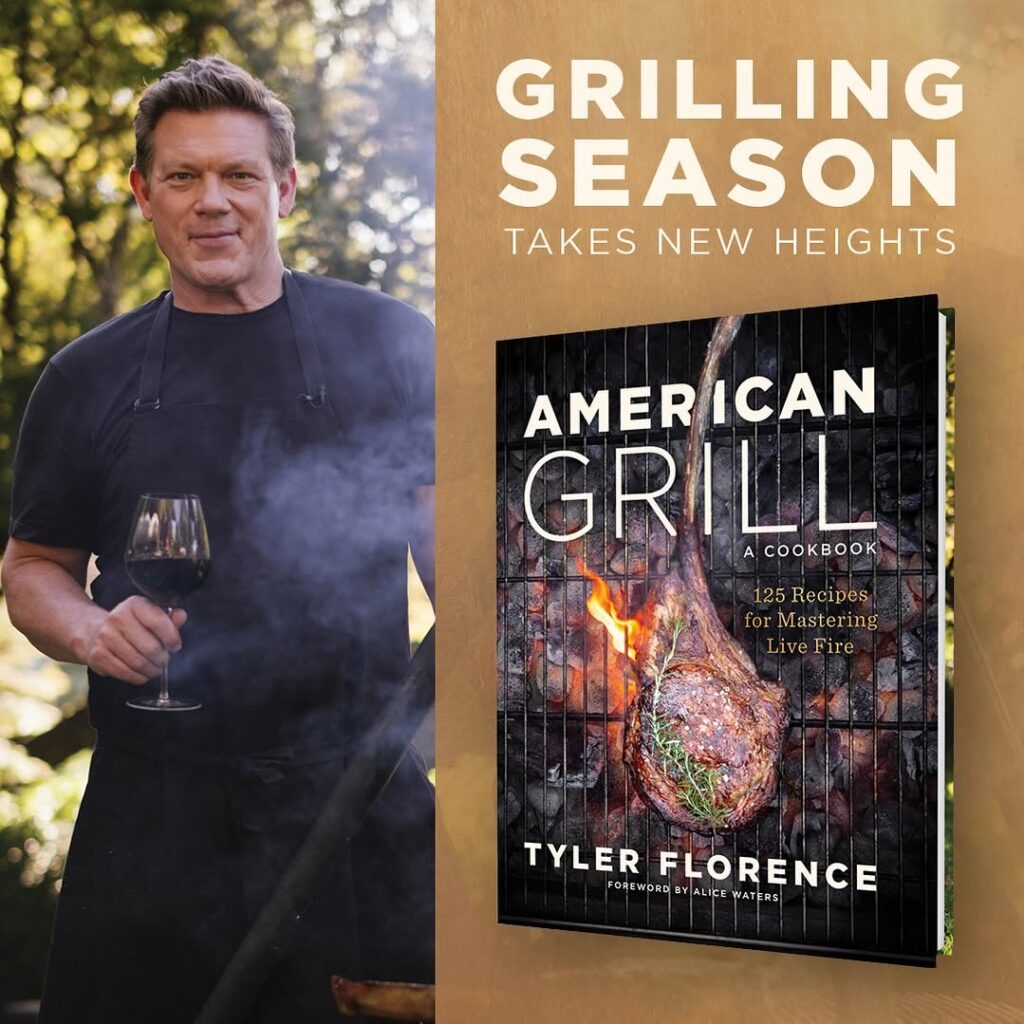
American Grill is my 17th cookbook, and I think it’s my most personal book because it’s how I like to cook at home. I have what I call my “grill park”—eight grills set up outside [including three Big Green Eggs, a Hestan grill with piped-in gas, a stick burner smoker and Cowboy Cauldrons]. We can grill for 60 people here at the house. I grew up in the South—I had barbecue sauce in my baby bottle. I crave beef the way a lot of people crave coffee.
From a dietary perspective, it’s certainly a hot trend right now. A lot of people are very protein-focused, which means it’s a good time to be in the steak business. If you can get it right—and I think we’re getting it right at Miller & Lux—it’s a really good lane to be in.
Tyler Florence will appear at the California Restaurant Show at the Anaheim Convention Center in Anaheim, California, on Monday, Aug. 24, 2026. Following Florence’s fireside chat, 100 copies of his book “American Grill” will be distributed to the audience. Also at the show on Aug. 24, CFE News’ Sara Perez Webber will be moderating a panel discussion of California catering industry leaders. Industry professionals can register for the show here.
Subscribe to CFE News' twice-monthly newsletter reporting on the business of catering, foodservice and events.