Building a Stronger Catering Business: Top Operators Share Strategies on Staffing, Profitability, Technology and Marketing
By Sara Perez Webber
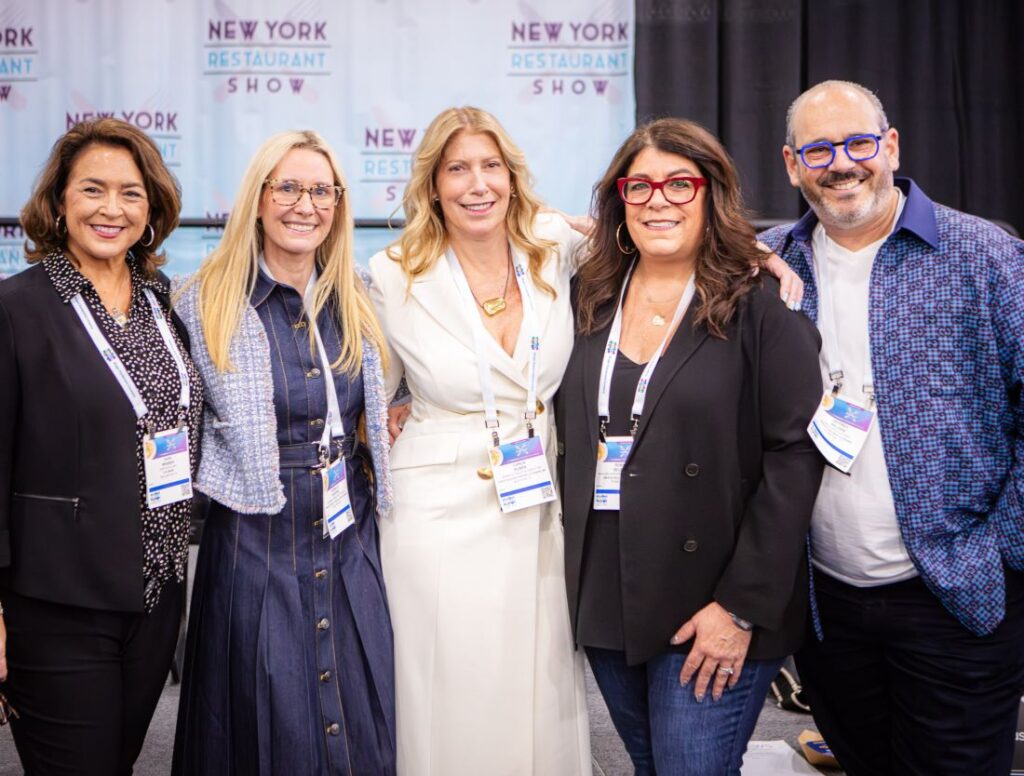
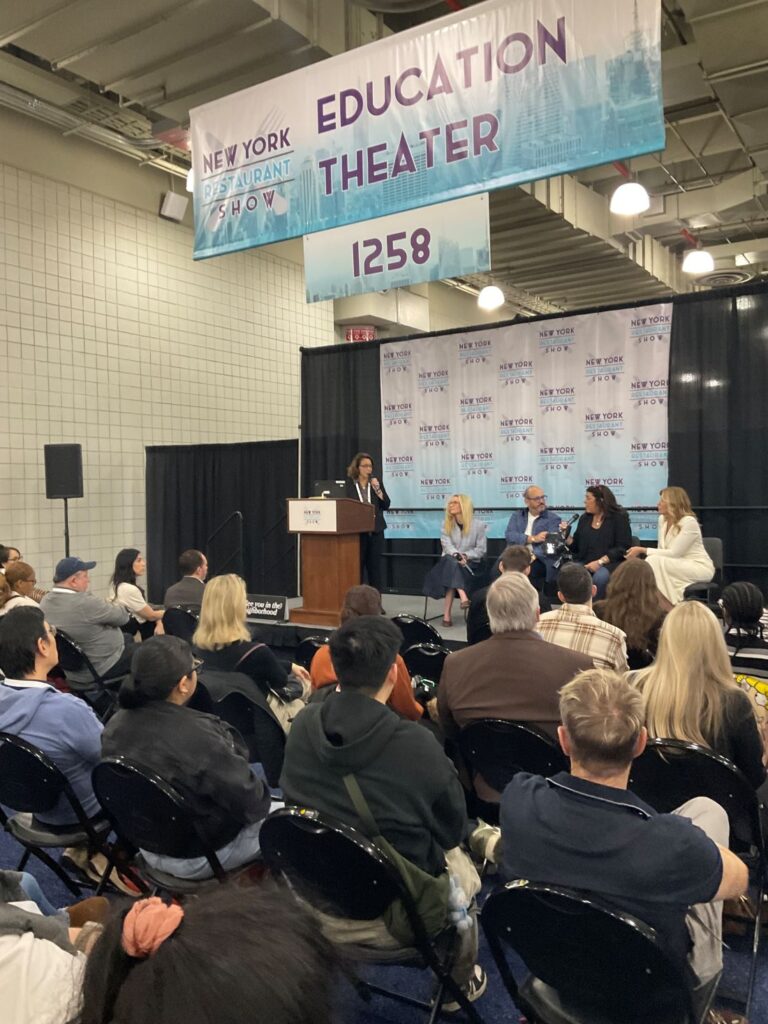
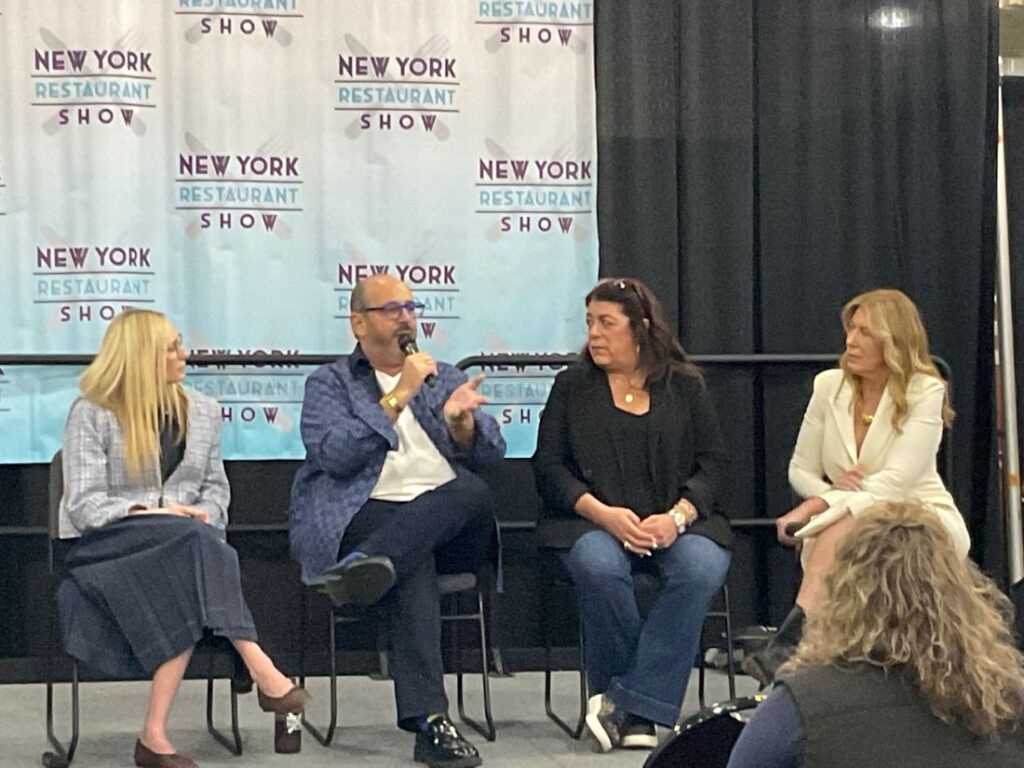
At the 2026 New York Restaurant Show, CFE News Editor-in-Chief Sara Perez Webber moderated a candid catering panel featuring four of the most respected names in New York catering: Robin Selden and Jeffrey Selden, managing partners of Marcia Selden Catering and Naked Fig Catering; Carla Ruben, founder and CEO of Creative Edge Parties; and Danielle Shapiro, regional director of sales for Elior North America. In the standing-room-only session, the caterers engaged in a wide-ranging conversation on the realities of running a modern catering operation. This first installment of CFE News’ two-part recap covers staffing, profitability, technology, and sales and marketing.
Staffing: Culture, Incentives and the Art of Retention
Staffing emerged as one of the most urgent topics in catering today—and panelists agreed there are no shortcuts. The operators who are winning the talent battle are doing so through culture, investment in people and creative recognition programs.
For Danielle Shapiro, the advantage of working within a large company like Elior North America is the sheer breadth of opportunity available to employees. “One of the things that we really promote is it’s just a place to start when you join our company, regardless of the position—and the sky’s the limit with how you can grow,” she said.
Robin Selden traced Marcia Selden Catering’s staffing success directly to the culture the company has built over decades—with some employees celebrating 30 years with the company. “There’s a reason for that; it’s because we take really good care of them, and that is how we bring people in,” she said. Staffers will speak highly of the company to their friends, who often will be interested in working there despite having no experience in catering. “Frankly, I’d rather have that, because I want to train them to do it our way,” said Robin.
The company also holds mandatory quarterly training sessions—but not the kind where management lectures from the front of the room. “It’s not just ‘let us talk at you,’” added Robin. It’s more, ‘Tell us about what you’re feeling in the field or in the kitchen or whatever, and let’s make it better every day.”
Referral bonuses are part of the equation, too. At Marcia Selden, employees who refer a hire who stays on for six months receive $500. At Creative Edge Parties, staffers receive a bonus when someone they refer works three events without canceling.
Creating a Workplace Where Employees Feel Valued
Carla Ruben emphasized the importance of treating event staff as more than gig workers: “They have to feel a part of something, and you have to draw the passion out of them.” Providing staff meals, beautiful uniforms and dignified working conditions are three ways to ensure employees feel like a valued part of the team. If the back-of-the-house “is sloppy, and they’re kind of considered second-class citizens, they’re not going to give you Michelin-star service.”
Jeffrey Selden described an internal recognition program at Marcia Selden Catering called “Quite Simply the Best,” in which any employee can publicly honor a colleague for a standout moment on the job. Honorees accumulate points redeemable at a company swag store stocked with branded merchandise.
Profitability: Protecting Margins in a High-Cost Environment
With food costs, labor, fuel and insurance all trending upward—often without a corresponding willingness from clients to pay more—how are top operators protecting their bottom lines?
At Creative Edge Parties, it starts with what’s on the menu. “We have to be much more intentional about what we’re recommending, and we have to be very smart about how we make the menus,” said Ruben. As an example, she pointed to shrimp—an ingredient perceived to be expensive but requiring little labor, so smart for the bottom line. “We try to balance it out so that it still has the Creative Edge touch, but at the same time we’re taking into account the dollars to not only buy the product but also the labor.”
Elior—which encompasses Abigail Kirsch Catering, Constellation Culinary Group and many high-profile New York venues—approaches the challenge from the client side, working to understand priorities and construct menus accordingly.
Meeting Clients Where Their Budget Is
“We really partner with the clients to understand what’s most important to them, to meet them where their budget is,” said Shapiro. “Yes, they want everything, but they might not have the budget for it. So what’s the most important thing to them, so that we can manufacture and customize a menu offering that’s going to deliver them what they need.”
Jeffrey outlined a two-pronged approach at Marcia Selden Catering: participation in a purchasing program through US Foods that helps lock in favorable pricing on staple items, combined with direct relationships with Connecticut farms for fresh, local proteins and produce.
Buying local not only lowers net costs and waste, it provides the company with quality ingredients. “Clients love that we’re buying local and being sustainable—and so do I,” said Robin. “It tastes better!”
Technology: Smarter Tools for a Faster Industry
The panelists offered a window into the platforms quietly transforming their back-office and event operations.
Jeffrey described how Marcia Selden Catering developed a custom internal staffing platform—built by a tech-savvy team member—that allows managers to filter staff by specific skill sets. He also highlighted Rock Paper Coin, an e-signature and payment platform that has become central to the company’s sales workflow.
Rock Paper Coin also functions as a CRM, tracking inquiry-to-booking conversion rates and automatically prompting clients for optional staff gratuities.
On the AI front, Ruben described how the tools have become central to how Creative Edge communicates concepts to clients before a single plate has been set—and says her company utilizes all the platforms available. “AI is allowing us to show clients the visual really quickly—that has never happened before,” she said.
Sales and Marketing: Authenticity, Relationships and Speed
Asked what’s actually driving new business right now, the panelists pointed to a few consistent themes: authentic social media, building strong relationships and sales responsiveness.
Robin said the biggest shift in their social media approach has been moving away from polished, uniform feeds toward showing the real people behind the food.
“It’s really, really important to be authentic,” she said. “It’s one thing to have a really pretty and shiny social media that’s all the same color and shows just your events. But what we’ve found that’s worked really well is for people to see that human side of us—to celebrate our team and show things that are happening in our life personally, also.”
Instagram is the channel that’s worked best for Marcia Selden Catering, and Robin thinks it’s important for a company’s principals to have robust Instagram profiles as well: “People want to know who they’re dealing with.”
Marcia Selden gets its best return from the guest experience, added Jeffrey, with repeat clients who refer more clients. “And our service team is actually an extension of our sales team,” he added. “They’re really into talking to the guests and embellishing the sale.”
Shapiro credited her team’s record-setting year in the hyper-competitive New York market to one operational decision: pulling salespeople out of event execution so they could focus entirely on revenue-generating activity. “That’s been really helpful—just getting back to clients quickly and letting them know that we want their business, we want to work with them, and that we’re available,” she said. “We’re not too busy doing an event to get back to them.”
Projecting and Earning Confidence Keeps Clients Coming Back
Ruben pointed to a more intangible but equally powerful marketing asset. “The greatest marketing that we can sell is confidence,” she said. “Confidence is what keeps people coming back. Confidence is what people look for in our social media. Are we confident in our brand? Are we confident in taking a risk? Can you have confidence that we’re going to show up, that we’re going to stick to budget? That word is extremely important for a repeat client base.”
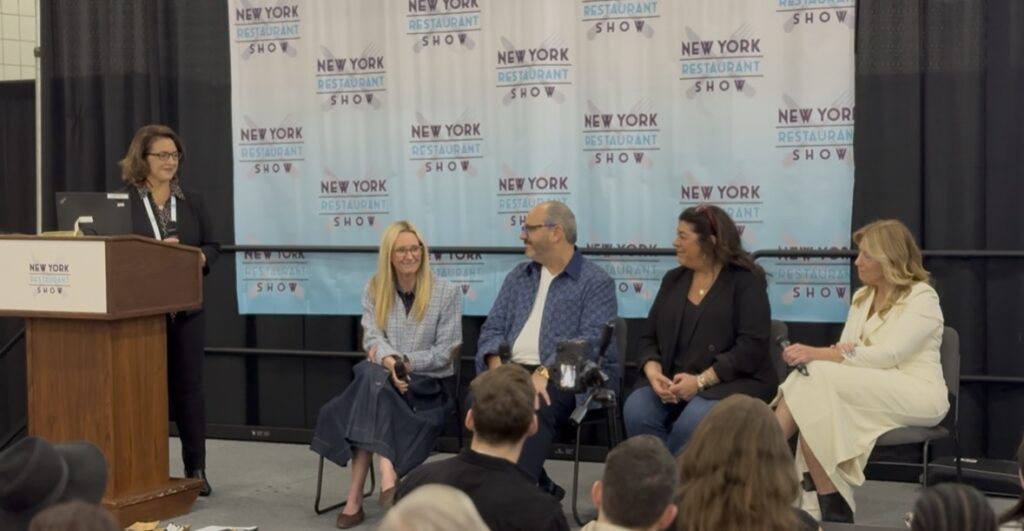
The panel also underscored the importance of fostering strong personal relationships. “In addition to social media, which is so important, we really rely heavily on the relationships we’ve built with our venues, partners, clients, peers and colleagues, for direct referrals and repeat business,” said Shapiro. “There’s so much great competition in New York. You can see it here in this room.”
Robin concurred: “I also think relationships are so, so important. It’s the currency of our industry right now.”
She noted that everyone on the stage had developed close friendships with each other despite being competitors. “There’s enough business for all of us in this room,” said Robin. “You need to embrace those people that are doing what you’re doing, and refer to and take care of them, because we’re a small little cog in a huge industry.”
Subscribe to CFE News' twice-monthly newsletter reporting on the business of catering, foodservice and events.