Spring has sprung, which means it’s time for the yearly question: Peeps, love ’em or hate ’em?
According to consumer research firm Curion, opinions on the iconic marshmallow chick candy reflect a nation divided (what else is new?).
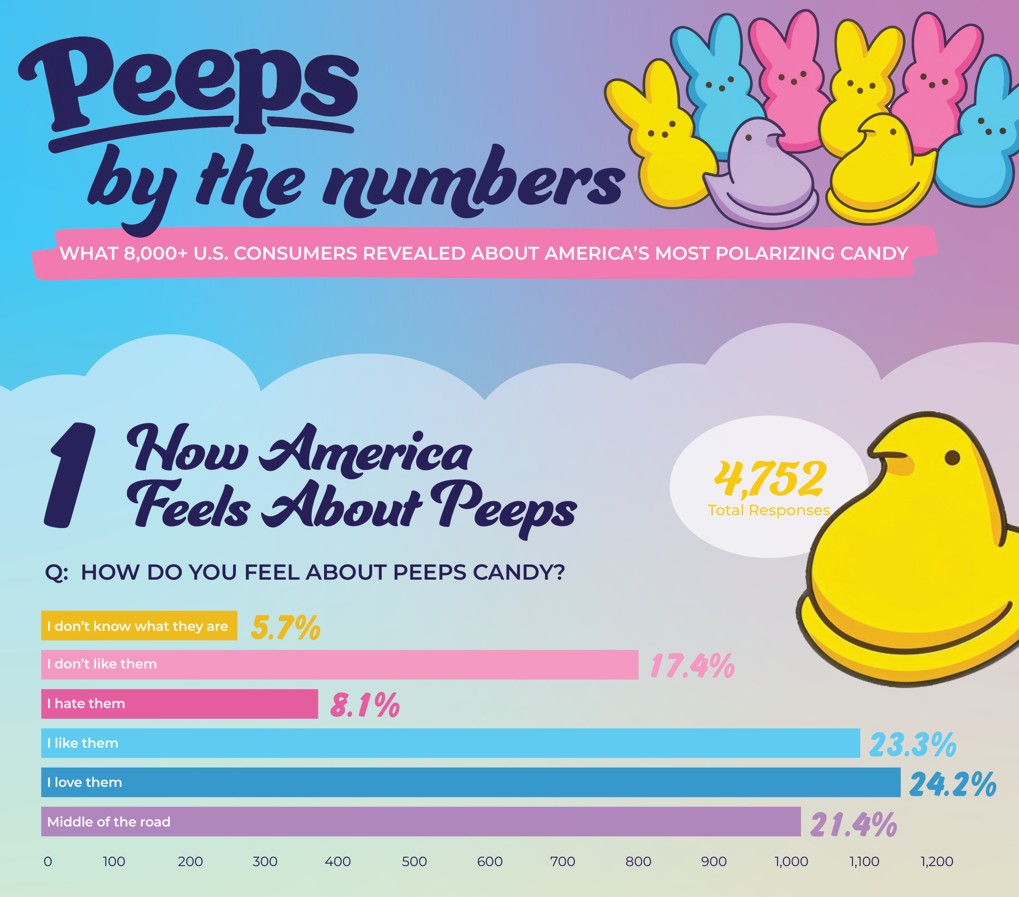
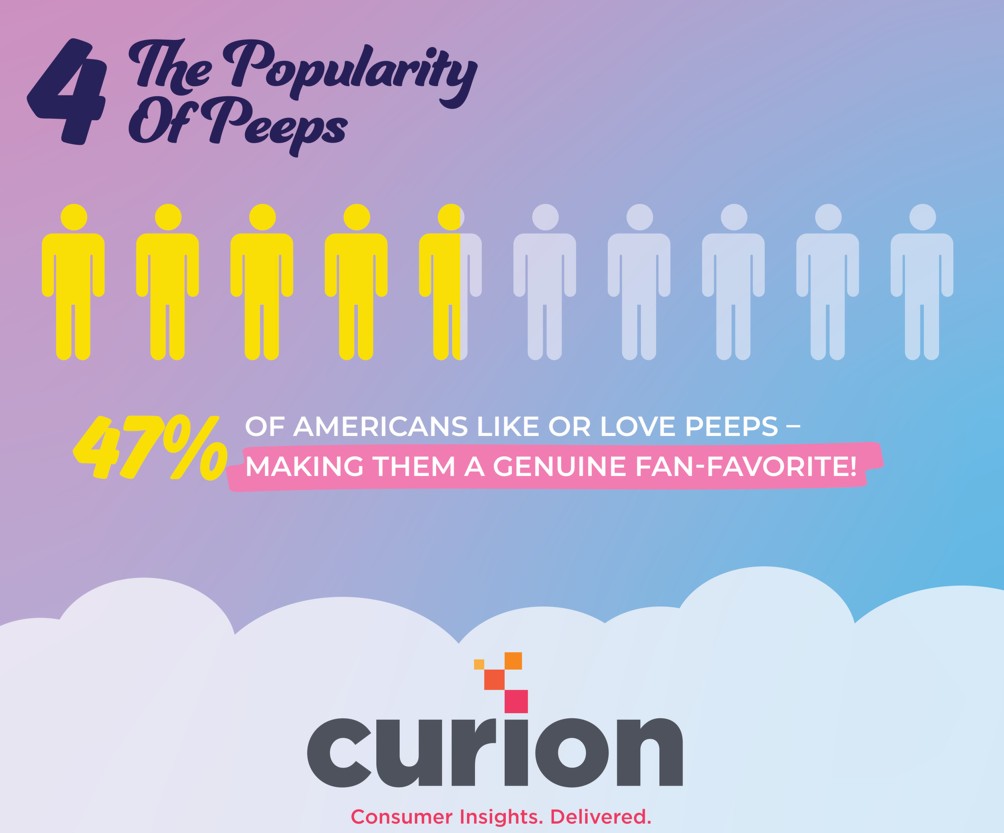
A Curion Poll PULSE survey of more than 4,700 U.S. consumers focused on sentiment lays bare the Peeps paradox. Nearly half of respondents report positive feelings toward the candy, while a meaningful segment remains firmly opposed. Specifically, 24.2% say they love Peeps and 23.3% say they like them—together comprising nearly half the population. On the other side, 17.4% don’t like them and 8.1% actively hate them, while 21.4% land in the middle of the road.
“Polarization is not always a liability,” said Lauren Dooley-Brand, senior director, strategic product insights at Curion. “For Peeps, having passionate advocates on both sides of the debate keeps the brand perpetually in the cultural conversation. That attention is extraordinarily difficult— and expensive—to manufacture artificially.”
Tradition and Nostalgia: The Real Drivers of Purchase
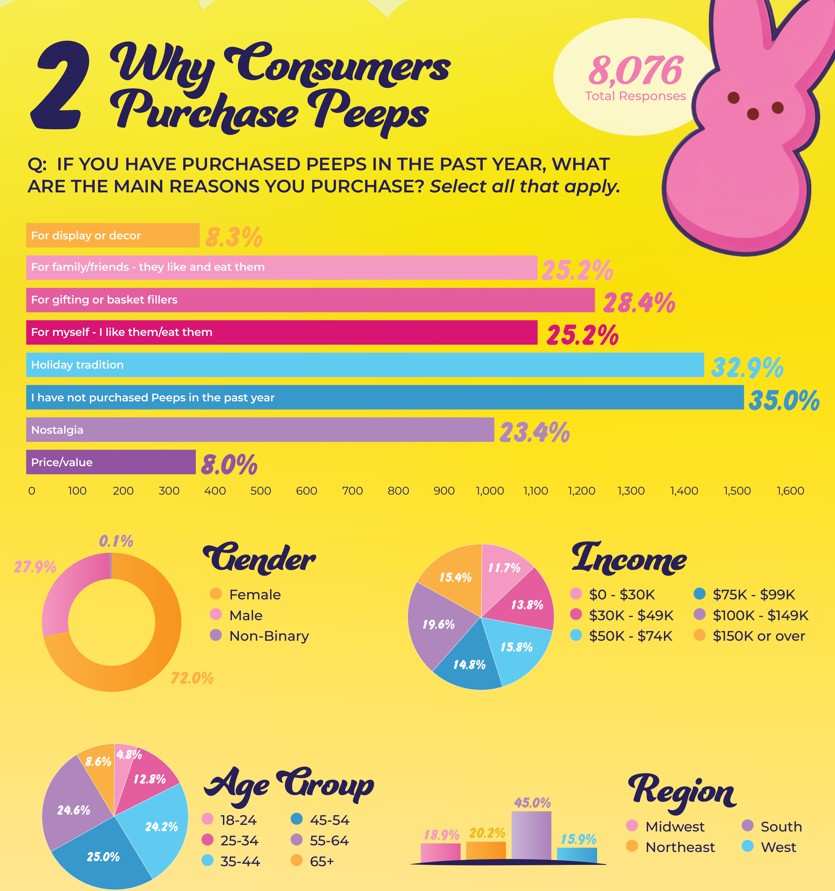
When Curion asked more than 8,000 consumers why they purchase Peeps, the answers went well beyond personal taste. Nearly one-third (32.9%) cited holiday tradition as their primary motivation, and 28.4% purchase them as gifting or Easter basket fillers. Nostalgia drove 23.4% of purchases, while 25.2% buy them for family members who enjoy them.
In short, for many consumers, buying Peeps is not a matter of craving; it’s a ritual.
How Americans Actually Eat Peeps
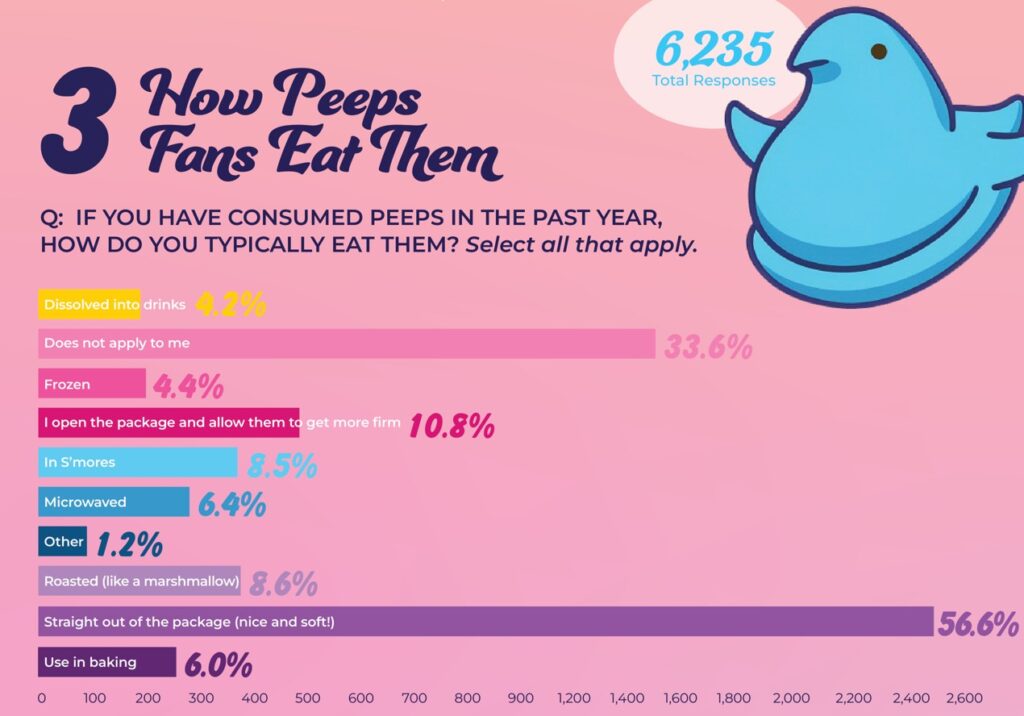
A third Curion Poll PULSE survey of more than 6,200 consumers explored consumption behavior among those who have eaten Peeps in the past year. The results reveal a surprisingly adventurous audience. While 56.6% eat them straight from the package, a meaningful minority uses them in more creative ways: 10.8% open the package and let them harden before eating, 8.6% roast them like a marshmallow, 8.5% incorporate them into s’mores and 6.4% microwave them.
This behavioral diversity suggests Peeps function more like a versatile seasonal ingredient for some consumers than a simple grab-and-eat snack, a dynamic that opens brand and innovation opportunities for further amplification.
The Endurance of an Icon
Peeps demonstrate a principle that consumer insights professionals know well: in a fragmented snack landscape, brands that own a feeling outperform those that merely own a function. Peeps do not compete with premium chocolate or artisanal confections. They occupy a distinct sensory and emotional space, with soft texture, sugar crunch, vivid color and deep-rooted holiday symbolism that coexists alongside more sophisticated sweets without trying to replace them.
The Curion Poll PULSE captures real-time consumer sentiment across a nationally representative U.S. sample. The Peeps-related surveys referenced in this article were conducted in February 2026 with total respondent pools of 8,076 (purchase behavior), 6,235 (consumption behavior) and 4,752 (sentiment), respectively.
Subscribe to CFE News' twice-monthly newsletter reporting on the business of catering, foodservice and events.