Consumer interest in climate-smart dining is growing—but foodservice operators aren’t keeping pace. That’s the central finding of the second year of “Closing the Gap: Eater and Operator Perspectives on Sustainable Dining,” a multi-year research study from BITE: Building Impact Through Eaters and Datassential.
The study—which surveyed 1,506 consumers and 400 foodservice operators—tracks how eaters and the industry view sustainable dining, and measures how both are changing year over year.
Eaters Are Leaning In
Three out of four consumers say they’re already eating sustainable foods—a 7-point jump from last year. The momentum is real and growing, particularly among Gen Z and Millennials, with more than half of both groups planning to eat even more sustainably in the year ahead. Gen Z, in particular, are turning sustainable eating into a social act: 53% say they’re very likely to tell friends and family about eating sustainably—compared to 41% of all eaters.

“As the largest and most influential generations shaping food culture, Gen Z and Millennials are driving momentum—over half plan to eat more sustainably next year, and they’re the most willing to recommend those choices,” says Eve Turow-Paul, founder and executive director of BITE.
A Growing Gap—and a Real Opportunity
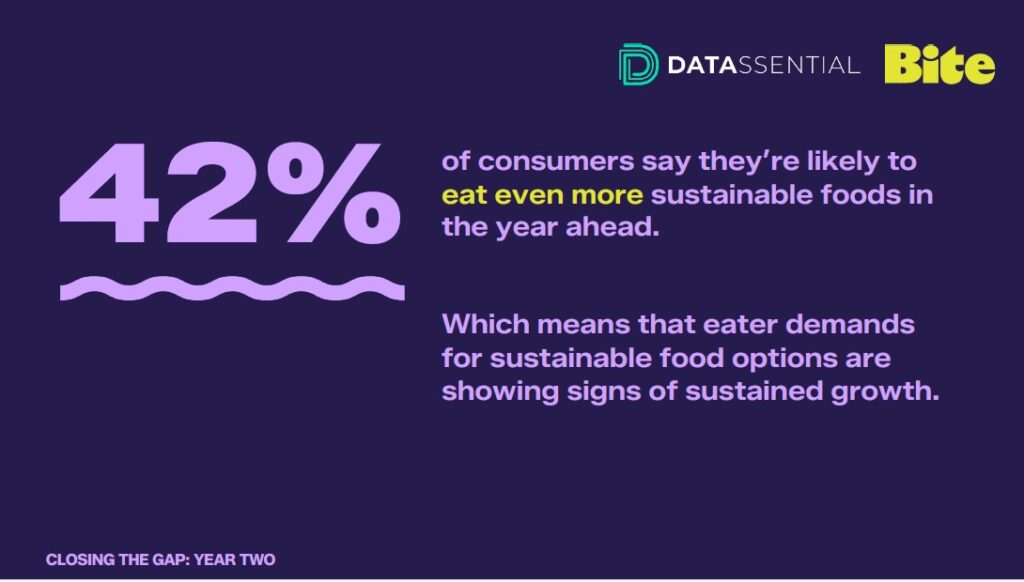
While 42% of eaters plan to increase their sustainable food consumption this year, only 28% of operators say the same. Additionally, only 62% of foodservice operators say they are currently menuing sustainable foods, a 5-point decrease from last year.
The disconnect between eater expectations and operator intention is also highly visible when it comes to meat. Eaters are more open to using less red meat than operators realize—the study found an 18-point gap between eater willingness and operator plans on this issue.
“Resolving the misunderstandings between eaters and operators can have a major impact on sustainable dining,” says Danielle Boles, senior research manager at BITE. Operators worry that customers won’t want to pay more or won’t be satisfied—but what eaters actually want most is food that’s delicious, familiar and easy to find. Closing that perception gap is one of the biggest opportunities in foodservice right now.
What Actually Works
The good news? The path forward doesn’t require eaters to give anything up. Consumers want both—meat and plant-forward options—and the operators best positioned to win are those who lean into choice, flavor and flexibility rather than framing sustainability as sacrifice. Nearly half of Gen Z and Millennials say they look forward to both animal proteins and plant-based alternatives when choosing what to eat.

“Choice and flexibility are the key to winning over eaters, especially younger generations,” says Huy Do, trendologist and research and insights manager at Datassential. “Operators who can deliver exciting, satisfying dishes that happen to be planet-friendly will find themselves ahead of the curve.”
BITE and Datassential will continue tracking these trends in Year Three, measuring ongoing shifts in menus and eating habits across the industry.
Subscribe to CFE News' twice-monthly newsletter reporting on the business of catering, foodservice and events.