By Amir Salami, founder of VizMenu
When it comes to digital menus, a QR code by itself is not the innovation. It is simply a doorway. The real opportunity is the digital experience behind it: a menu that can show food visually, explain dishes clearly, update quickly and help guests make decisions with more confidence.
For restaurants, cafés, hotels and catering companies, a well-designed visual menu can become more than a replacement for paper. It can serve as a flexible communication and merchandising tool before, during and even after an event. Benefits of a visual menu include:
1. Turning the Menu Into a Visual Sales Tool
Traditional menus depend heavily on names and descriptions. That works, but guests may still have trouble imagining what a dish will actually look like. A digital menu can add:
- High-quality food photography
- Short videos showing texture, plating or preparation
- Clear descriptions and ingredient details
- Suggested add-ons, beverages or desserts
- “Chef’s Pick,” “Most Popular” or similar highlights
The goal is not to overwhelm the guest. It is to reduce uncertainty. When people can quickly understand what is being offered, it becomes easier to compare options and discover items they may otherwise overlook.
2. Giving Caterers More Flexibility Before and During Events
Catering companies have an especially useful opportunity because menus often change from one event to another.
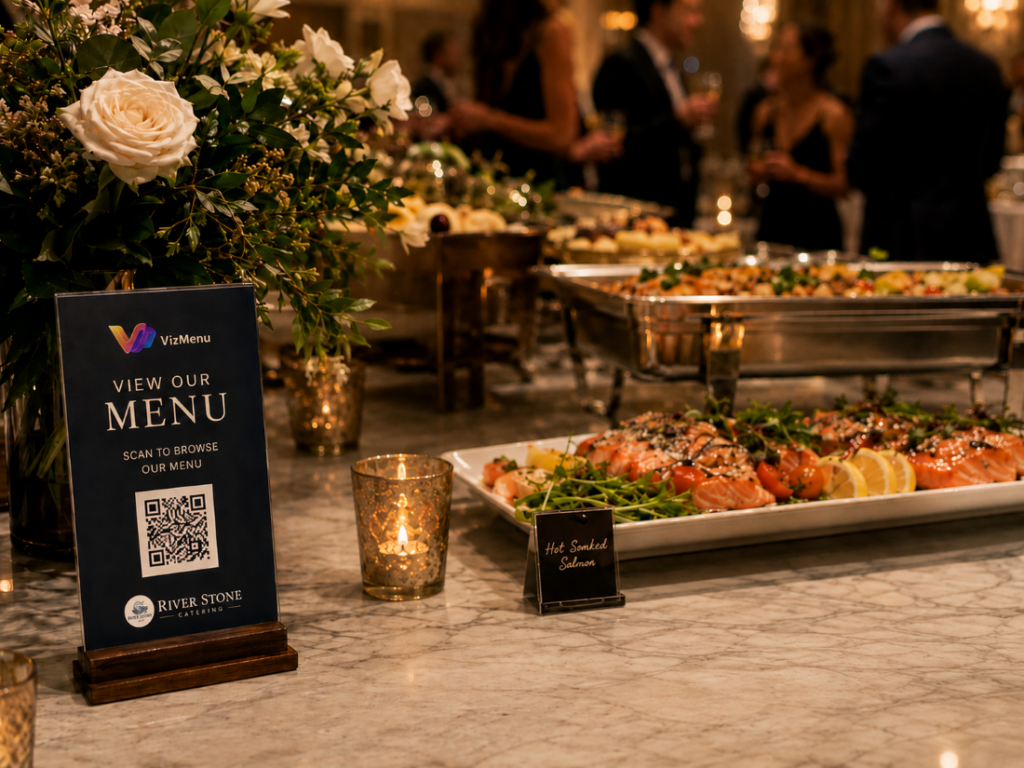
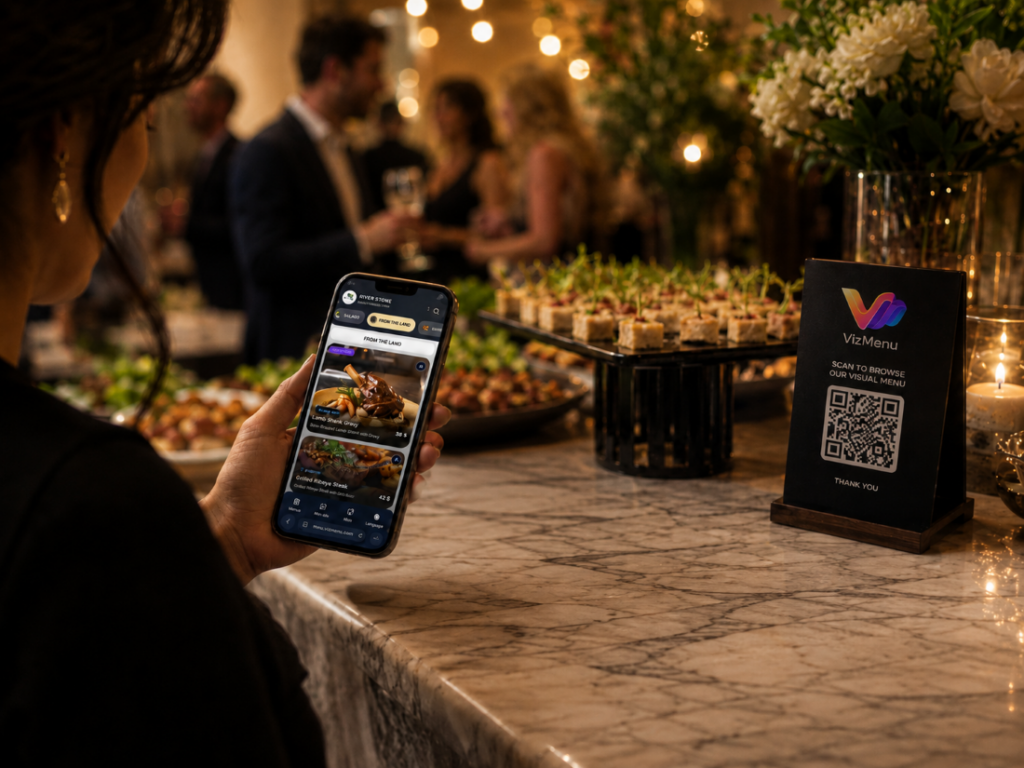
Instead of creating and printing a new menu for every wedding, corporate lunch or private party, a caterer can create an event-specific digital menu and connect it to a QR code displayed on table cards, buffet stations, bars, proposals or packaging.
That menu could show:
- Passed hors d’oeuvres and ingredients
- Buffet or food-station selections
- Signature cocktails and nonalcoholic drinks
- Dessert options
- Vegetarian, vegan or gluten-conscious choices
- Premium upgrades or optional add-ons
If an item changes at the last minute, the digital menu can be updated without reprinting every sign or card.
It can also help during the planning process. A prospective client reviewing catering packages can see the difference between standard and premium options instead of relying only on text descriptions.
3. Making Dietary Information Easier to Find
Guests increasingly want to understand what is in their food.
A digital menu can make information such as allergens, dietary preferences or nutritional details easier to locate without crowding a printed menu.
For example, a guest at a catered event may be able to identify vegetarian or gluten-conscious dishes before approaching a buffet. Restaurants can use the same approach to help guests narrow choices according to their preferences.
Accuracy matters. Allergen and nutrition information should always come from verified recipes and operational procedures, and businesses should avoid making broad health claims.
4. Reducing the “No-Surprise” Gap
One common dining disappointment is a mismatch between what a guest imagined and what arrives. Clear descriptions and realistic photography can help set expectations. The key word is “realistic.” Images should represent the actual dish as closely as possible. Overly edited or artificial-looking photos may create the opposite effect and reduce trust.
For caterers, this can also improve communication with event planners who are selecting dishes before a tasting or approving a menu for a large group.
5. Updating Menus Without Reprinting
Prices change. Ingredients become unavailable. Seasonal offerings rotate. A bar may run out of a cocktail ingredient midway through an event.
With a printed menu, even a small change can require a new batch of materials. With a digital menu, an authorized team member can update information once and publish it immediately. This can reduce printing waste while also helping teams keep information more consistent across locations, events or service periods.
6. Keeping Technology in the Background
A digital menu should make hospitality easier, not make guests work harder. The best experience is mobile-friendly, fast to load and simple to navigate. Guests should not have to download an app. Text should remain easy to read, categories should be logical and important information should be accessible in just a few taps.
Paper can still have a place. Some businesses may choose a hybrid approach so guests who prefer a physical menu still have that option.
The Bigger Opportunity
QR menus gained visibility during the pandemic, but their long-term value goes beyond contact reduction. Used thoughtfully, they can help restaurants and caterers present food more clearly, respond to changes faster, reduce unnecessary printing and give guests more information at the moment they are making a decision.
The QR code is only the entry point. The real value is what the hospitality business chooses to put behind it.
About the Author

Amir Salami is the founder of VizMenu, a visual menu technology platform for restaurants, cafés, caterers and hospitality businesses. His work focuses on helping food businesses present menus more clearly through visual content and useful information such as ingredients, calorie details and allergen information—helping guests make more informed choices and dine with greater confidence.
Subscribe to CFE News' twice-monthly newsletter reporting on the business of catering, foodservice and events.