Contributed by Unox
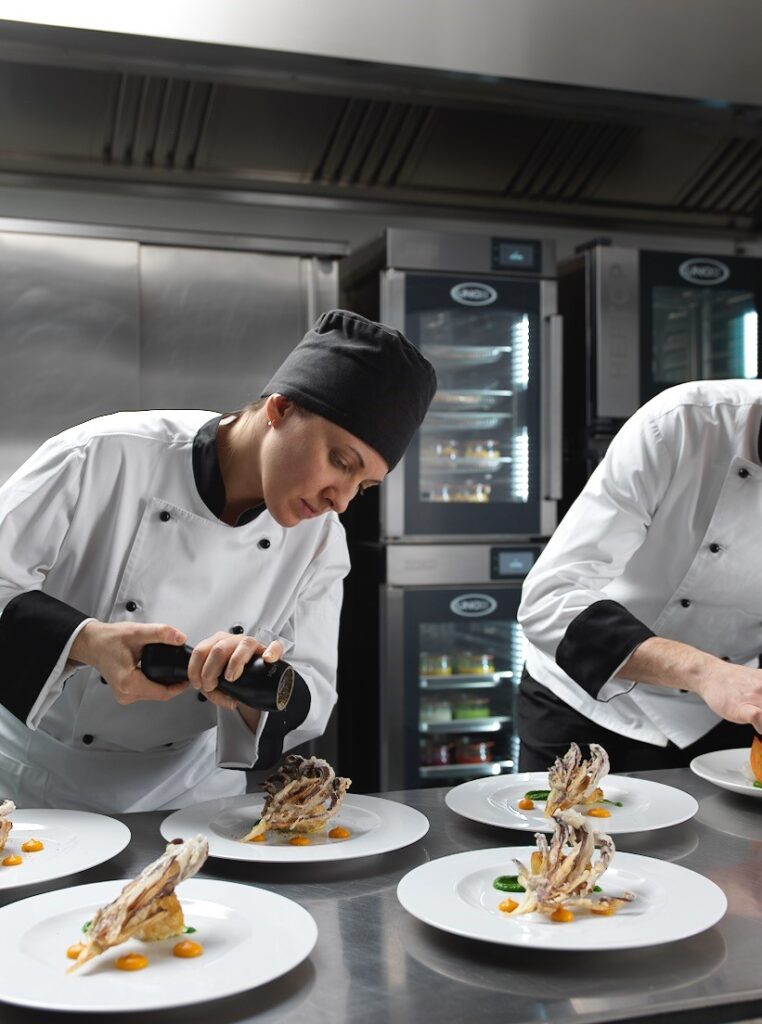
Catering kitchens operate under uniquely demanding conditions. Tight timelines, fluctuating guest counts, off-site service, and high expectations for food quality all place pressure on both people and processes. In this environment, success increasingly depends on how well kitchens are designed around workflow—from cooking and holding to finishing and service.
Across the industry, catering professionals are rethinking how advanced cooking and holding technologies can work together to create more resilient, lower-stress kitchens without sacrificing creativity or consistency.
Speed and consistency in high-volume cooking
One of the biggest challenges in catering is balancing speed with quality. Large events often require producing high volumes of food in compressed timeframes, making traditional cooking methods difficult to scale.
To address this, many catering kitchens are adopting high-speed cooking solutions like SPEED-X™, a high-speed oven designed to dramatically reduce cook times while maintaining consistent results. By combining multiple heat technologies in a single cooking process, these systems allow chefs to prepare dishes in minutes rather than relying on long, sequential production schedules.
From a workflow standpoint, faster cooking cycles give teams greater flexibility. Kitchens can respond more easily to last-minute changes, recover quickly during service peaks and reduce dependence on rigid prep timelines while maintaining food standards.
Holding as a strategic workflow tool
Cooking faster is only part of the equation in catering operations. How food is held prior to service plays a critical role in maintaining quality and reducing stress.
Advanced hot holding solutions are increasingly used to keep food at safe serving temperatures for extended periods without compromising texture, moisture or flavor.
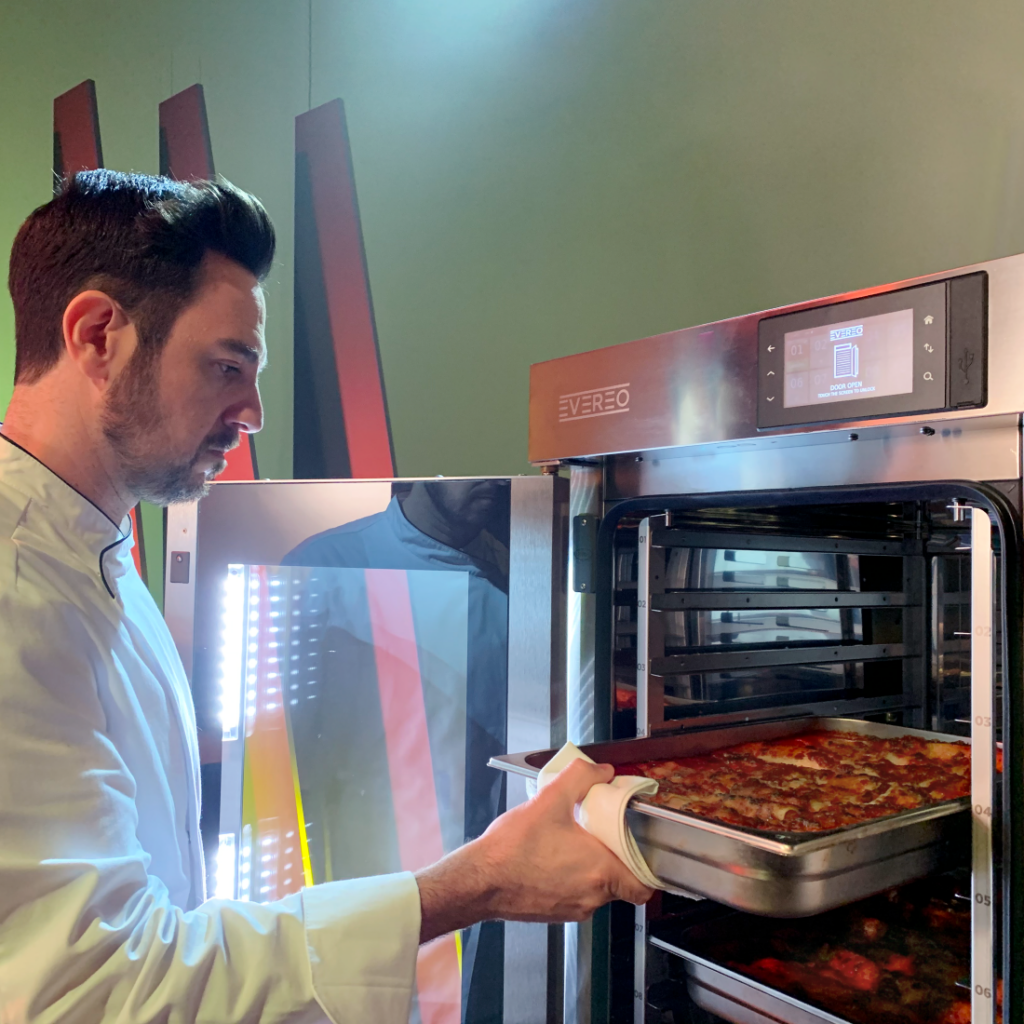
A good example of this is EVEREO® from Unox. Unlike traditional holding methods that can dry food out or diminish quality, controlled holding systems—also known as “hot fridges”—are designed to preserve product integrity over time.
This approach allows catering teams to:
- Prepare food well in advance of service
- Separate cooking from service timing
- Smooth labor demands across the day
- Reduce waste by holding food safely until it is needed
When holding is reliable, kitchens gain valuable breathing room during high-pressure events.
Reducing line pressure through integrated systems
Traditional catering setups often rely on a high-pressure hot line during service, where multiple tasks converge at once. This can quickly lead to bottlenecks and increased stress for staff.
By integrating high-speed cooking systems with advanced holding solutions, many kitchens are redesigning workflows to shift pressure away from the hot line. Food can be cooked rapidly, transferred to holding, and finished or plated as needed—allowing teams to work more calmly and predictably during service.
This workflow is especially effective for events with staggered service times, multiple courses or unpredictable guest flow.
Supporting resilient, lower-stress kitchens
Great catering kitchens aren’t defined by equipment alone; they’re built on systems that support the people using them. When cooking and holding processes are consistent and repeatable, teams spend less time troubleshooting and more time focusing on execution and presentation.
Simplified workflows also make it easier to onboard temporary or seasonal staff—a common reality in catering operations. Clear processes reduce training time and help ensure consistent results, even with changing teams.
Expanding menu possibilities with flexible equipment
Strong workflows give chefs more room to be creative.When kitchens can rely on fast cooking and stable solutions, they gain confidence to expand menus and offer dishes that would otherwise be difficult to execute at scale.
This flexibility allows caterers to:
- Offer broader, more diverse menus
- Adapt dishes to different event formats
- Maintain consistency across large guest counts
For catering professionals, this balance between creativity and reliability is essential.
Managing large-scale events with confidence
Large events amplify every operational challenge: timing, staffing, logistics and quality control. By designing workflows that connect production, holding and service, catering teams can handle high-volume events with greater confidence, consistency and control.
Key takeaways for catering operators
As catering kitchens continue to evolve, several best practices are emerging:
- Use high-speed cooking solutions to reduce prep time and increase flexibility
- Treat hot holding systemsas workflow tools, not just storage
- Reduce pressure on the hot line through integrated production and holding
- Separate cooking from service timing whenever possible
- Choose systems that support staff efficiency and wellbeing
In today’s catering environment, the most successful kitchens aren’t just faster; they’re smarter, calmer and more adaptable. Designing kitchens around workflow helps operators meet today’s demands while preparing for what’s next.
Unox is a global leader in professional cooking solutions committed to culinary excellence and continuous innovation. The manufacturer’s advanced combi and speed ovens are engineered to simplify the lives of culinary professionals, maximizing output and minimizing operating costs.
Subscribe to CFE News' twice-monthly newsletter reporting on the business of catering, foodservice and events.