CORE’s “Serving Up Hope” Campaign Supports F&B Families in Need
CORE, the national nonprofit that provides financial relief to families of food-and-beverage employees navigating health crises, natural disasters or other […]
CORE, the national nonprofit that provides financial relief to families of food-and-beverage employees navigating health crises, natural disasters or other […]

ezCater, the #1 food tech platform for workplaces, today released its third annual Lunch Report, revealing new insights into employees’ lunch habits. Although 98% of employees recognize the benefits of lunch breaks on job performance and productivity, nearly half (49%) skip lunch altogether at least once a week.
As a caterer, you know that meticulous preparation is the key to a successful event. If you don’t put in the work beforehand, you won’t achieve satisfying results for you and your clients.
The same philosophy applies to selling your catering business. With careful research and planning, you’ll put yourself in a much better position to reap the financial rewards of a successful transaction.

You know the catering high you get after a successful event? Even though you’re bone-tired, you arrive home, put your feet up, and celebrate—perhaps with a cocktail—reveling in a job well done.
Much like any catered event, your career will end, too. If you want to enjoy that same well-earned satisfaction in your retirement years, you must carefully plan and execute your exit strategy.
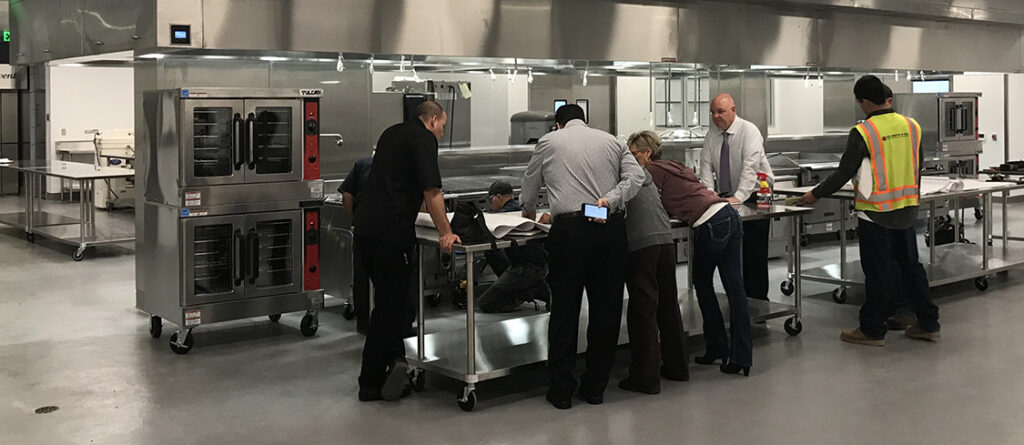
While a kitchen renovation may be high on the wish list, it often gets relegated to the backburner due to cost, disruption and the time you know it will take. And yet, it’s often a major key to growth.
Consider the stories of Ridgewells Catering in Washington, D.C., and 24 Carrots Catering & Events in Costa Mesa, California, two of the largest caterers in the country. The first stands on the precipice of a significant renovation. The latter has been basking in the success of its extensive renovation since 2018. Both owners understand that while kitchen rehauls present many challenges, the investment will pay off for years to come.

Caution is the byword as the year progresses. The economic environment remains unsettled, especially as the presidential election presents uncertainty. Firms that tighten up their risk management practices will put themselves in a good position to get through the year successfully.

The restaurant industry has a clear turnover problem. Topping 70 percent annually in recent years, according to the U.S. Bureau of Labor Statistics, employee departure rates leave eateries, bars and other commercial kitchen-driven businesses challenged to find the best workers in a tight labor market.

By Brad Korkow, Society Insurance
In today’s digital world, it’s impossible to avoid handling electronic data while running your catering business. Credit card and mobile payment options are the norm, putting caterers increasingly at risk of a cyberattack. Considering 60 percent of small companies go out of business within six months of a cyberattack (according to the National Cyber Security Alliance), data security should be at the top of any caterer’s to-do list.

As demand for drop-off catering picks up, many restaurants and full-service caterers are launching or expanding dedicated divisions to meet the demand. San Francisco-based Above & Beyond Catering, however, began drop-off catering first, in the early days of its founding in 2005. It expanded to encompass a separate full-service department—Fork & Spoon Productions—in 2016.

Tips for choosing technology to help your catering operation be more profitable By Mark Kelnhofer, MBA Operating and managing a